


Matchbox Technologies Secures Continued Support from Osaka's Employment Innovation Program
Matchbox Technologies Secures Continued Support in Osaka
In a significant move for healthcare innovation, Matchbox Technologies, headquartered in Niigata, has announced its selection for continued support under Osaka Prefecture's Employment Promotion Innovation Creation Support Project (EPICS). This decision underscores the prefecture's commitment to promoting job opportunities and developing new technologies and services in the face of severe labor shortages, a challenge exacerbated by Japan's aging population and declining birthrate.
Matchbox had previously proposed the creation of a specialized spot work platform exclusively for qualified medical professionals, which was adopted into the EPICS program back in October 2025. This initiative has received guidance from management experts and various support mechanisms, facilitating the startup's efforts toward implementation. Moreover, at a recent成果報告会 (results presenting event) held at the end of February 2026, the company earned an excellence award for its previous efforts, signifying the appreciation of its innovative approach.
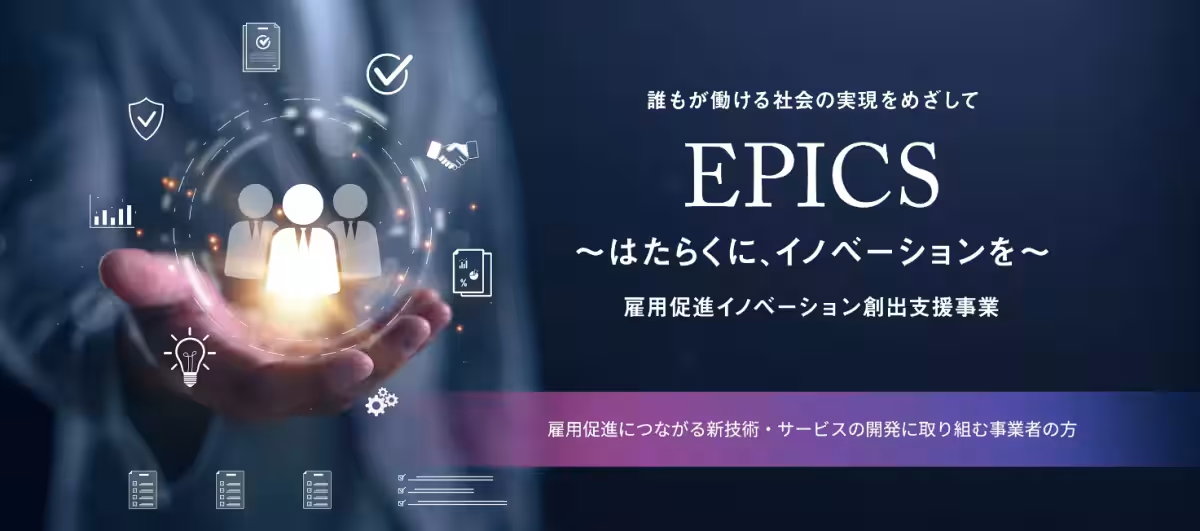
The EPICS program commenced in July 2025 to combat the increasing personnel shortages affecting small and medium-sized firms in Osaka. By fostering the creation of new employment opportunities and encouraging diverse working styles, the initiative aims to support companies engaged in the development of technologies and services that will enhance employment prospects.
About the Healthcare Spot Work System
The proposal accepted by the program consists of a spot work management system tailored for healthcare workers in Osaka. This platform will be available as both a website and an application, allowing healthcare facilities to register and post job openings per day or for a few hours. Workers can create profiles outlining their qualifications and skills, making it easy for them to view and apply for jobs digitally.
What distinguishes this platform is the capacity for individual healthcare facilities to maintain their own databases of available workers. When a worker's skills match the requirements of a healthcare facility, they can be incorporated into that facility's unique employment database. This not only enables facilities to issue limited job invitations but also ensures that they receive applications from highly qualified candidates.
This flexible working style aims to lower both psychological and time-related barriers, facilitating the reintegration of professionals who previously left the workforce due to time constraints or personal circumstances. The system provides a reliable way to connect essential workers with the growing demands in the healthcare sector.
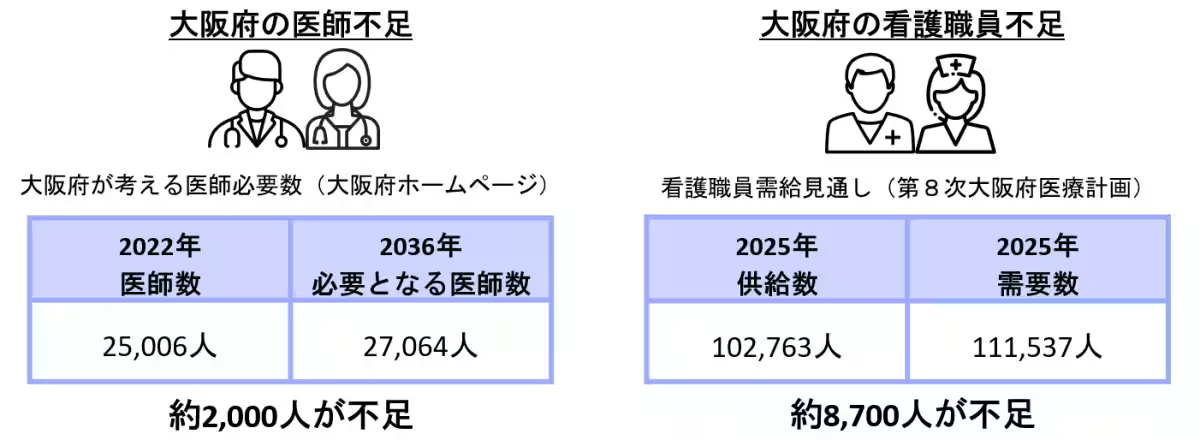
Osaka's 8th Healthcare Plan indicates a projected need for 27,064 doctors by 2036, up from 25,006 in 2022. The number of nursing staff required is also forecasted to rise drastically, highlighting the importance of an efficient pairing system between available qualified professionals and medical institutions.
Achievements in the Acceleration Program
Under the EPICS program, Matchbox has engaged over 20 supporters and has obtained interest from actual healthcare institutions for implementation. Through collaborative efforts with these supporters, opportunities for introductions to medical facilities in Osaka and Sakai have arisen, aligning with ongoing verification of physician needs. The program has fostered meaningful connections with various stakeholders, including local governments, to expand its network further.
The feedback received during the成果報告会 praised Matchbox's commitment to addressing labor shortages faced by small businesses and healthcare facilities, positioning the service as a high-potential solution for linking diverse groups seeking employment, including women.
Case Study: Sado General Hospital
One notable example of leveraging this platform can be seen at Sado General Hospital, the largest hospital in Sado City, Niigata. Utilizing the local spot work platform called Sado Matchbox, more than 50 workers, including 21 qualified nurses and midwives, have registered in the hospital's unique employment database. In just nine months since implementation, around 700 instances of work have been logged, contributing approximately 1,900 hours of labor. This effort has, in some cases, even led to full-time employment for qualified professionals.
As Matchbox continues to explore strategies for optimizing flexible work environments in Osaka's healthcare sector, the team draws inspiration from successful implementations in regions like Sado.
Future Endeavors
Moving forward, Matchbox recognizes the importance of refining its approach to reach potential workers actively. While strides have been made in connecting to healthcare facilities, the engagement strategy for qualified professionals needs further development. Strengthening partnerships with government agencies and medical associations will be vital to this process.
The company plans to initially focus on districts such as Sakai City to collaborate with sympathetic medical workplaces and initiate experimental applications before broadening their focus. They aim to convert the existing success into a sustained cycle of encouragement, integration, and job creation in Osaka's medical facilities, all supported by continued assistance from the prefecture.
In conclusion, Matchbox Technologies aspires to leverage digital innovation to create a society where everyone has the opportunity to work flexibly. By collaborating with local governments, they are committed to solving pressing regional challenges and enhancing employment opportunities through their unique platforms.
Topics Health)


【About Using Articles】
You can freely use the title and article content by linking to the page where the article is posted.
※ Images cannot be used.
【About Links】
Links are free to use.