



AI Interview Assistant 'Tonari' Revolutionizes Recruitment Sector with Efficiency And Quality
Transforming Recruitment with AI: Introducing Tonari
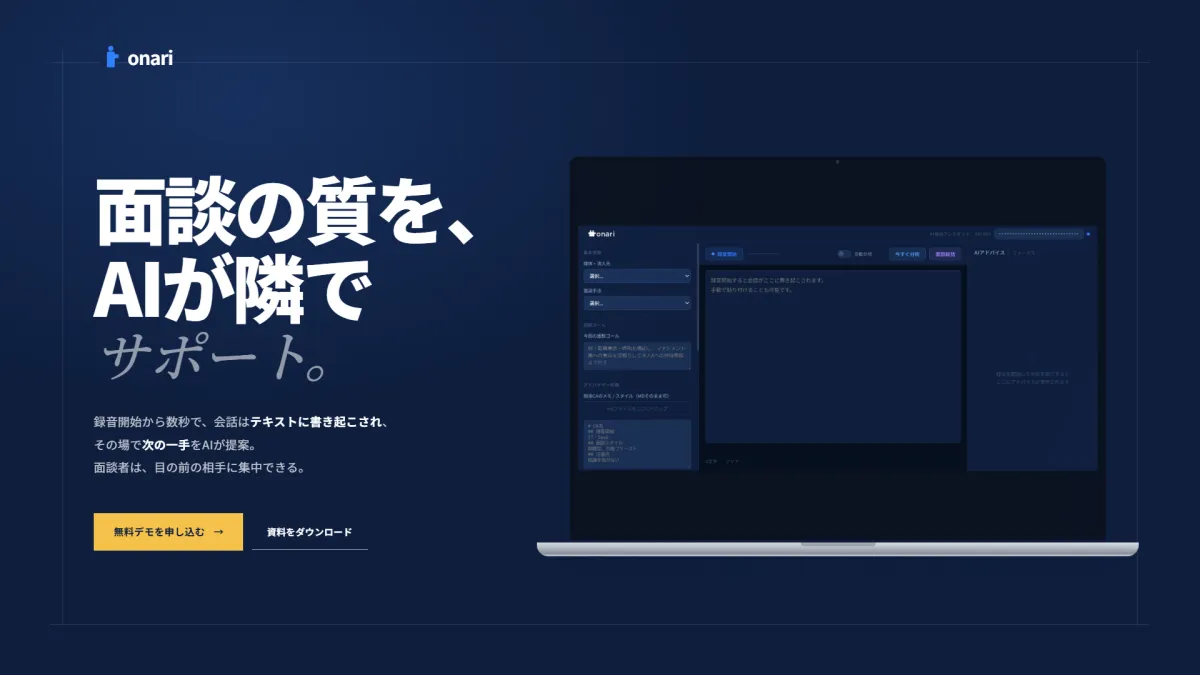
In today's fast-paced job market, recruitment agencies are feeling the pressure to enhance efficiency and improve candidate interactions. A new AI interview assistant named Tonari has been launched, aimed at addressing these challenges within the recruitment sector. Developed specifically for career advisors (CAs), Tonari provides real-time support during interviews, helping to improve the quality and efficiency of the recruitment process.
The Challenge of Personalization in Recruitment
The recruitment industry in Japan is bustling, with over 30,000 agencies operating throughout the country. Each day, career advisors engage in multiple interviews, yet the overall quality of these interviews often hinges on the individual advisor's skill and experience. As a result, several structural challenges have become evident:
- - A significant gap in success rates between veteran and novice CAs
- - Knowledge and experience tend to be personal assets, not organizationally retained
- - Considerable time is spent on post-interview documentation
- - New CAs require substantial time and financial investment to train
To tackle these issues effectively, the AI interview assistant Tonari was developed, incorporating the following three key functionalities:
Key Features of Tonari
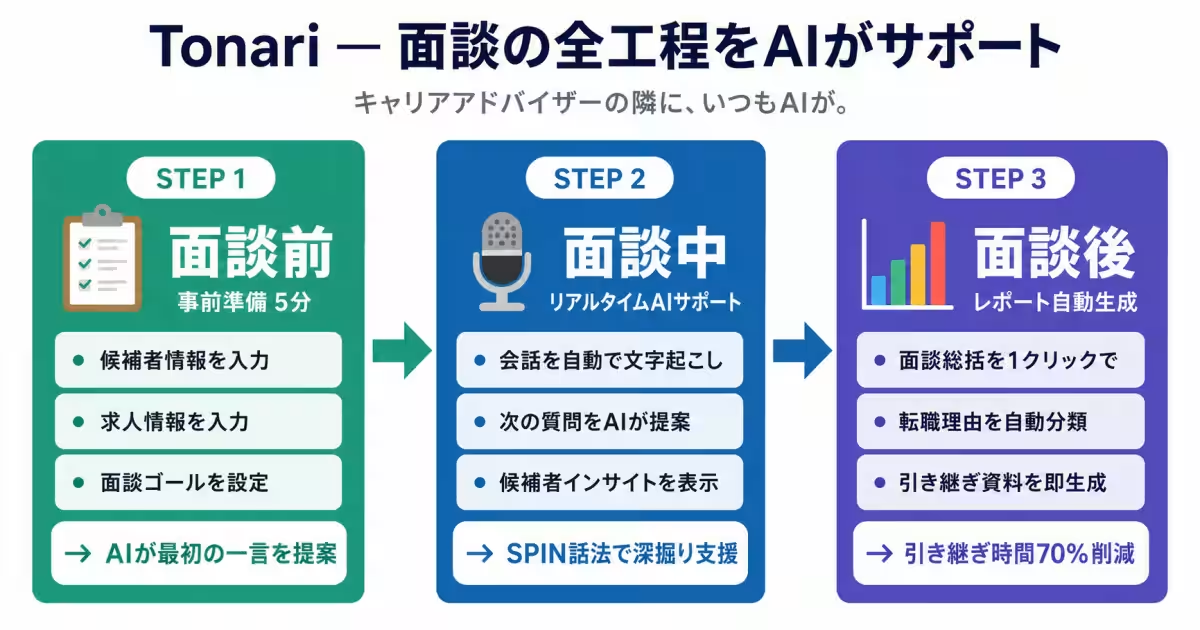
1. Pre-Interview Strategy Design
Tonari simplifies the preparation process by enabling CAs to input candidate information, job details, and their own interview style. Based on this input, the AI generates insightful suggestions, including the initial introductory statement, how to steer the conversation, and any critical points to bear in mind. This allows even new CAs to conduct high-quality interviews from their very first day.
2. Real-Time AI Assistance During Interviews
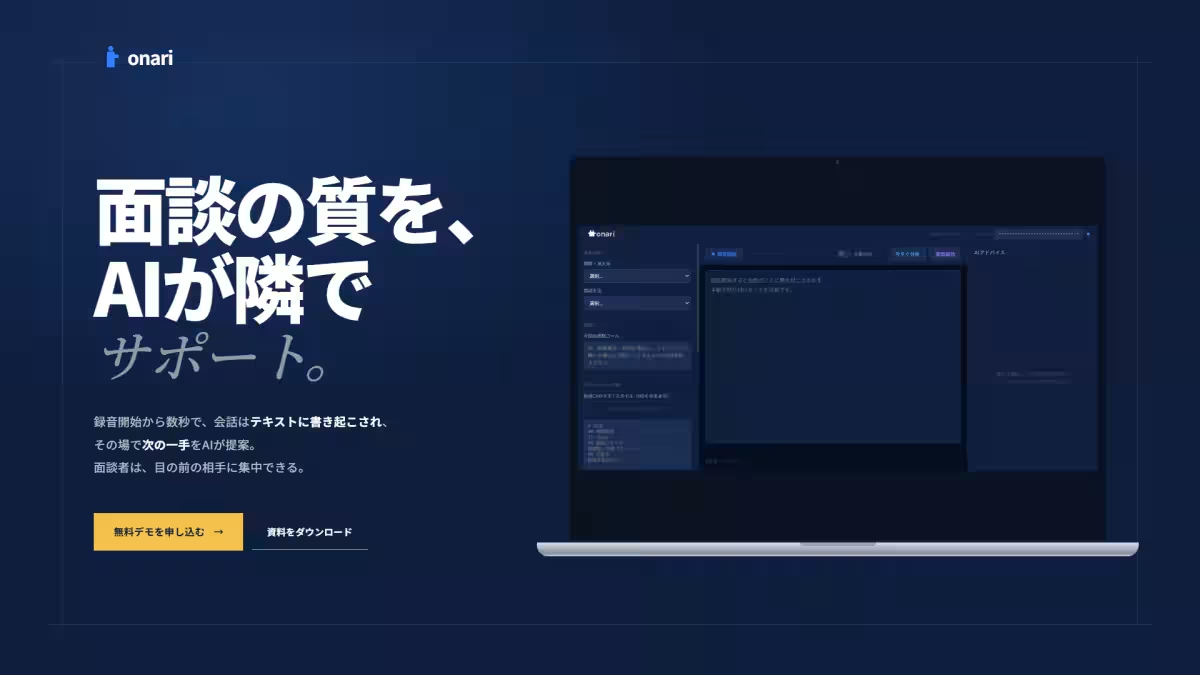
During the interview, Tonari transcribes the conversation in real-time, providing instant suggestions such as:
- - Probing questions based on the SPIN questioning technique
- - Insights and underlying feelings of candidates
- - Actions that should be taken immediately
- - Key points to be cautious of
3. Automated Report Generation Post-Interview
Once the interview concludes, CAs can generate a comprehensive report with a single click. Tonari will summarize essential components such as candidate motivations, activity status, preferred conditions, and insights, vastly reducing the time spent on documentation and handover processes.
Early Adoption Success at JOBPALETTE
JobPalette, an agency that adopted Tonari early in its rollout, achieved remarkable results in just a few months:
- - A 45% increase in success rates
- - 70% reduction in the time required for follow-up documentation
Why Tonari Stands Out
Tonari is designed specifically for the recruitment industry, markedly differing from generic AI tools. It provides a comprehensive solution covering every interview phase—before, during, and after—allowing agencies to implement it without disrupting existing workflows. Additionally, it significantly accelerates the ramp-up time for new CAs, turning them into productive contributors more effectively.
Future Expansion Plans
From May 2026, Tonari will significantly broaden its reach within the recruitment industry, followed by OEM expansions into other sectors by June 2026. In September 2026, a platform leveraging a prompt market will also be launched, expanding the utility of Tonari further.
About OpenPath
Company Name: OpenPath Inc.
CEO: Kazune Taneda
Location: 3-4-3 Mita, Minato-ku, Tokyo
Phone: 03-6822-8724
Website: openpath.co.jp
For inquiries regarding this press release, please contact:
OpenPath's Tonari Services
Phone: 03-6822-8724
Email: [email protected]
Service URL: tonariai.jp
Tonari represents a significant step forward in the integration of AI technology within the recruitment process, promising to ease the burden on CAs and foster increased success rates across the industry.
Topics Business Technology)

【About Using Articles】
You can freely use the title and article content by linking to the page where the article is posted.
※ Images cannot be used.
【About Links】
Links are free to use.