




GumGum Partners with unerry to Measure In-Store Visit Effectiveness
Measuring the Impact of Ads on Real-World Store Visits
In the digital advertising landscape, the evaluation of ad effectiveness has traditionally revolved around metrics like reach and click-through rates. However, these metrics alone often leave advertisers wondering, "Did this ad actually make a difference?" This question becomes even more critical for brands with physical retail locations, as understanding how ads influence real-world customer decisions is paramount to assessing the effectiveness of marketing strategies.
To address this need, GumGum Japan, a leader in contextual advertising, has partnered with unerry, a company specializing in pedestrian traffic data analysis, to launch a new service called the "In-Store Visit Measurement Menu." This service provides brands and advertisers with the ability to visualize the journey from ad exposure to actual store visits, thereby offering hard data to corroborate advertising effectiveness.
The Importance of In-Store Visits in Advertising
Advertising for brands with physical locations cannot be solely justified by online engagement metrics. The effectiveness of an ad is only truly measurable when it considers the entire consumer journey, which often includes a visit to a physical store after being exposed to an advertisement. Until now, the pathway from seeing an ad to making a store visit has not been adequately explored and visualized, representing a long-standing challenge in measuring advertising effectiveness in retail.
Combining Data for Enhanced Measurement
GumGum’s collaboration with unerry bridges the gap between ad interaction data and in-store visit statistics. The In-Store Visit Measurement Menu merges GumGum’s rich media ad exposure data with unerry’s pedestrian flow data to analyze how ads influence foot traffic to stores. This innovative approach enables brands to visualize the impact of their advertisements using concrete metrics like visit rates and per-visit spending.
As a result, brands can evaluate advertising effectiveness through consumer actions—in this case, actual store visits—rather than relying solely on traditional online metrics such as impressions or click rates.
Case Study: Shabu-You Campaign Success
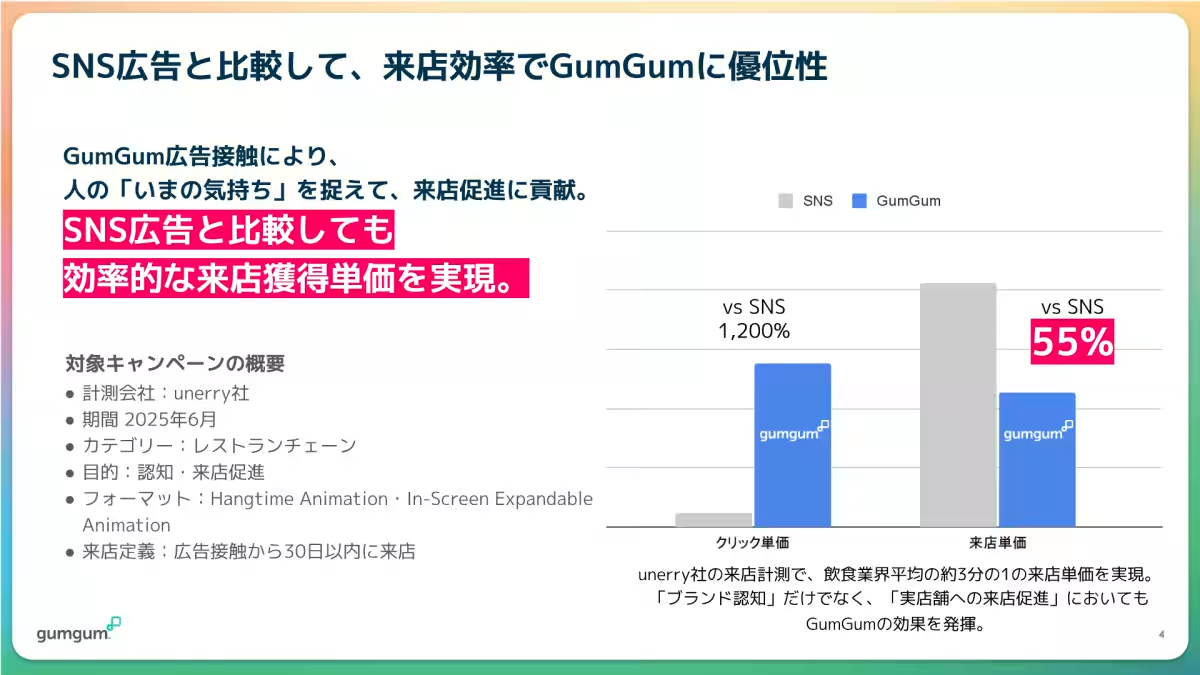
One illustrative case study involves the Shabu-You restaurant chain, which utilized the In-Store Visit Measurement Menu in a recent advertising campaign, supported by the Skylark Group and Japan Economic Advertising. Thanks to the pedestrian flow measurement provided by unerry, GumGum discovered that their rich media ads resulted in an in-store acquisition cost that was approximately one-third that of the industry average. Furthermore, the results indicated a more efficient generation of store visits compared to social media advertising campaigns.
This indicates that GumGum’s ads do more than just raise brand awareness or pique interest; they effectively promote actual store visits.
Insights from Shabu-You
Tomoko Okada, Director of Japanese Cuisine Development at Skylark Holdings: "This evaluation confirmed that we achieved a lower acquisition cost than social media campaigns, reinforcing the effectiveness of contextual advertising. We were able to quantitatively grasp a pathway that was previously difficult to visualize, marking significant progress for our future marketing optimization."
Understanding Consumer Mindsets
Many consumers often engage with various types of content before they clearly express intent to purchase products or services. They exist in a state of curiosity, where they might not be directly searching for information but are open to seeing advertisements that capture their attention. GumGum identifies this state as "mindset," focusing on consumers' psychological states and interests at specific moments.
Advertising effectiveness can be significantly influenced by both the target audience and the timing of the ads regarding these mindsets. To cater to this, GumGum utilizes contextual technology that analyzes web content to deliver ads aligned with consumer circumstances. Furthermore, it employs attention metrics to determine how much time users spend engaging with ads, optimizing ad placements and creative strategies.
The newly launched In-Store Visit Measurement Menu aims to quantify how these ad exposures lead to decisions that result in store visits, underpinned by pedestrian flow data analysis.
Future Prospects
Moving forward, GumGum and unerry plan to continue offering solutions for brands and agencies that own physical locations, aiming to capture the multifaceted effects of contextual advertising comprehensively. By visualizing advertising effectiveness from both online and offline perspectives, they aim to support brands in making well-informed marketing decisions.
In addition to Japan, they are looking towards global markets including North America, envisioning a new approach to advertising that combines contextual experiences with real-world actions.
Comments from GumGum
Kenzo Selby, Managing Director of GumGum Japan: "This partnership with unerry is an important validation of our long-held belief that contextual targeting, aligned with user mindsets, can lead to actual behavioral change. Our findings reaffirm that ads delivered in the right context have a positive influence on consumer actions without diminishing their experiential value, which we aim to continuously prove across various in-store purchasing scenarios."
Comments from unerry
Ryan Imaizumi, Chief Evangelist at unerry: "We're thrilled to collaborate with GumGum, which leads the way in contextual advertising globally, to widely demonstrate the value of our consumer flow measurement. This partnership enables us to visualize results in a way that has not been possible before, presenting an unprecedented solution for advertisers that will certainly become a standard for appealing to consumers moving forward."
About unerry
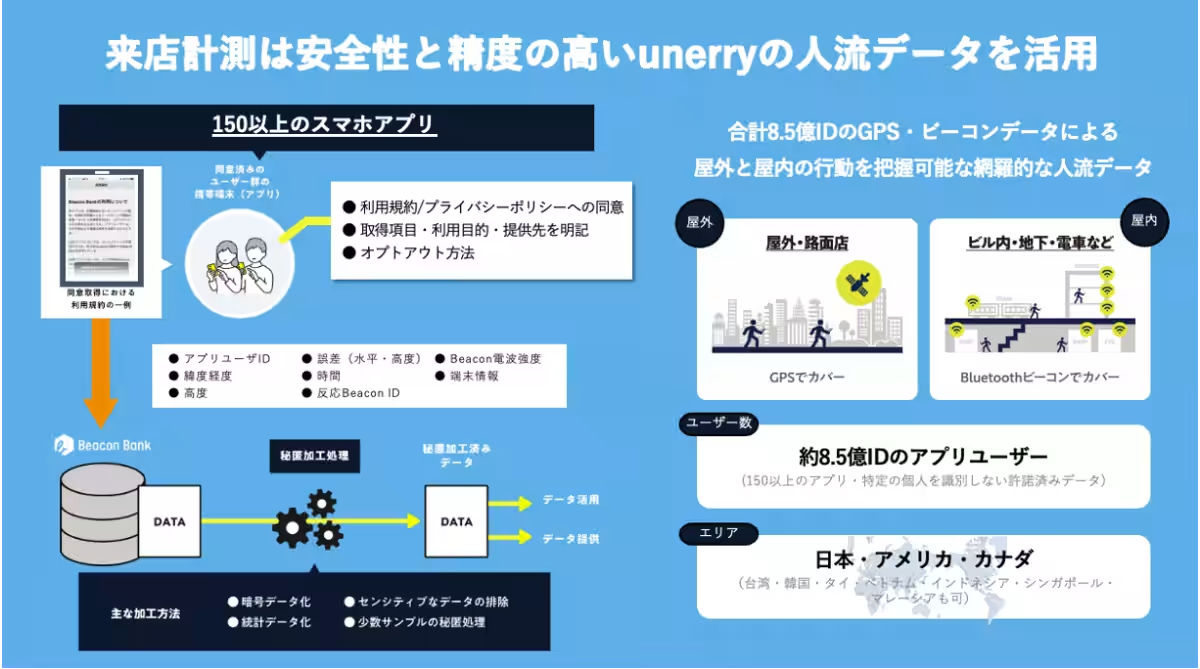
Founded in 2015, unerry operates the real-world behavior data platform Beacon Bank, using GPS and beacon technology to analyze pedestrian flow data from approximately 150 smartphone applications, yielding about 850 million IDs, with around 240 million from Japan. Their mission, "Creating a pleasant future with data,” encompasses OMO marketing support and initiatives aimed at building smart cities. More information can be found at unerry.co.jp.
About GumGum
GumGum is a digital advertising platform that connects people and brands through the power of context. By employing advanced contextual analysis that utilizes natural language processing and image recognition technologies, they create a healthy advertising environment without utilizing personal data. Established in California in 2008 and serving in 19 countries worldwide, GumGum has been active in Japan since 2017, aiding numerous brands that prioritize their brand value.
If you have any inquiries about this initiative, please reach out to:
GumGum Japan
Email: [email protected]
Website: gumgum.com

Topics Consumer Products & Retail)





【About Using Articles】
You can freely use the title and article content by linking to the page where the article is posted.
※ Images cannot be used.
【About Links】
Links are free to use.