



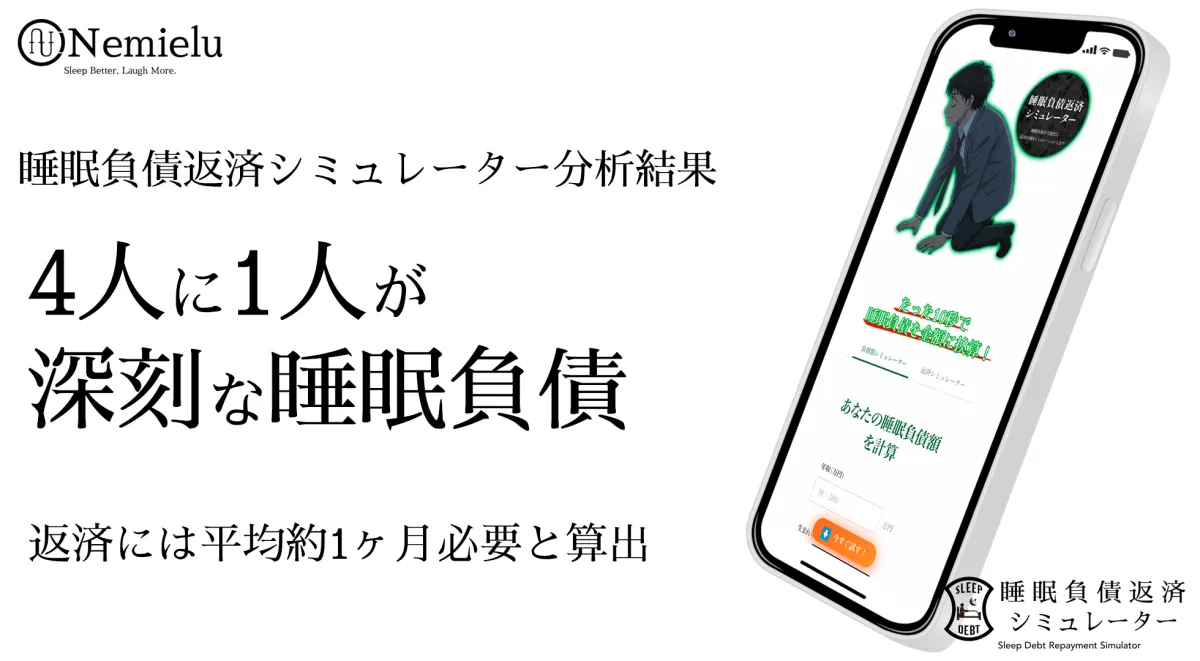
Astonishing Sleep Debt Statistics Reveal Challenges for Working Generation
Understanding the Seriousness of Sleep Debt Among Workers
Recent findings from Nemiel Corporation in Shinjuku, Tokyo, have shed light on a worrying trend regarding sleep debt among the working population. Through data collected using their ‘Sleep Debt Repayment Simulator’, the company has revealed that one in four individuals in the workforce is grappling with significant sleep debt. The analysis indicates that, even with efforts to improve their sleep duration, it could take an average of 29 days to recover fully from the deficit.
Sleep Debt Index and Its Implications
The Sleep Debt Index (SDI) is a crucial measure that calculates the gap between ideal and actual sleep duration. An average SDI of 1.3 hours demonstrates the extent of sleep deprivation affecting many workers, bringing attention to the correlation with daily fatigue, mood fluctuations, and diminished job performance.
In this recent survey, 25% of respondents were found to experience severe sleep debt (SDI ≧2 hours). This level of sleep deprivation is alarming and underscores the importance of understanding the health risks associated with subpar sleep habits.
Age Demographics of Affected Workers
The analysis reveals that individuals in their twenties and thirties represent the majority of the respondents (over 54.4%). This indicates that the younger working demographic is not just interested in their sleep patterns but also possesses a heightened awareness of the potential dangers linked to sleep insufficiency.
The data presents a crucial insight into how this age group is continually striving to establish their career while simultaneously managing their health, embodying a growing concern about balancing work-life dynamics.
Critical Health Risks Indicated by the Survey
Digging deeper into the survey results, it is evident that the average score on the sleep debt assessment questionnaire was 9.72 points. This score places approximately 90% of respondents in a high-risk category for health issues associated with chronic sleep deprivation—an eye-opening statistic that signifies the urgent need for intervention.
Out of all the respondents, only one individual scored below 2 points, which places them in a low-risk category. This emphasizes that nearly everyone else is at risk due to inadequate sleep, potentially leading to long-term health consequences.
Expert Commentary and Future Directions
Mitsuhiro Matsumoto, CEO of Nemiel Corporation, commented on the results, emphasizing that sleep debt often goes unnoticed or is perceived as merely feeling
Topics Other)
【About Using Articles】
You can freely use the title and article content by linking to the page where the article is posted.
※ Images cannot be used.
【About Links】
Links are free to use.