



Unlocking the Optimal Timing for English Vocabulary Learning Through Neuroscience Insights
Exploring the Timing of English Vocabulary Practice
Recent studies conducted by a team from Waseda University, along with scholars from Toyama University, Tohoku University, Tamagawa University, and the University of Tokyo, have shed light on the optimal timing for English vocabulary practice during communication activities. The groundbreaking findings reveal crucial differences between practicing vocabulary before and after engaging in dialogues.
Key Findings of the Study
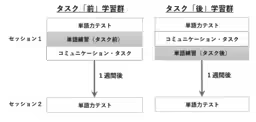
The research represents a pioneering effort in understanding how the timing of vocabulary learning impacts both memory retention and neural synchronization during conversations. Notably, the study showed that practicing vocabulary before engaging in dialogue leads to improved retention of words, while practice after conversational tasks fosters better synchronization of brain activity, enhancing mutual understanding among participants.
One significant outcome is that vocabulary practice conducted before a task can maintain its effect even a week later, which is vital for accurate word knowledge retention. Moreover, pairs with higher synchrony in brain activity exhibited better learning outcomes, highlighting the importance of collaborative learning through dialogue.
The Implications for Educators
This research has critical implications for educational practices. It suggests that the timing of vocabulary instruction should be flexible, depending on whether the learning goal is to ensure accurate knowledge or to enhance communication processes. This insight urges educators to consider the specific objectives of each lesson when deciding whether to conduct vocabulary practice before or after a communicative task.
Background of the Study
In the context of language education, educators have long debated the optimal timing for vocabulary practice—before or after communication activities. While pre-task vocabulary training prepares learners for tasks, it risks reducing engagement to mere mechanical repetition. Conversely, post-task practice potentially reinforces the vocabulary used during the dialogue.
Led by Associate Professor Yuichi Suzuki from Waseda University, the team included Professors Takayuki Nozawa from Toyama University and Takumi Uchihara from Tohoku University, among others. Together, they tested 80 Japanese English learners divided into 40 pairs to assess the effects of vocabulary practice timing on learning outcomes.
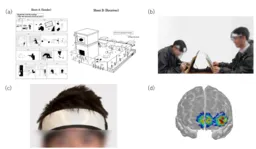
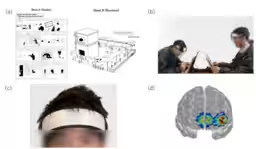
Utilizing functional near-infrared spectroscopy (fNIRS) technology to measure brain activity, the researchers analyzed inter-brain synchronization between pairs during conversations. They discovered that practicing vocabulary before a task enhances retention, while practicing post-task boosts brain synchronization.
Methodology and Results
The experiment involved learners engaging in an information exchange task, where one learner described an image depicting a spy’s route while the other summarized the information visually. The results demonstrated that those who practiced vocabulary before the task performed better in a follow-up test conducted one week later, using words more accurately.
On the other hand, brain activity measurements revealed that the group practicing post-task exhibited higher synchronization in the left lateral prefrontal cortex, associated with language processing. This suggests that engaging in a task beforehand may promote collaborative problem-solving, facilitating easier neural synchronization.
Moreover, higher synchrony in the social cognition-related medial prefrontal cortex correlated with better vocabulary learning outcomes. This reinforces the notion that social interactions during learning significantly contribute to educational effectiveness.
Future Directions
Given that this research was conducted in a controlled environment, further studies in real classroom settings are necessary to assess whether similar effects can be observed over extended periods. Detailed analysis of recorded conversations could reveal which types of dialogues most strongly foster brain synchronization and learning outcomes, providing more specific instructional strategies.
Conclusion
This research exemplifies the potential for neuroscience to inform language education. By understanding how the timing of vocabulary practice influences both learning outcomes and brain activity during communication, educators can tailor their instruction to meet specific learning goals, whether it be accurate vocabulary usage or the enhancement of collaborative communication skills. As educators reflect on the primary objectives of their lessons, they can strategically choose when to position vocabulary practice, leading to more effective and engaging learning experiences.
Topics Other)
【About Using Articles】
You can freely use the title and article content by linking to the page where the article is posted.
※ Images cannot be used.
【About Links】
Links are free to use.