



Hitachi to Release the Comprehensive Guide on Physical AI in 2026
Hitachi's Upcoming Book on Physical AI
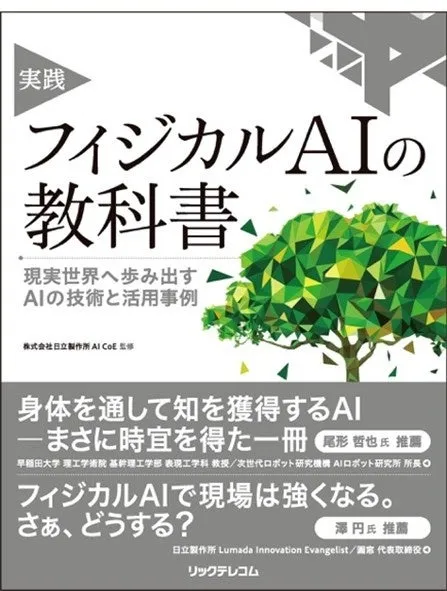
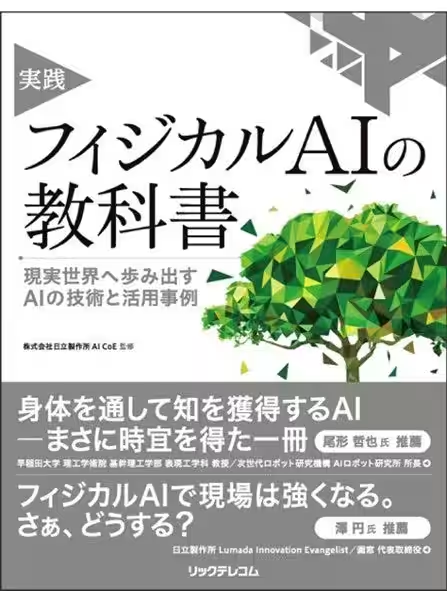
Hitachi Ltd. plans to release a new book titled The Practical Textbook of Physical AI in late May 2026, under the supervision of the AI Center of Excellence (AI CoE) within the Hitachi Group. This book aims to elucidate the intricate relationships between advanced AI technologies and the management of social infrastructure, illustrating how these innovations can provide significant benefits to various industries.
With Hitachi's directive under its management plan Inspire 2027, the company is focusing on leveraging its long-standing expertise in IT and Operational Technology (OT), combined with profound domain knowledge in AI, to create comprehensive innovation in society through its solutions, known as Lumada 3.0. A key contributor to this growth is HMAX by Hitachi, a suite of next-generation solutions designed to enhance operational efficiency and autonomy in mission-critical environments by integrating IT with OT. This integration is where Physical AI plays its vital role, bridging the gap between advanced analytical judgments and precise on-site action, proving essential in addressing urgent social issues like labor shortages and aging infrastructure.
AI technology has progressed significantly, moving from Perception AI and generative AI into a realm where AI agents are being developed that can autonomously devise procedures to achieve assigned tasks. Currently, there is immense interest in Physical AI, which deeply understands the real world and generates value through action, standing at the forefront of this evolution.
This publication follows the successful release of The Practical Textbook of AI Agents, which launched in October 2025 and garnered positive feedback. This new textbook is packed with representative case studies demonstrating HMAX's tangible achievements within the social infrastructure and industrial sectors. It systematically presents Hitachi's insights and practical know-how as it strives to cultivate 'world-class users of Physical AI'. It covers fundamental concepts, supporting base technologies, and a variety of use cases across essential disciplines such as manufacturing, logistics, railways, and power sectors.
All professionals interested in the implementation and business application of Physical AI, including those exploring the general concept or how it can serve corporate strategies, will find this book a vital resource.
Target Audience
The book appeals to a diverse group of readers, including:
- - Individuals interested in the concept, design, and implementation of Physical AI, along with real-life use cases and examples.
- - Business strategists looking to harness Physical AI in their operations.
- - Executives and project leaders considering the adoption and utilization of Physical AI.
- - System engineers and developers involved in designing, developing, and implementing Physical AI technologies.
- - Researchers and students keen on understanding the latest developments in AI technology and its social applications.
Contents Overview
The book systematically explores the foundational concepts of Physical AI, its underlying technologies, and relevant use cases:
1. What is Physical AI?
2. Foundation Technologies and Architecture of Physical AI
3. Use Cases of Physical AI in Industry
4. Future Prospects
Publication Information
- - Title: The Practical Textbook of Physical AI - Walking into the Real World: Technologies and Use Cases
- - Supervising Body: Hitachi Ltd. AI CoE
- - Publisher: Rick Telecom
- - Price: ¥3,520 (tax included)
- - ISBN: 978-4-86594-476-1
- - Format: B5 Variant
- - Pages: 312
- - Release Date: Late May 2026
- - Product Pages:
- Amazon
Related Websites
Contact Information
For inquiries related to Hitachi's AI initiatives, please contact the AI CoE HMAX & AI Center Secretariat through their contact form.
Topics Consumer Products & Retail)
【About Using Articles】
You can freely use the title and article content by linking to the page where the article is posted.
※ Images cannot be used.
【About Links】
Links are free to use.