



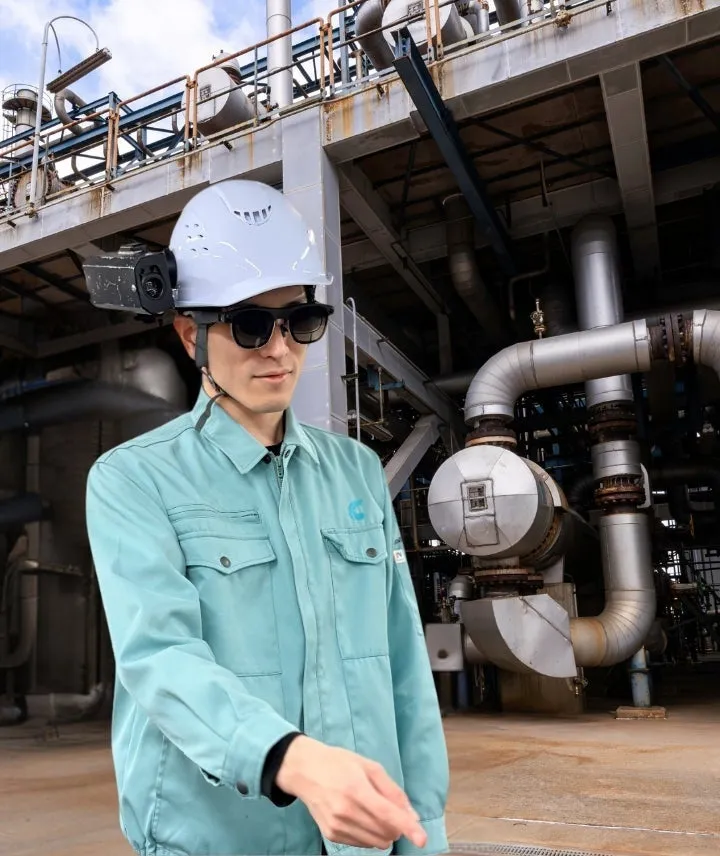
NeoRealX and Partners Introduce Revolutionary AR Laser Gas Visualizer for Enhanced Safety
A Game-Changer in Gas Leak Detection: The Laser Gas Visualizer
In an innovative collaboration, NeoRealX Co., Ltd., headquartered in Minato, Tokyo, has teamed up with ENEOS Globe Corporation, New Cosmos Electric Co., Ltd., and Tokyo Gas Engineering Solutions Corporation to create a groundbreaking safety support system called the Laser Gas Visualizer. This system leverages augmented reality (AR) and laser technology to make the hidden dangers of gas leaks visible.
The Urgency of Addressing Gas Leaks
Gas leaks pose invisible threats in urban environments, chemical plants, and day-to-day activities. With the increased use of combustible and toxic gases, the potential risks of explosions and poisonings necessitate the need for advanced detection systems. Traditionally, various gas detectors have been employed, with more recent advancements involving remote laser-based detection devices. However, to accurately assess the scenario of a gas leak, it’s crucial to estimate the gas dispersion from changing measurement data, which heavily relies on the experience and judgment of skilled inspectors.
Moreover, social issues such as aging infrastructure and a shortage of skilled technicians highlight the urgent need for smart safety technologies that allow non-experts to efficiently identify gas leaks. This is especially vital for gas companies, plant operators, and those involved in infrastructure inspections, where increased efficiency and safety on-site are paramount.
The Power of Laser Detection Technology
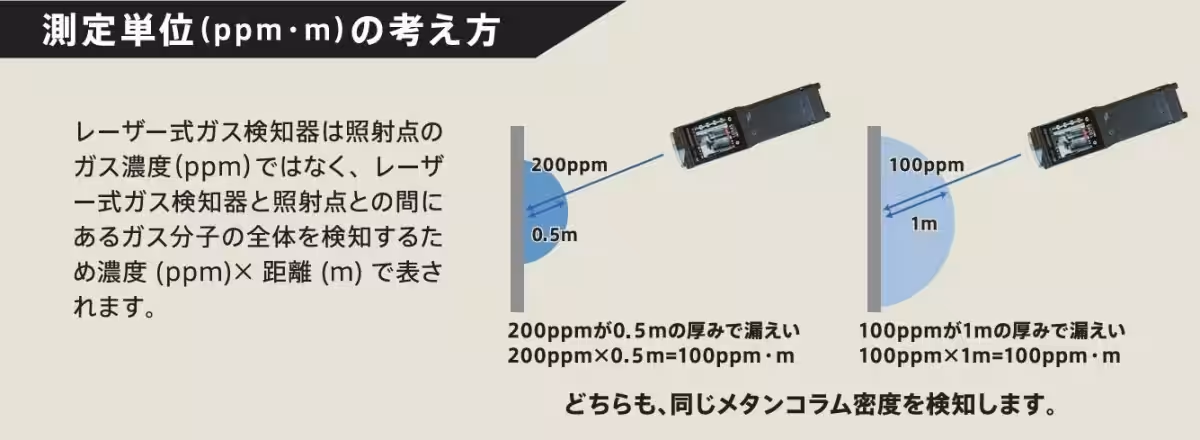
Through the use of tunable semiconductor lasers and absorption spectroscopy, the presence of methane can be detected with high sensitivity along the laser path. This technology is gradually being adapted for other gases as well. However, while laser gas detectors have the remarkable capability to detect leaks from a distance, the output is merely numerical data pertaining to gas concentration along the light path. This does not provide a three-dimensional representation of gas spread in a work environment.
Transforming Data into Intuitive Information
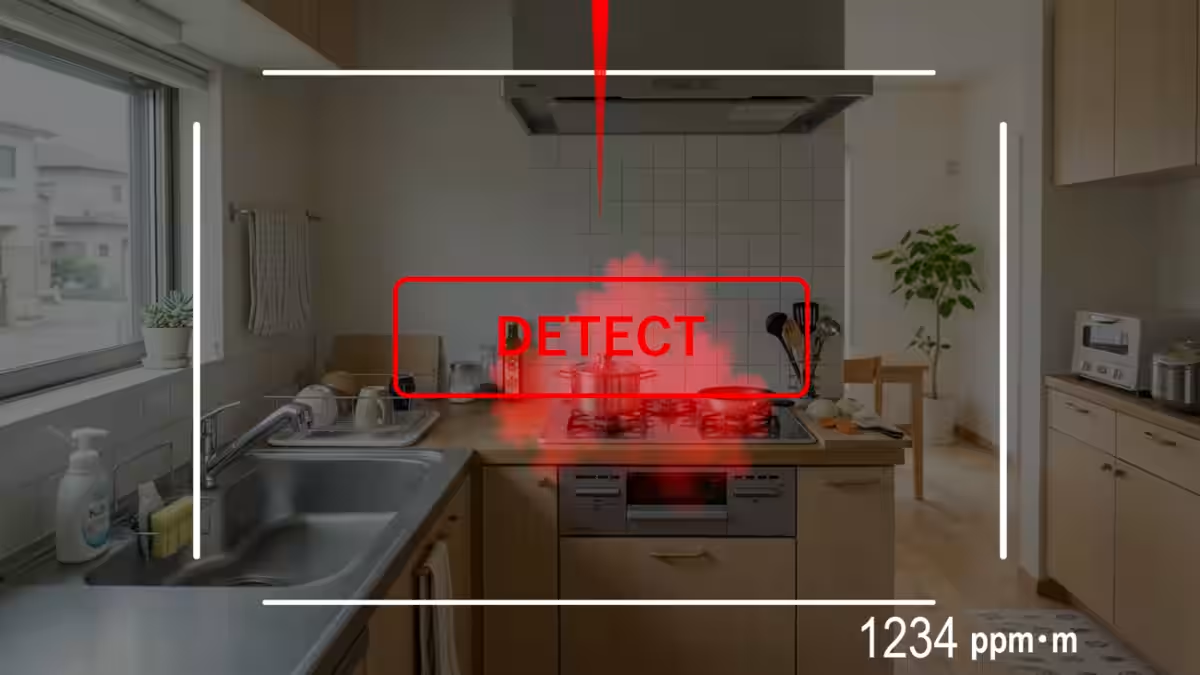
The essence of the new technology lies in its ability to convert linear detection information from the laser into intuitive spatial data for the operator. By integrating AR technology with laser gas detection, the Laser Gas Visualizer visualizes gas leaks in real time. It allows inspectors to operationalize the data obtained from remote detection as spatial information that can be interpreted immediately on-site, thus enhancing inspection precision and efficiency.
How the Inspection Process Works
The inspection process with the Laser Gas Visualizer can be summarized as follows:
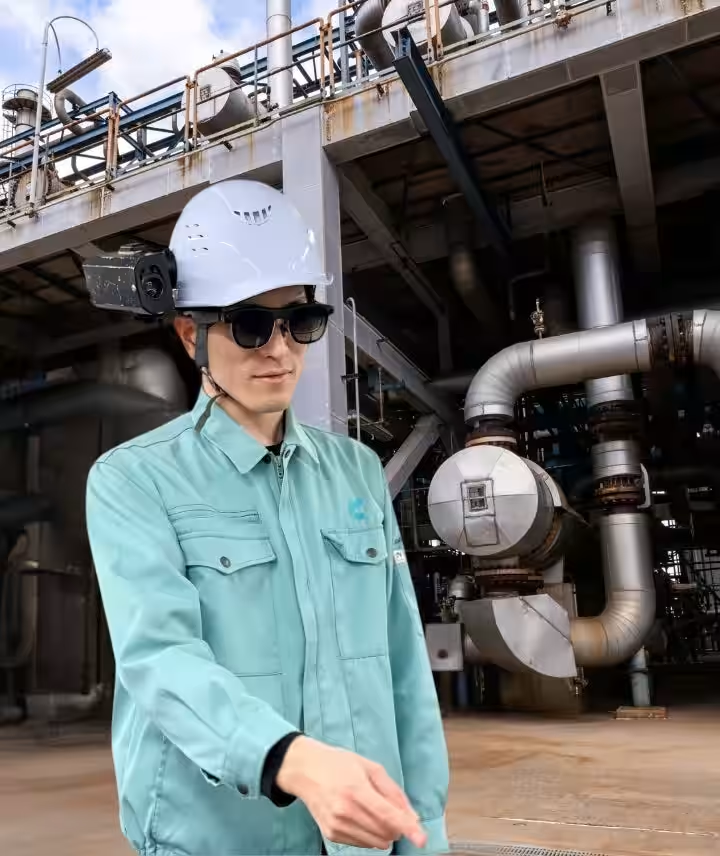
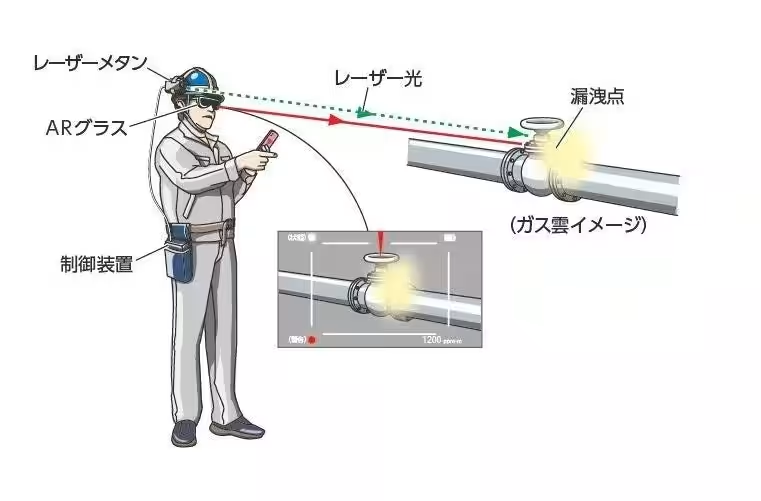
1. Inspectors don helmets equipped with laser gas detectors and align their line of sight with the laser firing direction, ensuring they can perform inspections hands-free.
2. Based on the data collected, information indicating the presence of gas is superimposed onto their field of vision via AR glasses.
3. The displayed information maintains its spatial relevance as the operator moves, allowing efficient gas leak exploration based on indicative positions.
This innovative approach shifts the reliance from experienced professionals to a more intuitive and reproducible method of identifying gas leaks, aligning with NeoRealX's vision of making the invisible visible through XR technology. The invisibility of gas leaks inherently contributes to accidental hazards, and this system aims to help workers make informed judgments by spatially visualizing these hidden dangers, thereby preventing accidents before they occur.
System Overview
The Laser Gas Visualizer system intricately ties together laser gas detectors with AR glasses, achieving a real-time visualization of gas leaks. The detected information is processed instantly for clear, intuitive display of gas presence within the operator's field of view. This advancement transforms previously dependent numeric and experiential understanding of gas leak locations into a visually comprehensible format. Additionally, voice guidance and display control indicate appropriate inspection speeds and caution points, supporting safe and efficient inspections irrespective of the operator's experience level.
This system does not aim for precise three-dimensional concentration distribution analysis but is rather designed as a practical aid that proactively assists in recognizing leak presence and guiding exploration and decision-making.
Future Directions
The Laser Gas Visualizer addresses a critical need in the gas detection sector by merging the latest technologies into a coherent solution for gas leak visualization. The focus now turns to conducting field tests aimed at its swift practical application. There are also plans to expand its application to other gas types, including ammonia, which can be detected with laser technology. Furthermore, the endeavor is to develop this technology into a solution that contributes to the prevention of gas leak accidents, thus enhancing safety in infrastructure and industrial sectors both domestically and internationally.
Topics Other)



【About Using Articles】
You can freely use the title and article content by linking to the page where the article is posted.
※ Images cannot be used.
【About Links】
Links are free to use.