



Exploring the Realities of U-Turn and I-Turn Entrepreneurship in Rural Japan
Exploring U-Turn and I-Turn Entrepreneurship in Rural Japan
In recent years, the concept of U-turn and I-turn entrepreneurship has been gaining traction in Japan, spurred by diverse work styles and a desire for independence. A survey conducted by HappyCars, a car purchasing company based in Kamakura, Kanagawa, aimed to uncover the realities of starting a business in rural areas for those who have relocated from urban settings.
Survey Overview
The study involved a sample size of 1,002 participants: 566 current entrepreneurs, 186 past entrepreneurs, and 250 individuals considering the move. They were assessed during a brief window from February 13 to February 16, 2026, through an online platform named PRIZMA. The objective was clear: to identify the motivations, challenges, and outcomes of U-turn and I-turn entrepreneurship.
Key Survey Findings
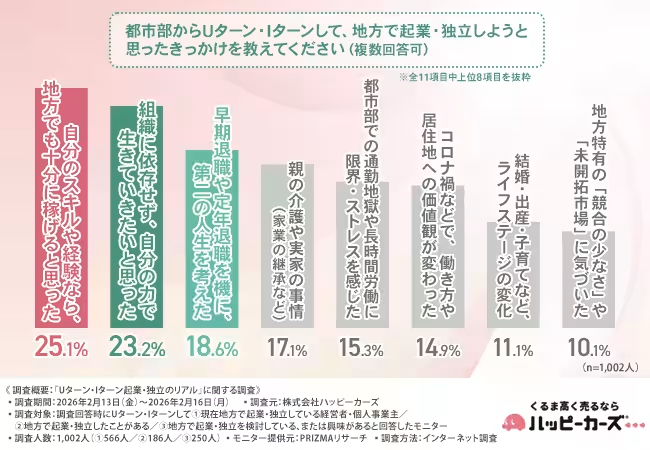
As we explore the motivations behind this shift to rural entrepreneurship, one primary reason stands out: over 25% of respondents indicated that they believed their skills were sufficient to earn a reasonable income in a rural setting. This sentiment shows that many are not just seeking a slower lifestyle but view this transition as a calculated business strategy.
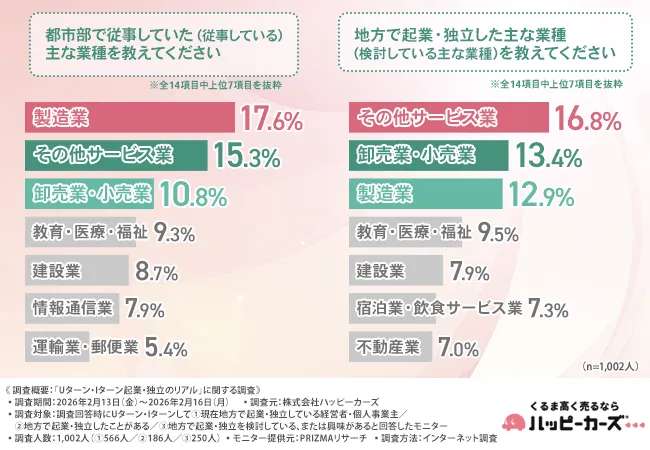
The survey revealed that a significant portion of newly established businesses in rural areas are in the services sector (16.8%) and retail (13.4%). The appeal of services and retail is rooted in the consistent demand from local consumers, making these options viable for low-risk startups. Added to that is the manufacturing industry, which continues to attract entrepreneurs who wish to engage in production activities.
Demographics of Entrepreneurs
Interestingly, many entrepreneurs transitioning to rural settings hail from the manufacturing and service industries. Their expertise in operations management and interpersonal communication forms a strong foundation for successfully running a local business. Most impactful is their observation that only a small fraction of respondents sought significant startup investments. Approximately 70% of entrepreneurs claimed their initial investment was less than ¥5 million, which illustrates a trend towards small-scale, manageable investments.
Starting Small: The New Norm
When probing into the employee structure of these rural businesses, 34% of respondents reported being sole operators, while 26.9% had between two and five employees. This indicates a trend toward lean operations where initial costs are minimized, enabling higher profit retention.
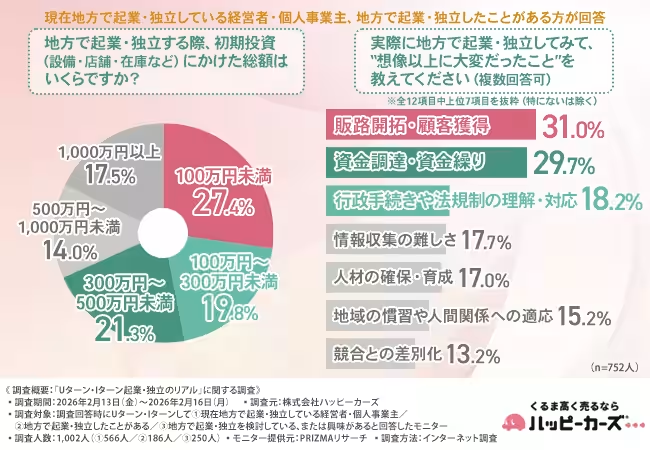
Participants were also asked about their initial capital investment, and a staggering 70% reported an expenditure of under ¥5 million to start their ventures. This trend underscores a preference for low-cost businesses, minimizing financial risks typically associated with larger investments.
Despite this favorable landscape, several entrepreneurs noted challenges they encountered when establishing their businesses. The top obstacles included difficulties in customer acquisition and funding, each reported by over 30% of participants, illustrating the dual focus on operational and financial challenges in this context.
Potential for Growth
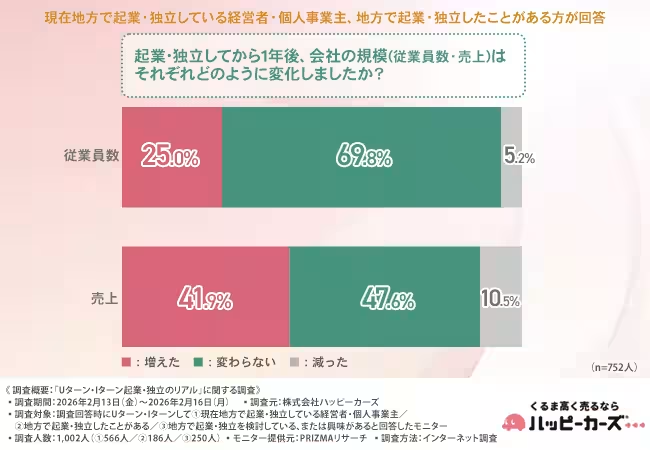
The survey also assessed the growth trajectory of these businesses one year after establishment. Of all respondents, around 41.9% saw an increase in revenue, while the majority reported stability in their operations. This resilience suggests that the low initial investment strategies adopted by rural entrepreneurs are proving effective in sustaining business viability.
Attractiveness of Rural Business
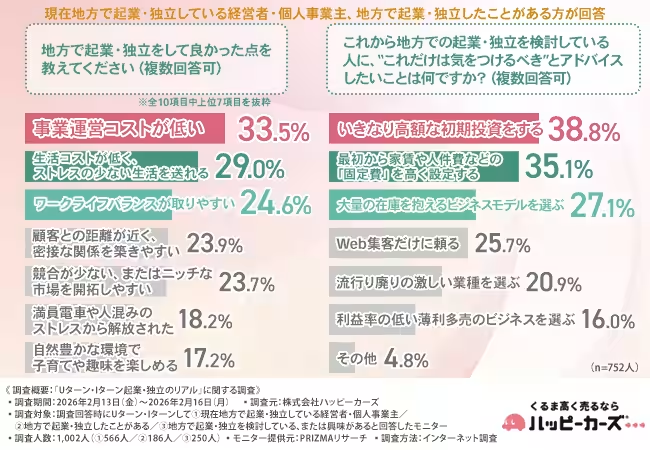
When asked about the benefits of their current entrepreneurial ventures in rural areas, cost advantages emerged as the most significant factor. Participants highlighted lower operational costs, including rent and personnel expenses, as game changers for business sustainability. An overwhelming majority emphasized the quality-of-life improvements derived from better work-life balance, lower living costs, and reduced stress levels.
Lessons from Experience
Experienced entrepreneurs offered practical advice to newcomers: avoid high initial investments, keep fixed costs low, and refrain from accumulating excessive stock. Their recommendations underscore the importance of agile operations tailored to local market needs to mitigate potential financial pitfalls.
Conclusion
In conclusion, this survey sheds light on the genuine potential and complexities of U-turn and I-turn entrepreneurship in Japan. From the motivations that propel individuals to take the plunge into rural business ownership to the lessons learned from their experiences, the findings pave the way for a new understanding of local business dynamics. Getting started on the right foot with effective cost management, resilient operational strategies, and a deep understanding of local demand can indeed foster a thriving entrepreneurial environment in rural Japan.




Topics Other)
【About Using Articles】
You can freely use the title and article content by linking to the page where the article is posted.
※ Images cannot be used.
【About Links】
Links are free to use.