



Discover the Happiness and Livability Rankings of Cities in Akita Prefecture for 2025
Exploring the Happiness and Livability Rankings in Akita Prefecture for 2025
Daito Kentaku Co., Ltd., based in Minato, Tokyo, has conducted one of the largest surveys on living satisfaction in Japan. The results have been compiled into two significant reports: the "2025 Happiness Ranking of Towns in Akita Prefecture" and the "2025 Rankings of Cities People Want to Continue Living In - Akita Prefecture Edition".
Happiness Rankings
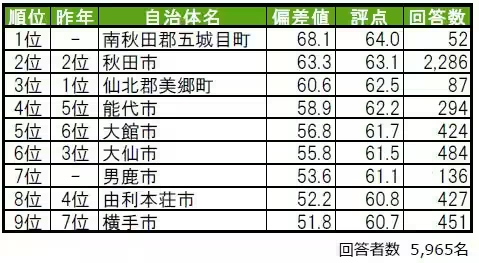
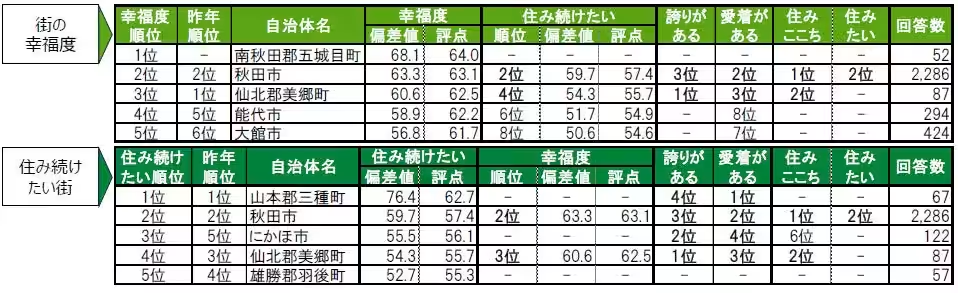
The top city for happiness is Minamiakita-gun Goshonome Town, making its debut at number one. Following closely is Akita City, which has retained the second position for four consecutive years. Rounding out the top three is Senboku-gun Misato Town.
This year marked the first time Goshonome Town could be evaluated, with its tally of responses exceeding 50 after being excluded from last year's rankings due to a lower response rate. Akita City is notable for receiving high marks in "living comfort" despite coming in second overall. Interestingly, it’s significant to note that among the top three, two towns are classified as rural, highlighting a common trend in smaller communities. Another noteworthy development is that Oga City, which did not rank last year due to insufficient data, has made an impressive comeback at the seventh position this year.
The ranking methodology for happiness is based on accumulated data from 2021-2025, reflecting responses on a scale indicating overall happiness ranging from very unhappy to very happy. Only municipalities with at least 50 responses are considered in the rankings, emphasizing the importance of community engagement in determining these results.
Livability Rankings
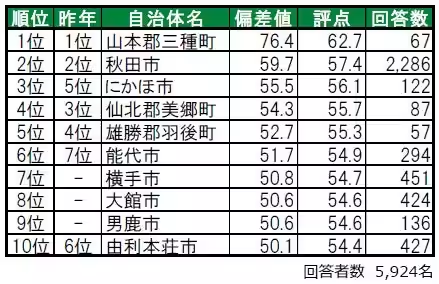
Conversely, the rankings for the cities where residents would like to continue living have a familiar face at the top: Sanbongi Town in Yamamoto District, achieving first place for the fourth consecutive year. Similarly, Akita City has secured its spot at second place for five years in a row, while Nikaho City has climbed from fifth to third.
Sanbongi Town was the only location to receive a high score in the 70s, indicating exceptional livability and resident satisfaction. Meanwhile, Nikaho City indicates a strengthening desire from its residents to stay, reflecting a growing attachment to the area. Notably, several cities that previously did not disclose their rankings due to low scores have now successfully broken into the top ten: Yokote City at seventh, Odate City at eighth, and Oga City at ninth.
Similar to happiness rankings, the livability assessment stems from answers to the question of whether respondents wish to continue residing in their current city, using a score from 0 to 100 that mirrors personal sentiments about the place they call home.
Key Findings and Insights
Understanding these rankings involves recognizing that happiness is defined not solely by economic factors but by the perceived quality of life and individual contentment within a community. Even smaller towns have proven they can generate happiness levels that rival larger cities, presenting a more holistic view of what makes a location truly desirable. The importance of community ties and a nurturing living environment, especially reflected in the data, showcases Akita's unique charm and character.
This comprehensive survey, executed under the auspices of Macromill Co. and helmed by Ken Munemasa of Daito Kentaku's Rental Future Research Institute, comprises 5,965 responses from a diverse demographic within the Akita Prefecture. Gender demographics indicate a slight majority of women at 51.9%, with various age groups represented, ensuring that voices from all ages contribute to the reflections on happiness and livability.
Final Thoughts
As Akita Prefecture continues to evolve, these rankings offer both a reflection of current resident attitudes and insights into the potential future of community development. Fonting on the results, cities and towns may strategically focus on enhancing factors influencing happiness and desirable living conditions, thus enriching the lives of their residents for years to come.
Topics People & Culture)

【About Using Articles】
You can freely use the title and article content by linking to the page where the article is posted.
※ Images cannot be used.
【About Links】
Links are free to use.