



Analysis of Global English Proficiency Trends in 2025 Revealed by EF Index
Insights from the 2025 EF English Proficiency Index
On November 19, 2025, EF (Education First) published the latest iteration of its English Proficiency Index (EF EPI), marking an essential milestone in understanding global trends in English language skills. This comprehensive report assesses the English capabilities of adults in 123 countries and regions, revealing crucial insights for education leaders, policymakers, and learners worldwide.
Kate Bell, the author of the EF EPI, emphasizes English's importance as the leading global language, especially in navigating complex international relations. “In an era marked by burgeoning challenges across various sectors, English serves as a vital connector, enabling cross-cultural communication and collaboration,” she states.
An Overview of the 2025 EF EPI Findings
The 2025 index evaluates data from an unprecedented 2.2 million test-takers who utilized the EF Skills Evaluation Technology (EF SET), the largest free English testing platform globally. For the first time, the EF EPI assessments integrated advanced artificial intelligence technology from Efekta Education Group. This innovative approach allows for an evaluation of reading, listening, speaking, and writing skills, marking a significant leap in the accuracy and breadth of the proficiency assessment process.
Key Highlights
1. Top-Performing Countries
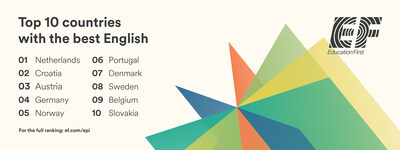
The Netherlands continues to top the rankings, followed closely by Croatia and Austria, which have made notable improvements. Germany also saw substantial advancement, securing the fourth position after remarkable progress.
2. Challenges in Speaking Skills
Speaking remains a vital yet challenging skill; over half of the countries revealed this as the weakest area of English proficiency among their populations.
3. Widespread Skill Variations
Significant disparities exist within many countries’ English skill levels, especially among those with generally higher proficiencies. Notably, the skills that rank as strongest or weakest can vary considerably across nations, indicating that no specific skill set is universally more complex.
4. Narrowing Gender Gaps
The gender gap in English proficiency continues to close across many regions, although a slight widening has occurred in the Middle East. This shift highlights the changing dynamics in language education and engagement between genders.
5. Youth Proficiency Trends
Contrary to expectations, younger adults under 25 are exhibiting lower English proficiency levels compared to older age groups in many countries, which raises concerns about educational outcomes for this demographic in the post-pandemic world.
6. Regional Insights
Europe has seen its proficiency plateau, while Asia reported the narrowest skill gap. In contrast, Latin America highlighted a broader age-related divided in skill levels, with Africa showcasing the most diverse proficiency range among its countries.
The Broader Implications
Beyond the rankings, the EF EPI delves into the connections between English proficiency, innovation potential, economic opportunities, and global collaboration. As nations adapt to new work and life contexts shaped by advancements in artificial intelligence, proficiency in English is increasingly recognized as crucial for engaging with key resources and innovations, many of which emerge primarily in English.
Conclusion
The publication of the EF EPI 2025 serves as both a mirror reflecting current language skills and a beacon pointing towards future educational needs. As we navigate this fragmented world, empowering individuals through English education may define success in a variety of fields—from personal growth to international cooperation. For further details and access to the full report, visit ef.com/epi.
Founded in 1965, EF is dedicated to breaking down barriers through language, education, and cultural exchange, while Efekta remains at the forefront of enhancing educational outcomes using AI technology.
Topics General Business)
【About Using Articles】
You can freely use the title and article content by linking to the page where the article is posted.
※ Images cannot be used.
【About Links】
Links are free to use.