



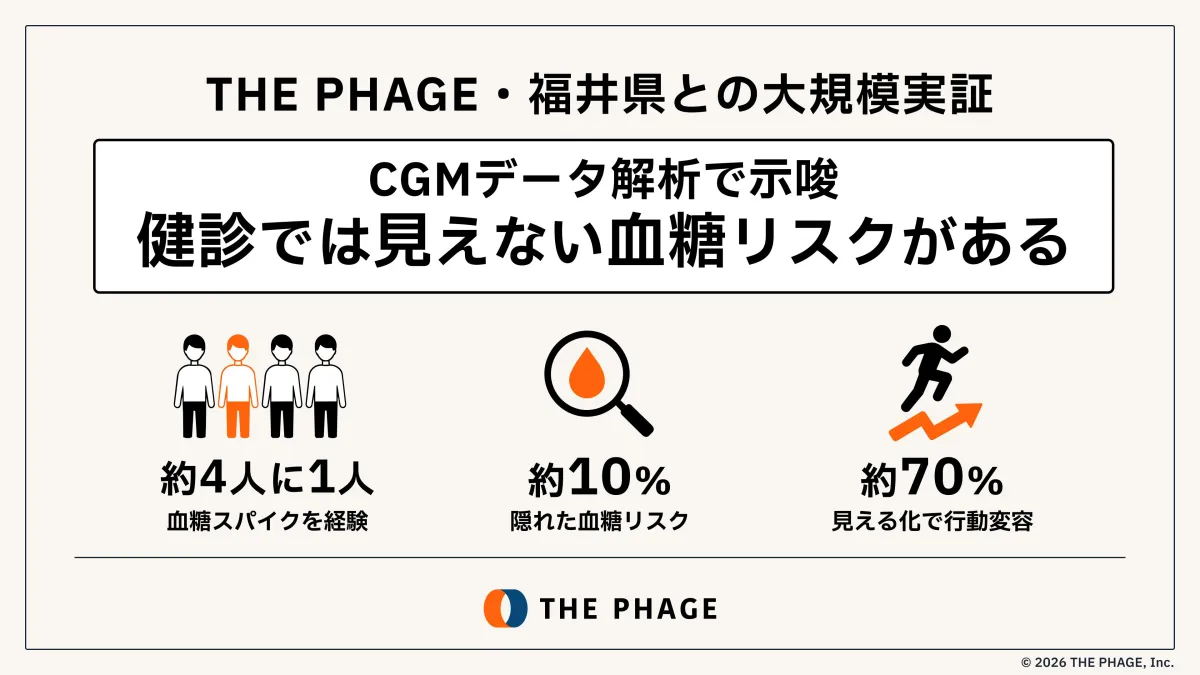
One in Four People Experience Blood Sugar Spikes: Results from THE PHAGE's Large-Scale Study in Fukui Prefecture
One in Four People Experience Blood Sugar Spikes: Results from THE PHAGE's Large-Scale Study in Fukui Prefecture
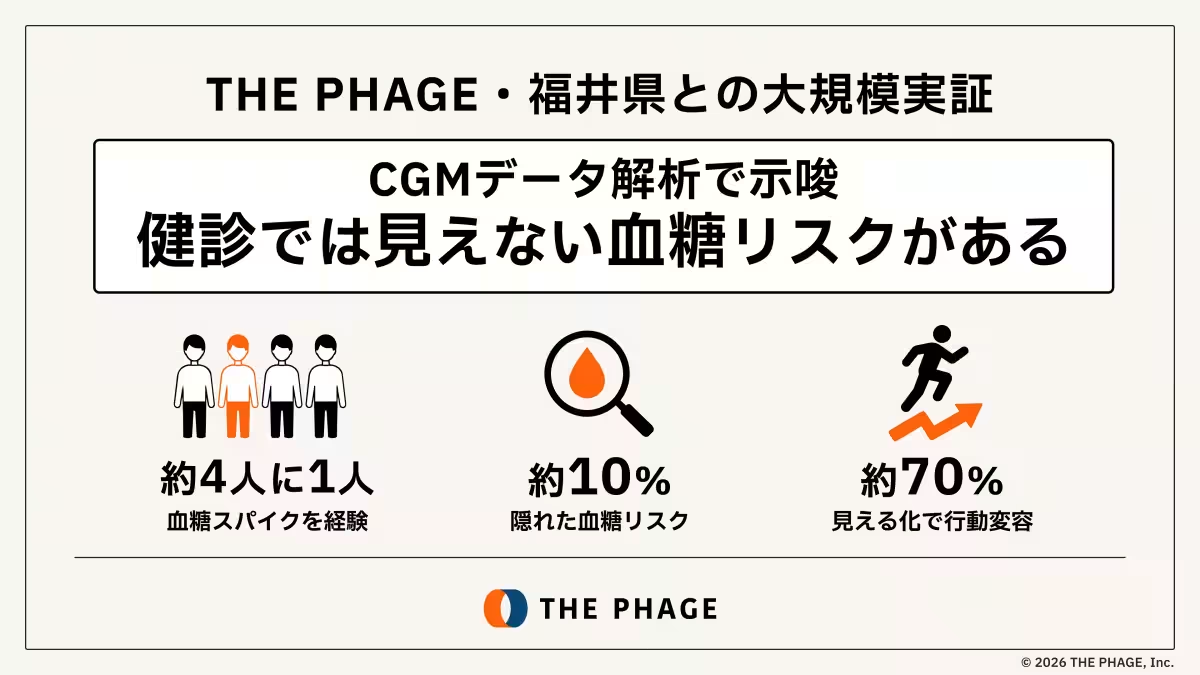
In recent findings released by THE PHAGE, an alarming statistic has emerged: one in four individuals are experiencing blood sugar spikes. Conducted in collaboration with Fukui Prefecture, this large-scale study has gathered comprehensive time-series data from over 4,000 participants who are non-diabetic or pre-diabetic. It sheds light on the critical conditions that were previously invisible to standard health screenings, opening the door to a new preventive health domain.
Overview of the Study
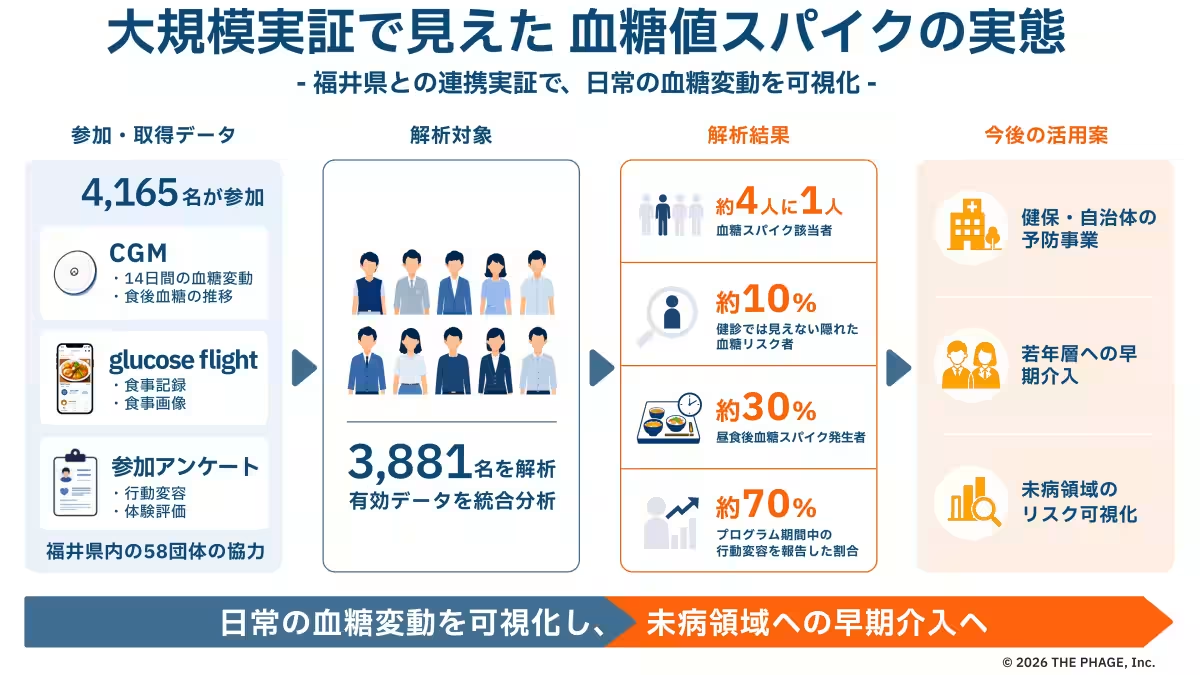
The study aimed to assess blood glucose fluctuations using advanced technology, specifically Continuous Glucose Monitoring (CGM) devices, which allow for in-depth monitoring of glucose levels over a two-week period. This is in stark contrast to standard health check-ups, which measure glucose levels at only a single point in time through blood tests such as HbA1c (Hemoglobin A1c) or fasting blood glucose. By using CGM technology, researchers were able to capture a comprehensive picture of participants' blood glucose levels as they went about their daily activities.
A total of 4,165 adult participants in Fukui Prefecture volunteered and wore the CGM devices, with usable data obtained from 3,881 individuals. This approach gathered significant evidence on the occurrence and implications of glucose spikes in the participants' daily lives.
Key Findings from the Study
Through careful analysis of the data collected:
- - Approximately 25% of participants experienced blood sugar spikes, defined as post-meal glucose levels reaching 200 mg/dL or higher on two or more occasions during the study period.
- - Among those categorized as 'pre-diabetic'—defined as a borderline level in regular health check-ups—about one-third of participants in their twenties also exhibited these spikes. For those in their thirties to fifties, nearly half faced similar spikes.
- - Perhaps the most compelling result indicates that around 70% of participants changed their dietary and lifestyle habits as a result of their involvement in the program, demonstrating the power of visible data in prompting behavioral changes.
Future Implementation: Blood Sugar Management Services
In light of the findings, THE PHAGE plans to roll out new blood sugar management programs aimed at corporate health insurance and local government health initiatives. Some key strategies include:
- - Young Adult Focus: Acknowledging the high rates of borderline risks found in young adults, proactive measures will be introduced before lifestyle habits become entrenched.
- - Personalized Health Guidance: By combining CGM monitoring with nutritionist feedback, participants will be better equipped to understand the relationship between their dietary choices and blood sugar levels. Follow-up support will ensure lasting changes are maintained.
- - Population Health Approach: The program aims to identify concealed blood sugar risk individuals within communities, enhancing preventative care measures and optimizing healthcare costs through data-driven approaches.
Significance and Future Developments
CEO Shohei Tokunaga of THE PHAGE emphasized the significance of this study, stating that it highlights the blood sugar risks that often go unnoticed in standard health assessments. He noted that to achieve the goals of proactive healthcare, we need systems that can detect lifestyle changes early on to prevent serious health complications.
Looking forward, THE PHAGE intends to collaborate further with food and pharmaceutical companies, as well as research institutions, to enhance public awareness regarding the significance of blood sugar data. This initiative not only serves to elevate personal health management but also contributes to the growing movement towards preventive healthcare at large.
The implications of this study are profound, urging both individuals and health organizations to pay closer attention to blood sugar health and heralding a new era for prevention-focused healthcare initiatives. Those interested in participating or learning more about the findings can refer to the official updates shared by Fukui Prefecture and THE PHAGE.
For more details, visit THE PHAGE.

Topics Health)
【About Using Articles】
You can freely use the title and article content by linking to the page where the article is posted.
※ Images cannot be used.
【About Links】
Links are free to use.