




Emerging Trends in Food and Restaurant Industry M&A Report and Strategic Shifts
Insights into the 2025 M&A Trends in the Food and Restaurant Industries
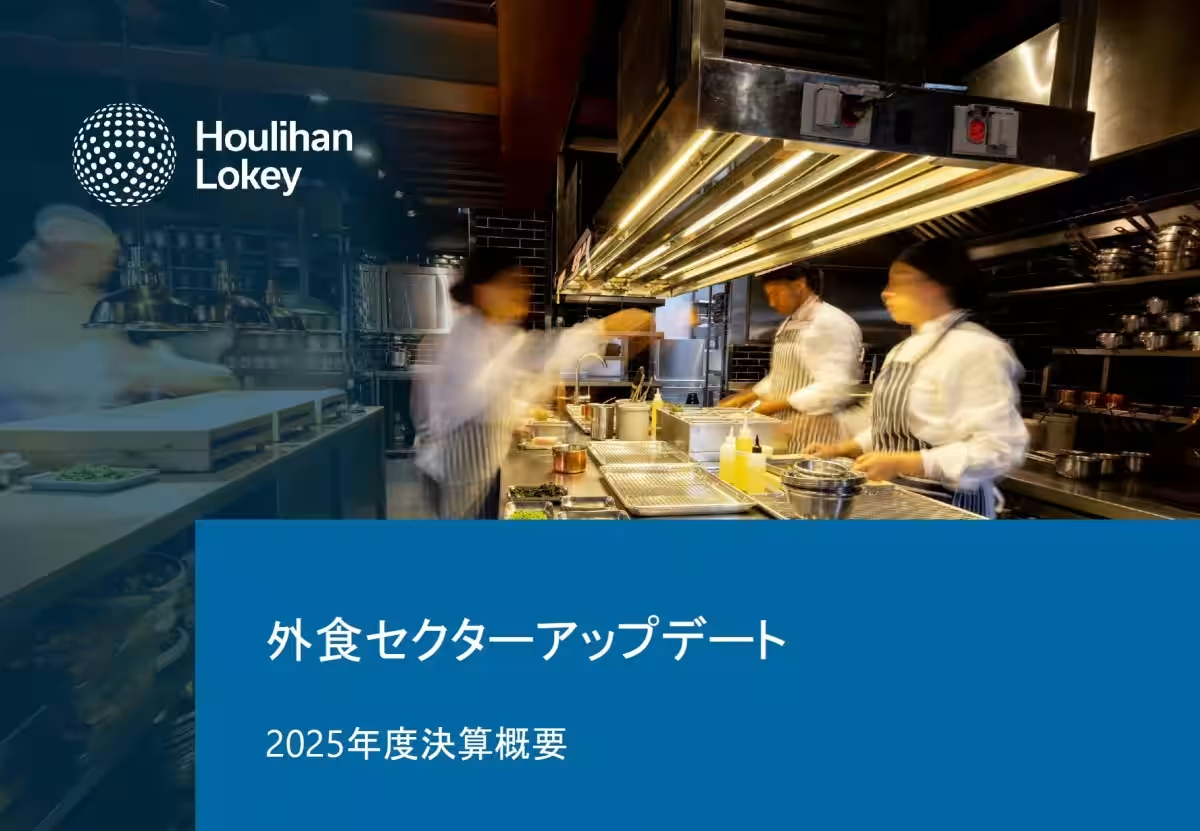
Houlihan Lokey, Inc., a leading investment bank located in New York, has released its sector report analyzing M&A activities in the food and restaurant industries. The report offers a fresh perspective on trends, driven by the latest financial insights and strategies that businesses will adopt moving forward.
Overview of Findings
Food Industry: Assessing Resilience Amid Rising Costs
The food industry has maintained a growth trajectory into 2025, primarily due to price adjustments that have been implemented. However, the effectiveness of these price increases in maintaining sales volume and managing rising raw material and logistics costs has led to a widening performance gap between companies. Major players such as Ajinomoto, Kikkoman, and Japan Tobacco (JT) have been praised for their global expansion strategies and high profitability. In contrast, sectors that are heavily reliant on domestic demand, such as dairy, flour, sugar, and instant noodles, have not achieved the same valuation levels.
The industry is shifting away from mere price adjustments and is being pushed toward innovative growth strategies. Companies are focusing on enhancing their product value, expanding lucrative offerings, and revising their business portfolios while being conscious of shareholder interests. Successful adaptations in the form of high-value product expansions and overseas growth are becoming critical to enhancing business worth in this evolving landscape.
Key Focus Areas: Value Addition over Basic Price Adjustments
As the effects of price revisions stabilize, firms that can maintain sales volume and profitability through high-value products and services will find themselves at a competitive advantage. Ajinomoto’s initiatives in healthcare and functional materials, as well as Morinaga Milk’s yogurt and bacteria business, illustrate how companies are carving out competitive niches by entering high-value areas of the food sector, gaining substantial recognition from the market.
Driving Value through International Growth
With domestic markets becoming increasingly saturated, sectors that have successfully tapped into international markets are receiving enhanced evaluations. Following the success of Ajinomoto, Kikkoman, and JT in global markets, other food companies are ramping up investments in overseas markets. For example, Morinaga Confectionery's major investments in U.S. frozen dessert companies reflect a new competitive axis formed by robust overseas business foundations.
Improving Capital Efficiency and Shareholder Value
Management is increasingly asked to prioritize capital efficiency, especially as investor activists exert pressure for enhanced returns. Companies like Ajinomoto, Meiji Holdings, and Yakult are under scrutiny, and this has prompted them to re-evaluate low-performing businesses and explore M&A opportunities aimed at capital optimization. Some companies are even considering going private as a response to these pressures.
Restaurant Sector: Shifting Focus to Quality Growth
The restaurant industry is also navigating through a transformative phase. While growth continues, driven by inbound demand and the effects of price adjustments, disparities among companies are widening due to rising labor and material costs. The days of mere price hikes as a strategy for revenue growth are coming to an end, signaling a shift towards valuing brand strength, customer experience, and strategic expansions.
Stock Performance Divergence Despite Business Growth
Many key restaurant companies have reported increased revenues and profits, yet stock performance has shown a polarized trend. Companies like FOOD & LIFE COMPANIES and Monogatari Corporation have seen substantial stock price increases, while others, despite positive earnings, such as Ousho Food Service, have experienced declines in stock value. The market’s evaluation has become more sophisticated, focusing on sustainability of growth and potential improvements in capital efficiency.
The Three Winds of Change Shaping the Restaurant Landscape
As the impact of price hikes stabilizes, many restaurant companies are pivoting from focusing solely on customer spending to prioritizing customer traffic. Brands like McDonald's Japan and Zensho Holdings are leveraging their strong reputation to increase visit frequency through applications and promotional strategies. Additionally, the ramen industry has thrived due to increased demand from inbound tourists, contributing to the growth of companies like FOOD & LIFE COMPANIES.
With rising investments in technology such as mobile ordering, self-checkout, and service robots, digital transformation is becoming a crucial element in enhancing competitive strengths.
M&A as a Core Growth Strategy
The year 2025 has also been marked by a flurry of M&A activity within the restaurant sector, with strategic deals primarily aimed at acquiring growth brands and strengthening portfolios. The acquisition of 'Norish' by Create Restaurant Holdings and the consolidation of the operator for 'Rokurinsha' by Matsuya Foods are just a few examples of the vibrant movements within the ramen segment. Meanwhile, international transactions, including the acquisition of an Australian steak chain by Colowide and sushi chains by Genki Global Dining Concepts, have expanded significantly as well. Private equity funds are also increasingly concluding exit deals, highlighting M&A as an established cornerstone of growth strategies for restaurants.
Conclusion
As the food and restaurant industries navigate these challenging yet dynamic landscapes of M&A, a greater emphasis on strategic innovation, customer experience, and international expansion will be essential for driving future growth and maintaining competitiveness in the market.

Topics Consumer Products & Retail)




【About Using Articles】
You can freely use the title and article content by linking to the page where the article is posted.
※ Images cannot be used.
【About Links】
Links are free to use.