



Women AI Initiative Japan Releases Groundbreaking Report on Female AI Workforce 2025
Women AI Initiative Japan Releases Groundbreaking Report on Female AI Workforce 2025
The Women AI Initiative Japan (WAIJ), based in Shibuya, Tokyo, has launched the first-ever 'Women AI Workforce White Paper 2025'. This report compiles findings from a nationwide survey of 1,116 women, revealing insights on women's engagement with AI technology, their learning needs, and the impact on career paths. The primary aim of this white paper is to establish foundational data for addressing social challenges and developing support strategies for women involved in AI.
Background of the Report
Japan's demographic shifts, including a declining birthrate and an aging population, have resulted in a shrinking labor force. In contrast, women's participation in the workforce is on the rise; as of June 2025, women's employment rates have reached 75.7%, according to the Ministry of Internal Affairs and Communications' labor survey. This indicates the crucial role women play in the socio-economic landscape.
However, many women are employed in administrative and service jobs that are more susceptible to automation. According to the Ministry of Economy, Trade, and Industry, an estimated surplus of 2.14 million workers in administrative roles will occur by 2040, alongside a projected shortfall of 3.26 million skilled workers in emergent fields like AI and robotics. Thus, a significant structural gap between labor supply and demand is becoming increasingly evident, necessitating appropriate measures and policy responses from both women individually and society at large.
The white paper aims to offer women new avenues for career development and to guide businesses, governmental bodies, and educational institutions in creating supportive measures and environments for women's advancement. By visualizing the current state, challenges, and future potentials of women in AI through data and narratives, this document serves as a pivotal resource for fostering an environment where women can autonomously build their careers in an AI-driven economy.
Content Overview of the White Paper
1. The Impact of AI on the Women's Labor Market
2. Women's Awareness and Engagement with AI
3. New Career Paths opened by Women in AI
Survey Overview
- - Survey Name: Survey on Women's Engagement and Learning in AI
- - Survey Period: August 15 - August 16, 2025
- - Method: Online survey
- - Sample Size: 1,116 women aged 20 to 59 (excluding students and others)
Key Findings
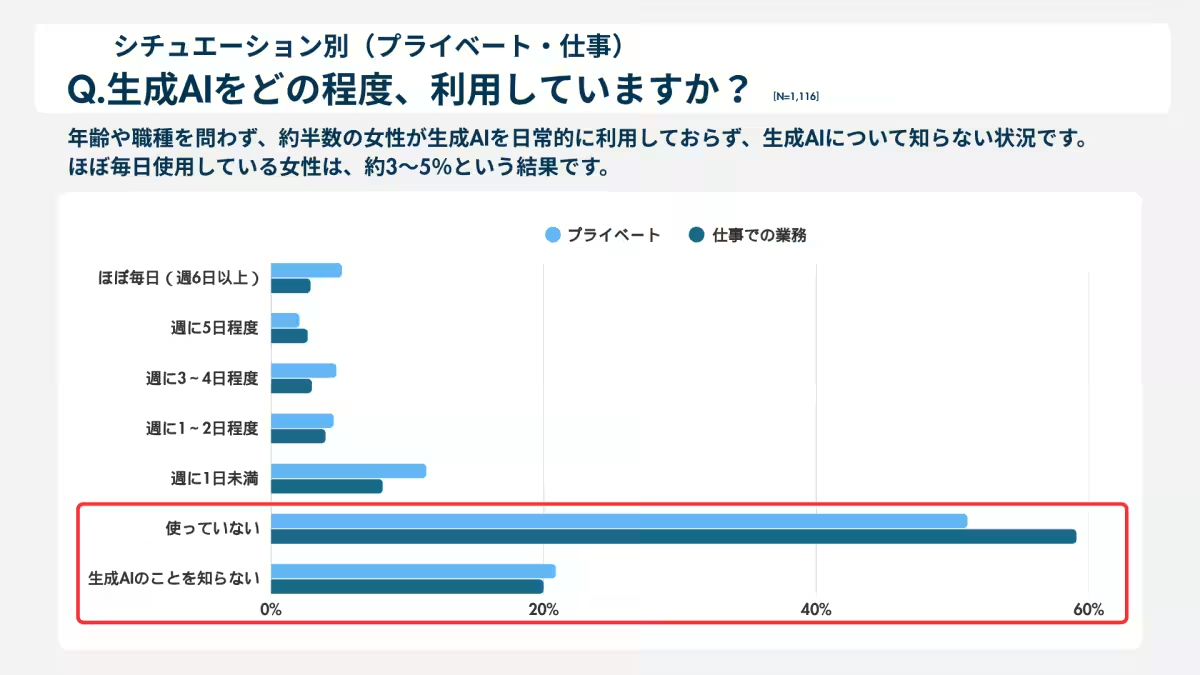
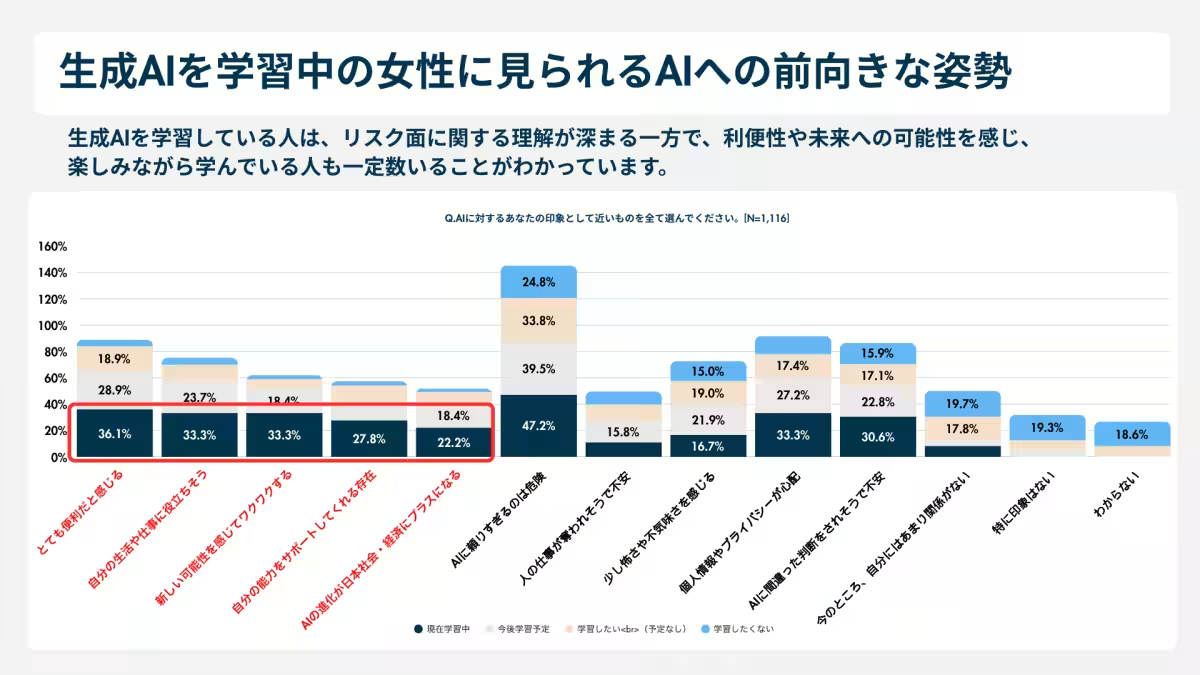
- - Engagement Levels: Around half of the respondents are not using generative AI regularly, with only 3-5% utilizing it daily. Those actively learning about AI have a much higher daily use rate, highlighting significant disparities.
- - Generational Differences: Usage is comparatively higher among women in their 20s (approximately 30%), while nearly 60% of women over 50 reported not using AI.
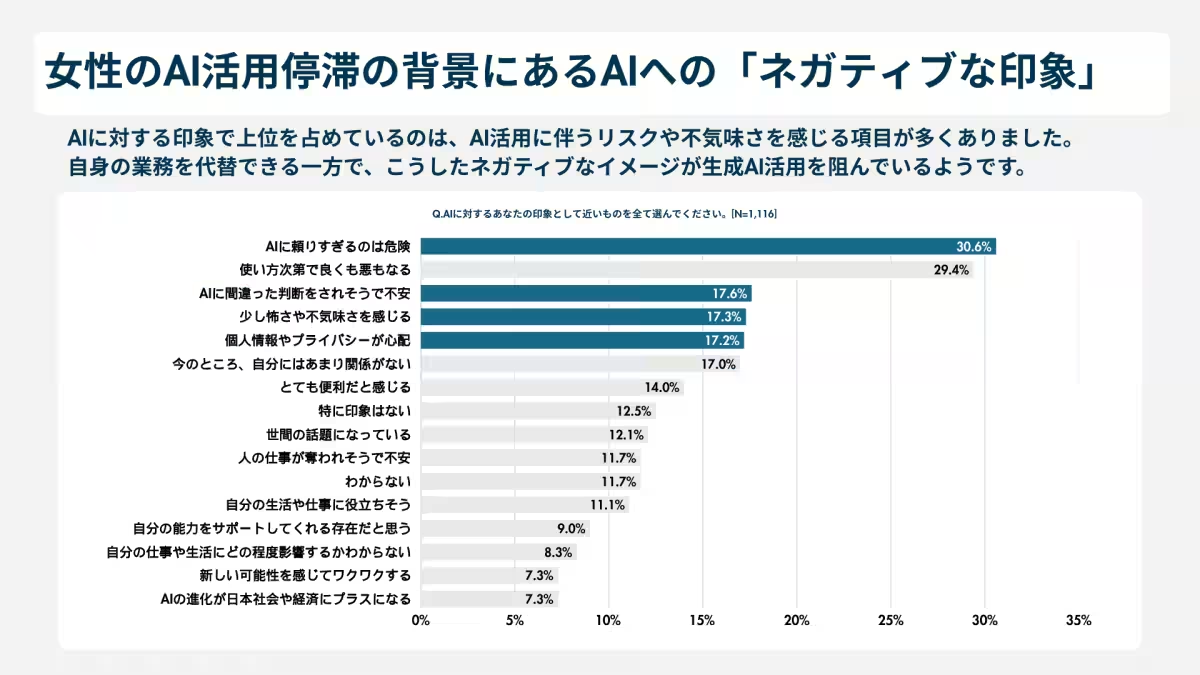
- - Barriers to Utilization: Many women harbor negative perceptions about generative AI, with 30.6% believing over-reliance is dangerous and 41% finding it difficult to engage due to perceived complexity.
- - Career Impact Awareness: While 40% anticipate new career opportunities due to AI, barriers such as uncertainty about learning methods and information overload hinder progress.
- - Expectations from AI: Women engaged in AI learning expressed desires for more personalized work styles and flexible working arrangements.
Insights and Future Directions
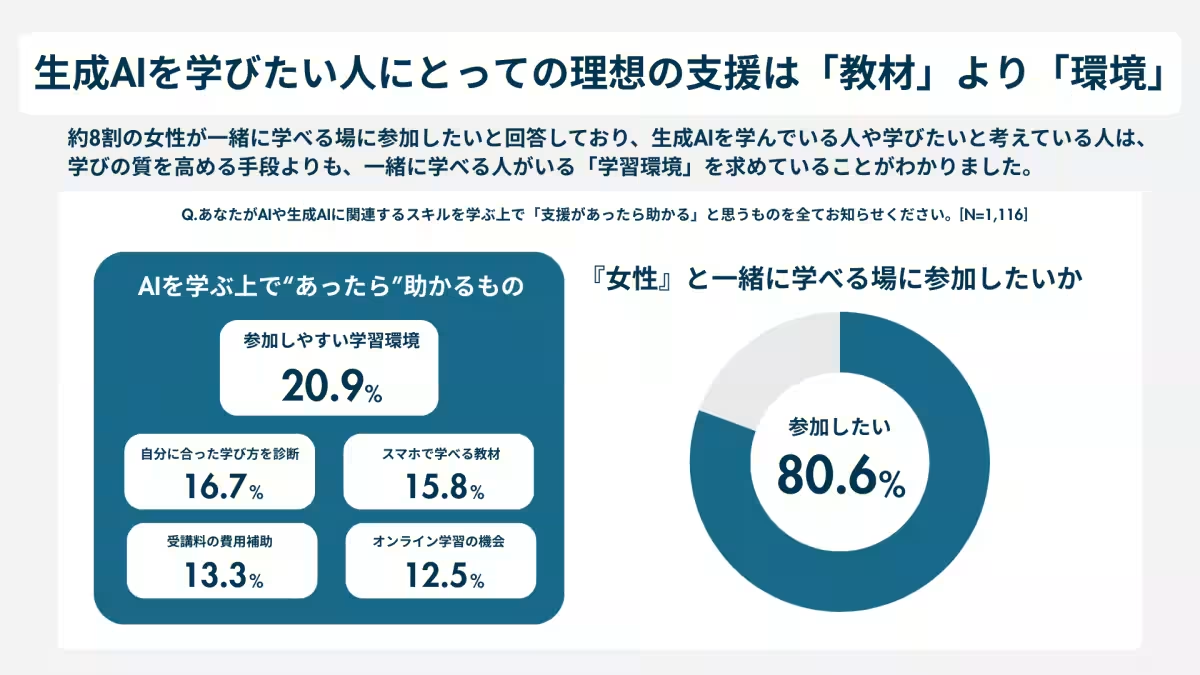
This survey reveals that although women hold positive expectations about AI, significant barriers impede their active engagement and learning. The expressed need for communal learning spaces echoes a strong desire, with 80.6% showing interest in joining communities focused on collaborative learning.
In light of these findings, WAIJ is committed to fostering a community where all women can learn, challenge themselves, and make empowered choices about their futures. The white paper will be updated annually, enabling ongoing monitoring of trends in women's AI engagement, and facilitating discussions grounded in factual data through regular surveys and analyses. WAIJ aims to collaborate with enterprises, governmental departments, and educational institutions to further women's roles in AI.
Topics Business Technology)
【About Using Articles】
You can freely use the title and article content by linking to the page where the article is posted.
※ Images cannot be used.
【About Links】
Links are free to use.