




JLL Unveils 2026 Global Real Estate Transparency Index, Highlighting Growth in Asia-Pacific and MENA
JLL Announces 2026 Global Real Estate Transparency Index
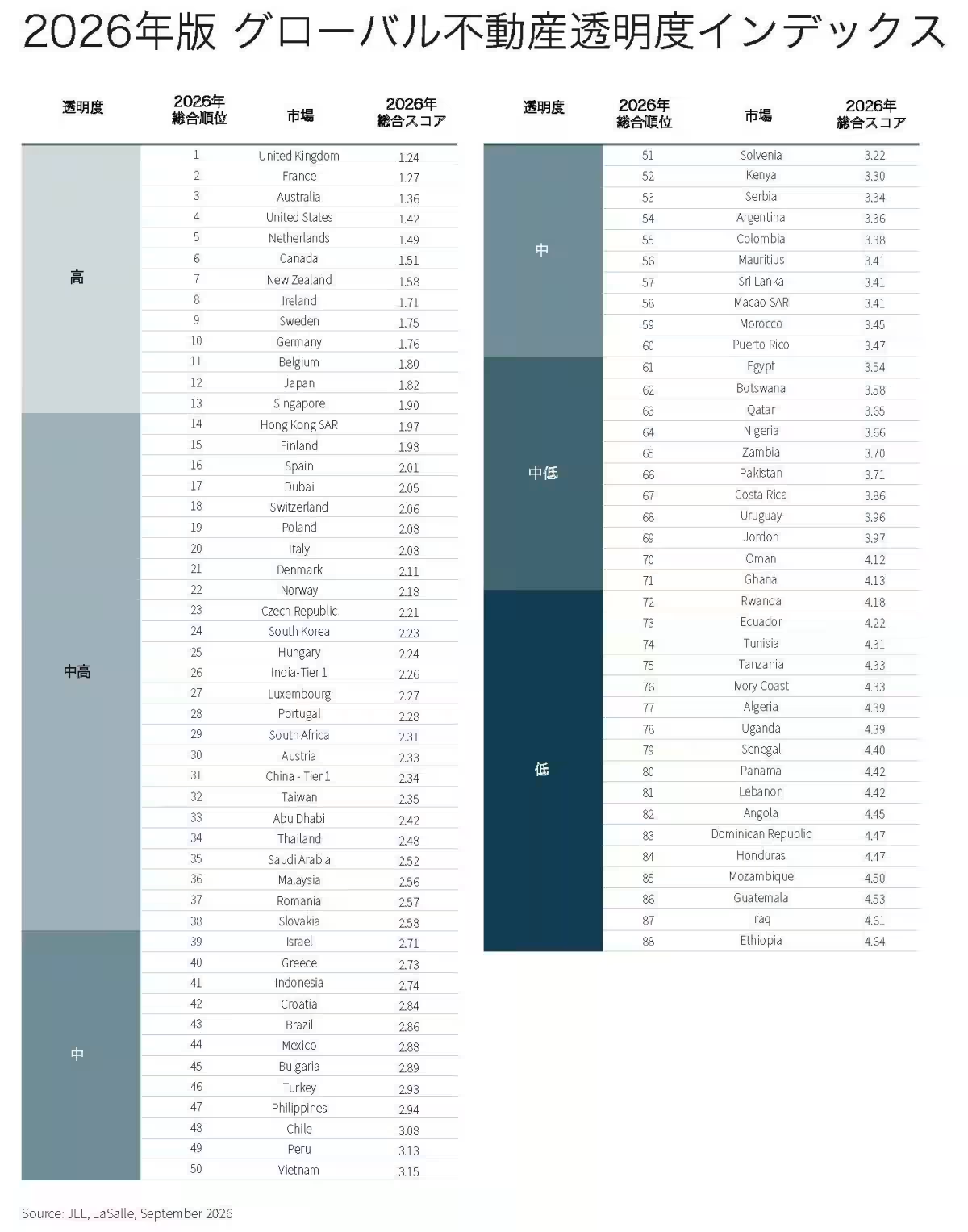
On September 16, 2026, JLL, a leading provider of comprehensive real estate services, released the 2026 Global Real Estate Transparency Index, marking its 14th edition. This index reveals that during the past two years, two-thirds of the global markets examined have experienced an increase in real estate transparency. As investment capital is increasingly concentrated in mature markets, the Asia-Pacific and MENA regions have risen to prominence due to rapid digitalization and proactive reforms.
Key Highlights of the Index
1. Asia-Pacific Leading Transparency Improvements: Half of the top ten markets showing the most significant improvements are in the Asia-Pacific region, spearheaded by countries like India and Vietnam. The Gulf nations have also seen substantial improvements in transparency thanks to government-led digital initiatives and significant economic reforms, securing top spots in the index.
2. Record Investments Driven by Transparency: The gain in real estate transparency has spurred a resurgence in cross-border investments, especially in India and Vietnam, which have set new records for investment amounts.
3. Japan Maintains Strong Position: Japan is ranked 12th globally, sustaining its status within the 'high transparency' category. This ranking indicates its ongoing appeal for global investors, financial institutions, and businesses looking to operate in a conducive environment.
4. Tokyo Excels in Sustainability: Tokyo emerges as the third most transparent city in sustainability, receiving international recognition for its advanced environmental initiatives and disclosure practices in addressing energy efficiency and climate change risks.
Factors Contributing to Enhanced Transparency
Several legislative and regulatory changes in Japan have further bolstered transparency in sustainability. The enactment of the amended Energy Conservation Law, which mandates strict energy efficiency standards for all new buildings, alongside the obligation for sustainability and climate-related disclosures, has played a pivotal role in improving transparency within the country’s sustainability sector.
Insights from JLL’s Senior Leadership
Richard Bloksom, CEO of JLL Capital Markets, stated that real estate transparency has evolved beyond being merely an indicator of market maturity; it has become a prerequisite for global capital investments. As uncertainties rise, investors prioritize markets with robust digital infrastructures, rich data disclosures, and clear regulatory environments. The reforms underway in Asia-Pacific and MENA are contributing to reducing risks and facilitating cross-border investments, thus narrowing the transparency gap with key global markets.
Emerging Trends in Asia-Pacific and MENA
The Asia-Pacific region ranked highest in the latest survey, comprising half the top ten improving markets. India, through enhancements in digital infrastructure, market data expansion, and the growth of the REIT market, has been pivotal in driving this improvement. Meanwhile, Vietnam, South Korea, Australia, and Thailand have seen marked transparency enhancements due to strengthened corporate governance and expanded disclosures regarding alternative assets, resulting in a swift recovery of cross-border investments—recording peak transaction amounts in key markets.
The MENA region, particularly the Gulf countries, continues to attract international investment amid ongoing geopolitical uncertainties due to steadfast institutional reforms. Countries like Saudi Arabia, Dubai, Abu Dhabi, and Qatar have emerged as the most transparent markets globally, bolstered by initiatives such as Saudi Arabia’s Vision 2030 reforms and Dubai Land Department’s REST (Real Estate Self Transaction) program, catering to the investment environment desired by international investors and financial institutions.
Japan’s Prospects and Future Strategies
Japan’s real estate transparency is steadily improving, but as highlighted by Yuto Daito, Senior Director at JLL Japan Research Division, the global market is evolving at a faster pace. With corporate governance reforms enhancing balance sheets, asset sales of non-core businesses are gaining traction, leading to the monetization of previously inaccessible prime assets. It is forecasted that Japan’s real estate investment amounts will exceed 6 trillion yen by 2025 and continue growing into 2026.
While transparency enhancements from 2024 onward are expected to steadily attract foreign investment, challenges linger, particularly concerning market data refinement. The incorporation of AI and cutting-edge technologies should evolve data disclosure processes to provide real-time insights.
In light of sustainability's growing importance, Japan’s stringent environmental regulations and green building certifications have garnered high praise globally. However, detailed disclosures regarding energy costs and the development of joint decarbonization mechanisms between owners and tenants remain areas for improvement.
Conclusion
Improved transparency is also expanding investment opportunities to alternative asset classes requiring specialized management. Data centers and infrastructure are now capturing 20% of global investment volumes, with the demand for diverse and specialized data disclosures increasing. Concurrently, regulatory changes are ushering new capital into the market, heightening the need for standardized disclosure practices and transparent valuation processes. As transparency improves, Japan's real estate market is anticipated to become even more attractive to global investors and stakeholders alike.

Topics Consumer Products & Retail)









【About Using Articles】
You can freely use the title and article content by linking to the page where the article is posted.
※ Images cannot be used.
【About Links】
Links are free to use.