



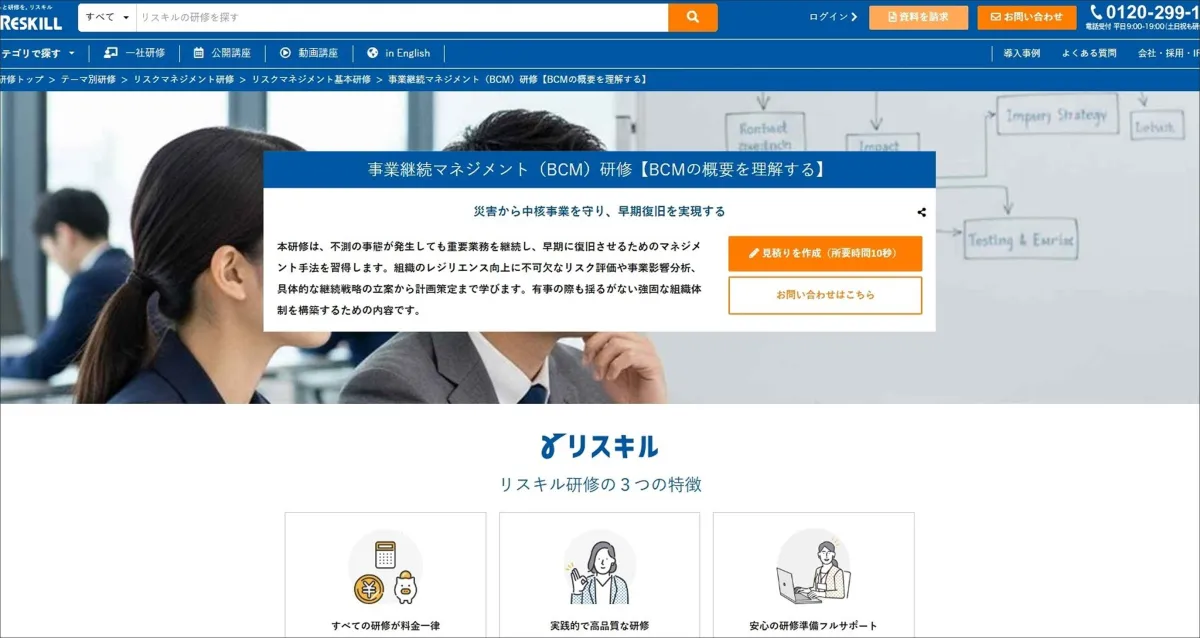
New Business Continuity Management Training for Resilience in Crisis Recovery
Enhancing Corporate Resilience Through Effective BCM Training
In a world increasingly fraught with uncertainties, such as severe natural disasters and rising cyberattacks, the need for robust Business Continuity Management (BCM) has never been more critical. Reskill Co. has responded to this need by launching a comprehensive BCM training program, aiming to equip employees with the skills necessary to sustain critical operations and ensure a swift recovery in the face of unforeseen challenges.
Key Objectives of the BCM Training
This training program is designed to help participants identify and prioritize essential business functions, assess risks, and formulate effective recovery strategies. By doing so, organizations can not only fulfill their corporate social responsibility but also maintain customer trust during crises.
The Importance of BCM in Today’s Environment
Modern companies face varied risks that threaten their business continuity. Often, organizations struggle with vague criteria on which operations should take precedence during emergencies and the timelines for recovery. Additionally, many planned strategies fail to penetrate the organizational fabric, leading to challenges in implementation and effectiveness. As a result, there is a growing demand for specialized training that increases organizational resilience.
Training Overview
The BCM training program is structured to provide a step-by-step journey from understanding the fundamentals of BCM to developing specific, actionable strategies. Here are the key components of the training:
- - Target Audience: Mid-level employees, managers, and those responsible for BCM/BCP within their organizations.
- - Skills Development Goals: Participants will learn to accurately assess risks and devise detailed plans to ensure business continuity. They will gain insights into Business Impact Analysis (BIA) methods, establish Recovery Time Objectives (RTO), and build backup systems. Moreover, the training emphasizes teaching techniques to prevent plans from becoming obsolete.
Core Components of the Course
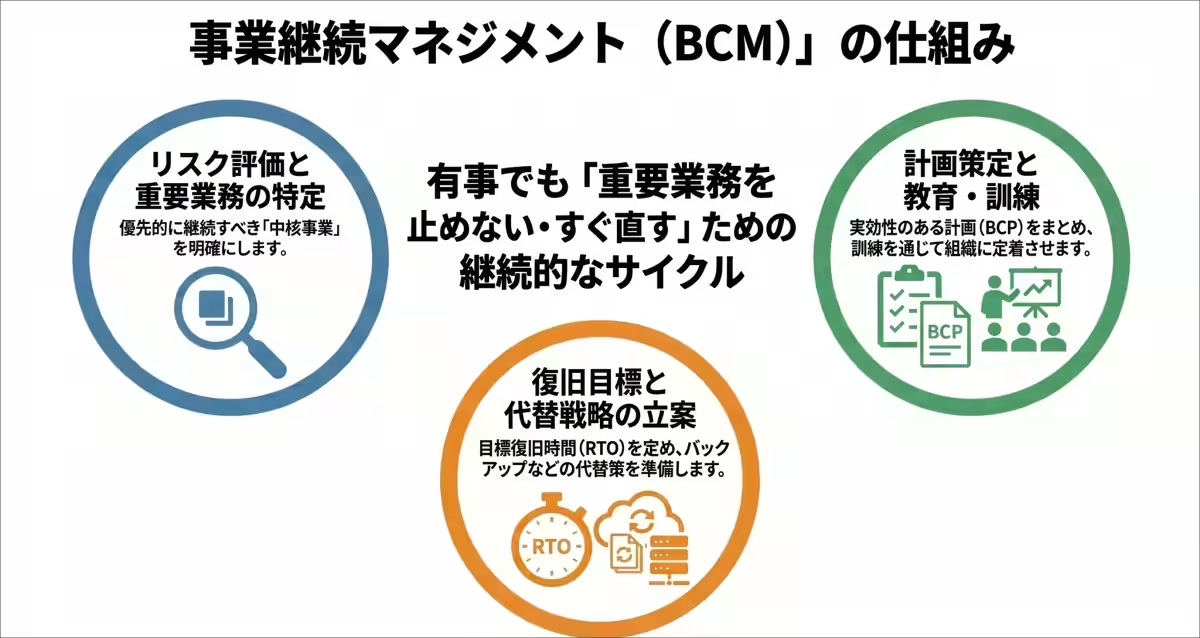
1. Understanding Risks and Prioritization: Learn to analyze various risks and utilize BIA techniques to identify crucial business processes that must be sustained in a crisis.
2. Setting Recovery Objectives: Understand how to establish RTO and Recovery Level Objectives (RLO), exploring options for alternative methods, such as securing facilities or manual processes.
3. Developing Effective Strategies: Acquire skills for documenting plans and training exercises to ensure they are ingrained in company culture.
Curriculum Highlights
The training navigates through critical concepts and hands-on activities, ensuring participants leave with practical knowledge. Some topics include:
- - Foundations of BCM: definitions, objectives, and the value it brings to management.
- - Identifying Core Business Functions: executing BIA and recognizing key processes.
- - Risk Assessment: evaluating various risks, including natural disasters and supply chain vulnerabilities.
- - BCP Development: clarifying initial response protocols and command structures.
- - Ensuring Training Effectiveness: preventing formalization through engaging training methods and continuous improvement.
About Reskill Co.
Reskill Co. specializes in risk management training and offers a broad array of employee training programs. Following the motto “More Training,” the company aims to solve business challenges with a transparent pricing model that includes all necessary adjustments without hidden fees. Their experienced trainers provide practical content that can be immediately implemented in the workplace while offering comprehensive support from the distribution of training materials to operational assistance.
In conclusion, the Business Continuity Management training by Reskill Co. addresses the pressing needs of organizations to maintain operational integrity during crises while empowering employees with crucial skills to navigate uncertainty. By investing in this training, businesses can enhance their resilience, uphold their corporate responsibilities, and ensure lasting trust from their clients.
Topics Business Technology)
【About Using Articles】
You can freely use the title and article content by linking to the page where the article is posted.
※ Images cannot be used.
【About Links】
Links are free to use.