



Common Traits of Successful Companies Implementing AI in Contact Centers
The Rise of AI in Contact Centers
The landscape of business operations has witnessed a remarkable evolution with the integration of artificial intelligence (AI), particularly in contact centers. A recent survey conducted by Flyle, a Tokyo-based company specializing in voice of the customer (VOC) analysis and response quality improvement services, has shed light on the current state of AI deployment in this crucial sector.
Background of the Study: Importance of AI Investment
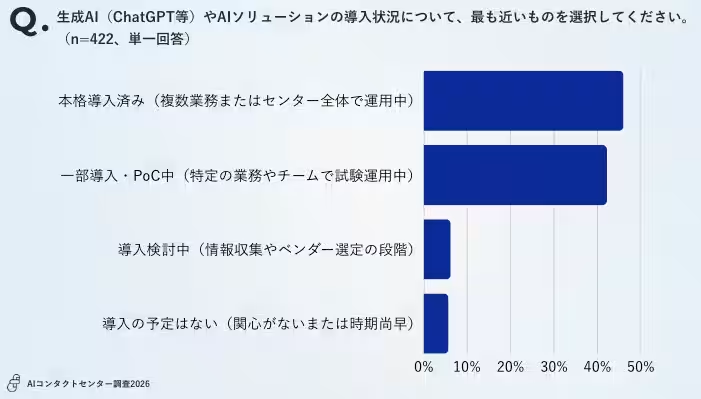
The contact center environment is essential for businesses, serving as the central hub for customer feedback. Recent data indicates that nearly 90% of companies have moved to significant phases of AI integration—either completely implementing or in pilot testing stages. An impressive 86% of respondents also expressed intentions to either increase their AI investments or maintain current spending in the next fiscal year.
The core function of a contact center lies in capturing and analyzing 'the voice of the customer.' It plays a vital role in gathering inquiries, complaints, suggestions, and cancellations, providing a valuable touchpoint for businesses seeking to improve operations. Quality interactions within contact centers directly correlate with customer satisfaction and the overall Net Promoter Score (NPS), making them a strategic asset in customer relationship management.
To capitalize on the potential of AI, contact centers can automate the analysis of vast amounts of daily inquiries, leading to insights that enhance risk detection and overall business performance. This automation not only improves response rates but also upgrades the quality of customer interactions, thereby underscoring the importance of AI as a pivotal tool for understanding customer needs and driving business improvements.
Objective of the Survey: Differences Between Successful and Stagnant Companies
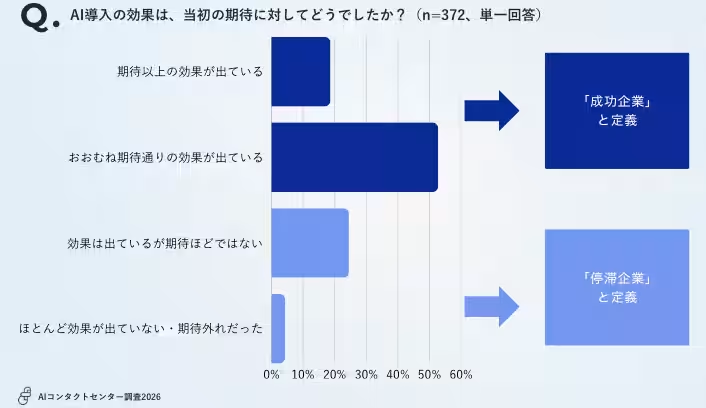
In a landscape where AI has become ubiquitous, the focus now shifts from mere implementation to the tangible results it generates. The findings from Flyle's survey reveal that only 65% of respondents reported achieving their expectations or even exceeding them with AI deployments. Alarmingly, one in three companies has not perceived a significant return on their AI investments.
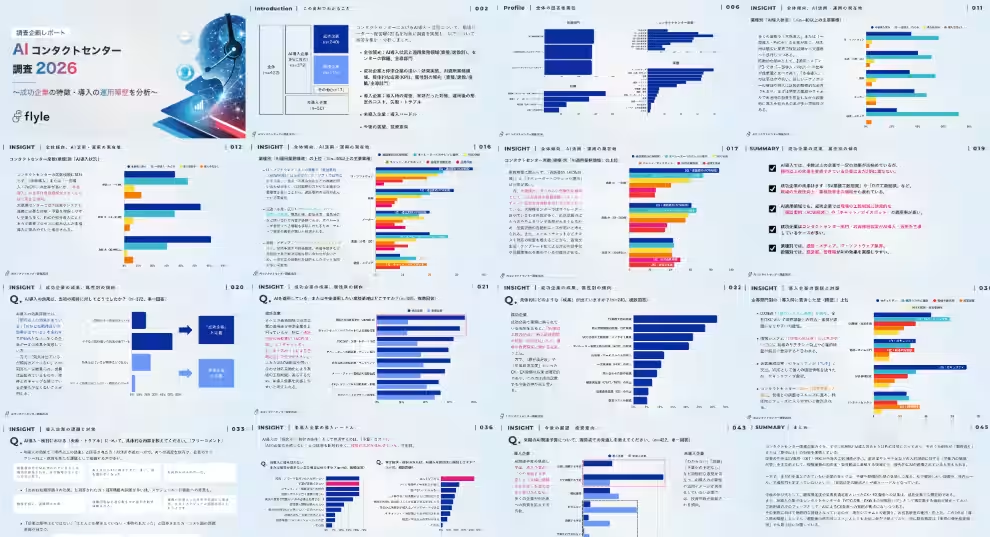
The investigation into the factors that separate successful companies from those experiencing stagnation provides critical insights. It delves into the challenges encountered during the implementation phase and unexpected issues arising post-deployment. Through a comprehensive analysis of responses from 422 leaders in the contact center sector, the survey seeks to address these crucial queries.
Key Aspects of Analysis
1. Trends by Demographics
The survey's findings were broken down based on demographic characteristics of the respondents. Key comparisons were drawn on various factors:
- - AI application areas and industry sectors.
- - Job roles of respondents.
- - Leading departments for AI implementation.
- - Scale of contact center operations.
2. KPIs Enhanced by AI vs. Those That Remained Static
The survey highlights a significant divide between KPIs that successful companies have improved with AI and those that have not seen progress. This analysis seeks to define the boundaries of where AI excels and the areas that require further development.
3. Common Challenges from Implementation to Operation
Several challenges were consistently identified as critical both during initial AI implementation and in ongoing operations:
- - Obstacles faced during the implementation phase.
- - Unforeseen costs emerging after deployment.
- - Prioritized investment areas for the upcoming fiscal year.
Conclusion
As businesses continue to adapt to the rapid advancements in AI technology, the insights drawn from the AI Contact Center Survey 2026 serve as a roadmap for organizations looking to enhance their customer engagement through strategic AI deployment. Transitioning to AI solutions like Flyle can fundamentally shift how businesses analyze and respond to customer needs. For further detailed insights and data, the full report is available for download here.
About Flyle
Flyle is an AI agent designed for contact centers, transforming the analysis of customer interaction data—from call logs and surveys to trading minutes—into actionable insights. By automating previously labor-intensive tasks such as VOC analysis and CRM documentation, Flyle supports strategic decision-making across departments. With a commitment to data security and compliance, Flyle stands at the forefront of AI-enabled customer service solutions. For more information, visit Flyle's website.

Topics Consumer Technology)
【About Using Articles】
You can freely use the title and article content by linking to the page where the article is posted.
※ Images cannot be used.
【About Links】
Links are free to use.