



Okayama University Unveils Mechanism of Hormonal Control in Reproductive Processes
Mechanism of Hormonal Control in Oviducts Explored
Recent research conducted at Okayama University has shed light on an essential aspect of reproductive biology: the role of estrogen, specifically estradiol-17β (E2), in regulating muscle contractions within the bovine oviduct. Understanding this mechanism is pivotal for developing enhanced infertility treatments in humans and improving reproductive success rates in livestock.
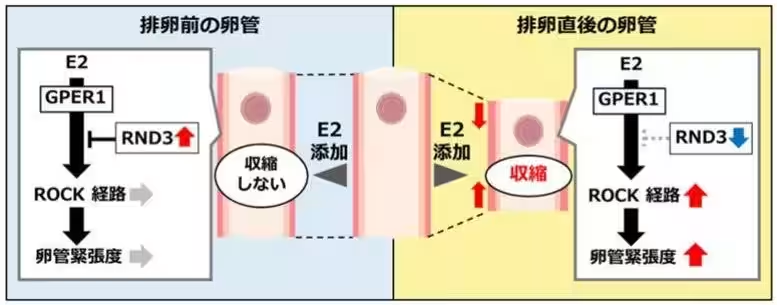
The research team, comprised of Sayaka Kubota, a doctoral student, along with graduates Risa Okawara, and professors Kohei Kawano and Koji Kimura, discovered that E2 directly controls the tonicity (the muscle tension) of the oviduct after ovulation. Their study revealed that while E2 increases the muscle contractions postpartum, it has no effect on the oviduct's tension before ovulation. The differences in the response of oviductal tonic contractions to E2 during different reproductive phases are crucial in understanding reproductive success.
Research Findings: A Closer Look
The team's experiments illustrated that during the post-ovulatory phase, E2 activates Rho kinase, a factor associated with smooth muscle tonicity, rapidly increasing muscle tension. In contrast, the pre-ovulatory oviduct, which naturally has higher E2 concentrations, showed inhibited activity due to high expression of RND3, a protein that blocks Rho kinase activation. As a result, the positive effect of E2 on muscle tonicity in oviducts was significantly reduced before ovulation.
This regulatory mechanism is significant as it may contribute to the timely transportation of sperm and early embryos, phases vital for successful fertilization and pregnancy establishment. The breakthrough findings of this study can potentially lead to significant advancements in addressing infertility in both human and agricultural settings.
Publication and Future Implications
Published in the journal Reproduction on February 16, 2026, these findings mark a substantial contribution to the fields of reproductive physiology and animal breeding technology. The research is supported by the Japan Society for the Promotion of Science (JSPS) and various funding initiatives aimed at enhancing reproductive health solutions.
In her reflections on the outcome, Sayaka Kubota expressed her surprise and excitement at how E2 influences oviductal tension post-ovulation and hopes this research will lead to better outcomes in livestock breeding and human infertility treatments.
Conclusion
The implications of this study reach beyond academic curiosity; they promise tangible benefits for both human health and agricultural practices. By elucidating the hormonal controls on reproductive systems, Okayama University continues to lead in groundbreaking research with real-world applications.
For more detailed information on this research, you can view the published paper linked here.


Topics Health)
【About Using Articles】
You can freely use the title and article content by linking to the page where the article is posted.
※ Images cannot be used.
【About Links】
Links are free to use.