



Many Workers Hide Their Breaks: A Study Reveals Secret Retreats at the Workplace
Hidden Breaks in the Workplace: An Insightful Study
In a world where productivity is often prized above self-care, a recent study carried out by Instabase, a platform specializing in rental spaces, uncovered a worrying trend. Almost 25% of employees prefer to take their breaks hidden away from the gaze of their colleagues. Whether it's in the restroom, stairwell, or empty meeting rooms, this so-called "hidden break" phenomenon sheds light on the challenges workers face when it comes to taking time off during their workday.
The Survey Summary
With a sample group of 231 participants, Instabase conducted a thorough investigation into break habits in workplaces and educational institutions. In the context of the ongoing summer heat and the onset of fall—a time when health and rest become paramount—the results revealed some surprising insights:
- - 23% of respondents who worry about the opinions of others opt for hidden breaks in discreet places, compared to only 4% who do not care, yielding a staggering six-fold difference.
- - A mere 9-18% of respondents use designated nap or relaxation rooms in the workplace. The most common method of taking a break is through short naps taken at desks or in cars, accounting for 47%.
- - The top reason given by 35% of respondents for not taking breaks is the absence of suitable spaces nearby, overshadowing concerns about what others might think.
The full details of the survey are published on the Instabase website, highlighting the pressing need for a more supportive environment for breaks in workplaces and educational settings.
The Reality of Hidden Breaks
Among the 210 participants who were not students or homemakers, 184 individuals reported taking breaks. When categorized by their concerns about others, the hidden break rates displayed a significant divide: the considerate group had 23% engaging in stealthy breaks, whereas only 4% felt comfortable resting openly.
The areas chosen for these concealed breaks overwhelmingly included restrooms, staircases, and vacant meeting rooms. Intriguingly, a category of participants noted train compartments as alternative short rest spots. In contrast, the use of corporate nap and restrooms stagnated at 9% and 18% respectively. It appears workers are finding it harder to relax openly, as 87% of those in hidden breaks admitted to worrying about their surroundings during their rest.
Insufficient Relaxation
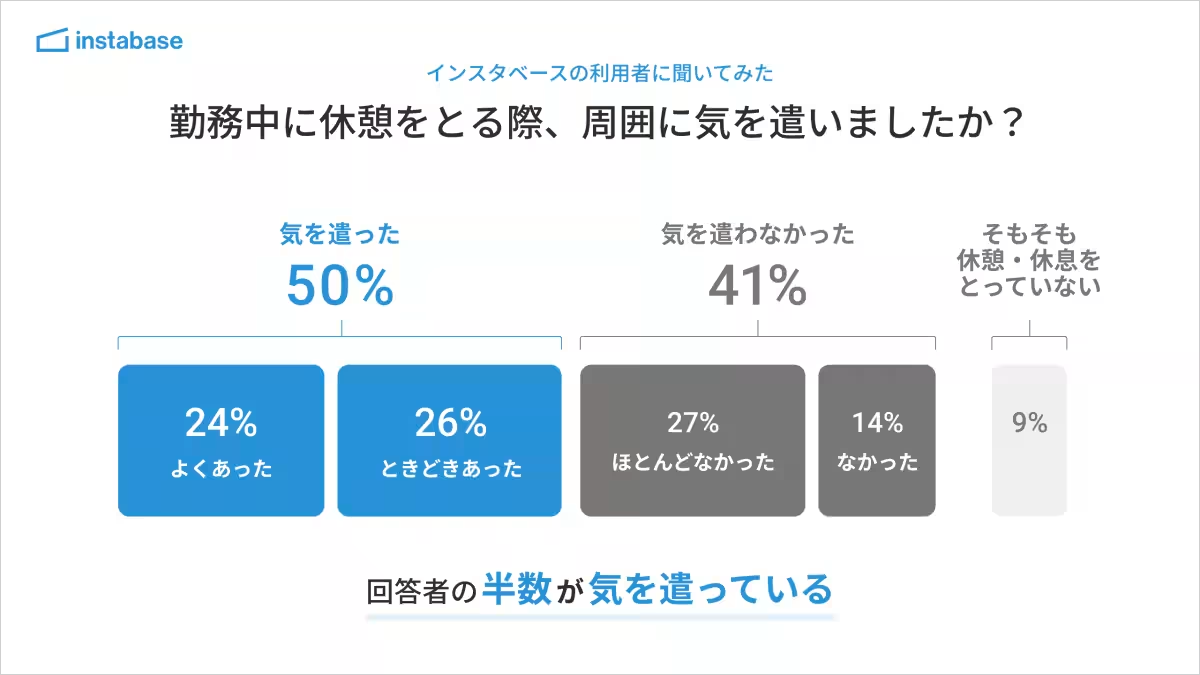
An additional inquiry revealed that over 50% of respondents frequently find themselves mindful of their surroundings when taking a pause, with 9% admitting they do not take breaks at all. The emotional toll of considering the opinions of coworkers revealed itself in the following responses: 18% of individuals felt reserved due to perceptual scrutiny, and 14% felt guilty for taking time off.
Thus, it's clear that social perceptions and psychological barriers prevent many from reaping the full rewards of their break time.
Reasons for Difficulty in Taking Breaks
Participants were asked to identify their perceived obstacles to taking breaks. The number one reason, cited by 35% of respondents, was the lack of suitable nearby spaces. Furthermore, an amalgamation of answers revealed that 43% indicated a shortage of relaxation areas, encompassing both workplace and home settings. Additionally, 33% raised concerns about the costs associated with taking necessary leisure time, reinforcing the notion that relaxation is undervalued.
A psychological barrier was evident in responses, with 18% citing concern about peer perception and 14% feeling uneasy about resting. This collective sentiment unveils an urgent call for a cultural shift concerning leisure in the workplace.
Respondents shared reflections, such as, “After work, I feel guilty wanting alone time since I delegate childcare responsibilities,” and, “The workplace environment lacks a comfortable atmosphere conducive for individual breaks.”
Finding Suitable Relaxation Spots
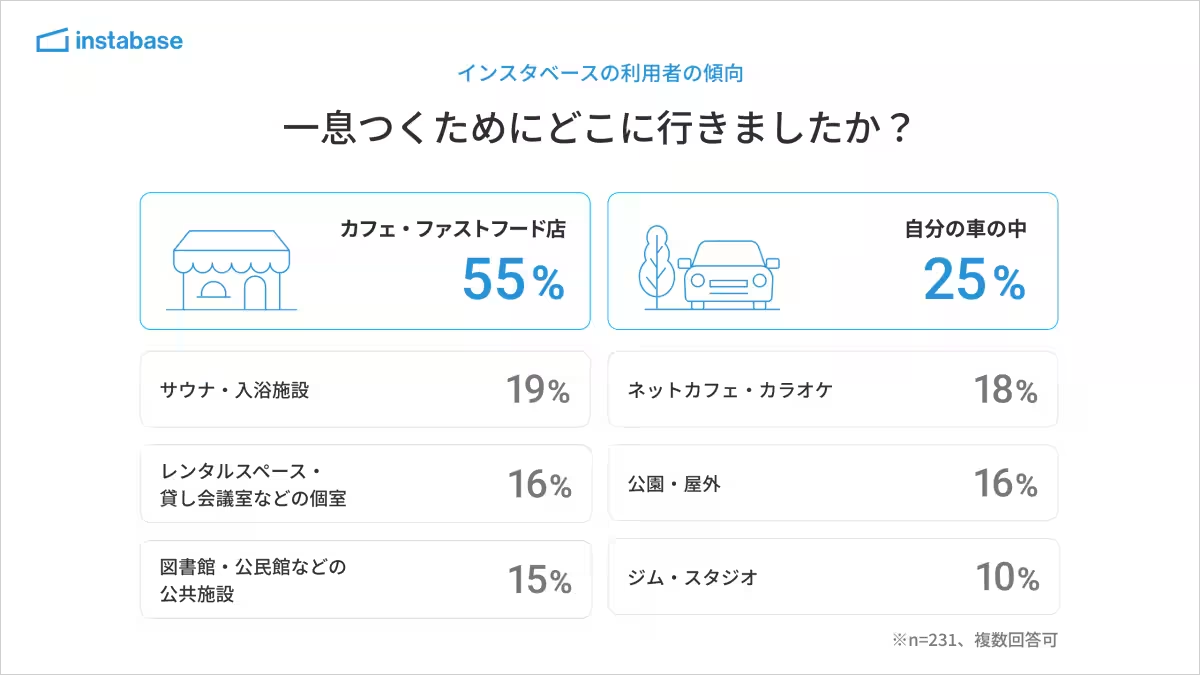
When questioned about breaks taken outside of the workplace or home over the past year, 81% confirmed they had indeed engaged in rest or personal time. Cafés, cars, and private rental spaces emerged as the most favored locations for these escapes, affirming the necessity for versatile relaxation areas in urban spaces.
Through this survey, Instabase not only examined break-related habits but also the dilemmas that arise from the available space to unwind. The rise of hidden breaks in workplaces emphasizes the emotional barriers to rest faced by workers, as more environments must cultivate guilt-free relaxation opportunities to promote a healthier work-life balance.
Survey Methodology
The survey, conducted from August 19-25, 2026, employed an online questionnaire targeting Instabase users, yielding 231 valid responses. For further details regarding this research on workplace breaks, visit Instabase’s survey report.


Topics People & Culture)
【About Using Articles】
You can freely use the title and article content by linking to the page where the article is posted.
※ Images cannot be used.
【About Links】
Links are free to use.