



The Growing Need for ICT in Japanese Language Education for Foreign Roots Students
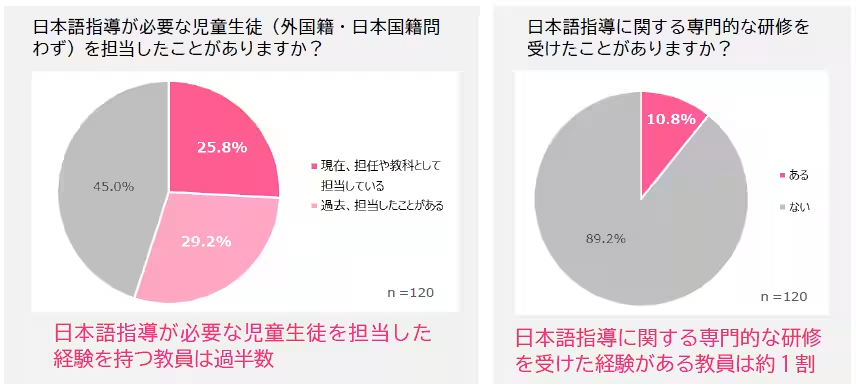
In recent years, the demand for effective Japanese language instruction for students with foreign roots has surged, as highlighted in a survey conducted by Surala Network, a company specializing in adaptive interactive ICT educational materials. The survey gathered insights from 208 educators, education committee officials, and administrators across the country, unveiling a crucial gap in teacher training and support for Japanese language education. Despite over half of the surveyed educators having experience teaching these students, only about 10% had received specialized training, leading to overwhelming pressure on teachers who lack adequate resources.
The report also sheds light on the complexities of teaching students with varying levels of Japanese proficiency within the same classroom, as many educators expressed difficulties in balancing general subject instruction with Japanese language support. Such challenges have instigated an increased reliance on individual teachers, further straining educational environments where administrative support is minimal due to a lack of personnel and funding.
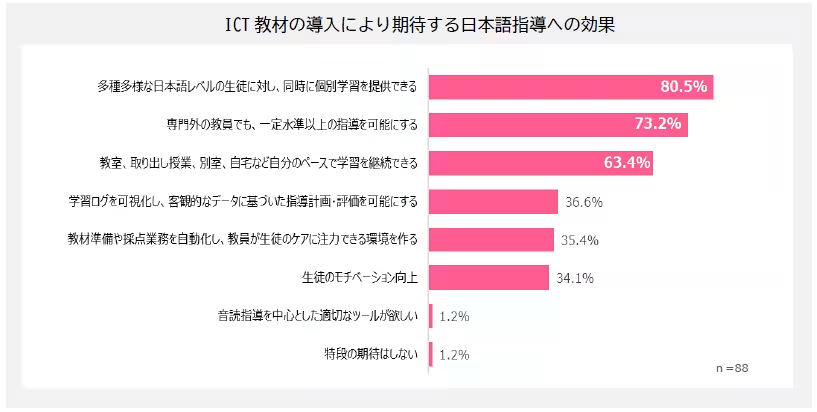
Given these pressing issues, the survey revealed that more than 80% of educators believe that ICT tools are essential for enhancing Japanese language instruction. Notably, this percentage climbs to over 90% among various education administrators, indicating a shared recognition of tech-based solutions in addressing the educational needs of foreign roots students. ICT tools are praised for their ability to offer bilingual learning environments, use AI for personalized learning experiences, and enable consistent learning regardless of location. These features make them increasingly vital in supporting diverse classrooms where traditional instructional methods may fall short.
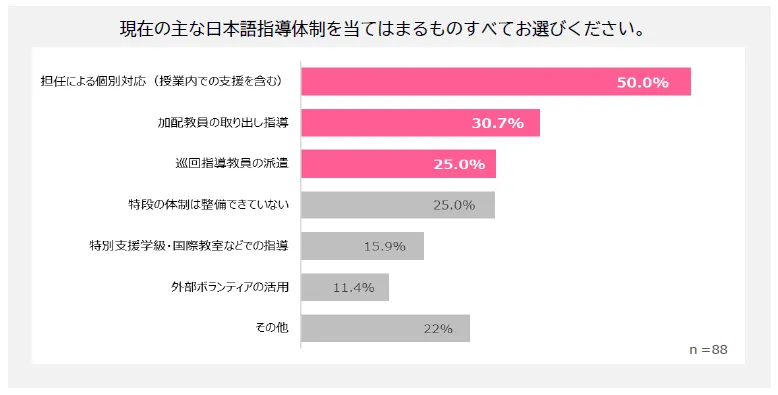
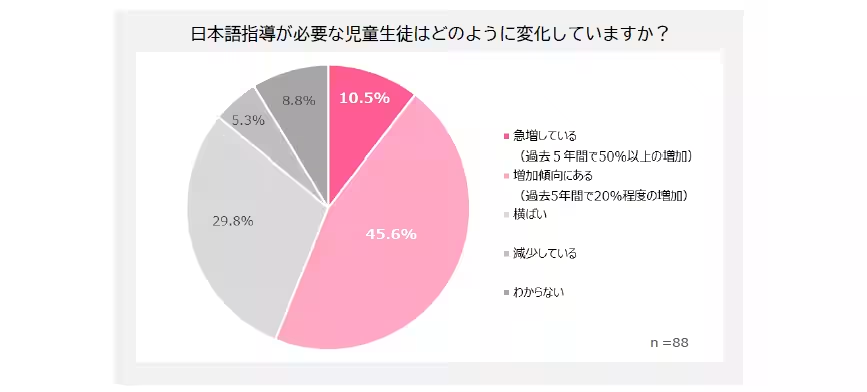
Statistics from the Ministry of Education highlight a worrying trend, with the number of students in public elementary, middle, and high schools who require Japanese language education reaching 69,123 in FY2023, a nearly twofold increase over nine years. The report indicates that while 56.1% of administrators acknowledge a rising need for language instruction, 50% of responses still revolve around classroom-based individual support, showcasing the ongoing dependence on teachers' efforts without sustainable structural changes.
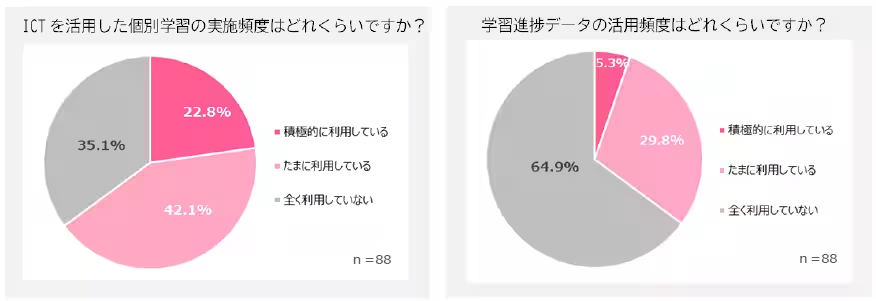
Despite the advancement of the GIGA school initiative, which ensures one-to-one device access for students, the actual integration of ICT tools in Japanese language instruction remains limited. The findings reveal that 35.1% of educators do not utilize ICT for individualized learning, and a staggering 64.9% fail to use learning logs effectively, showcasing a significant disconnect between available technology and practical application in classrooms.
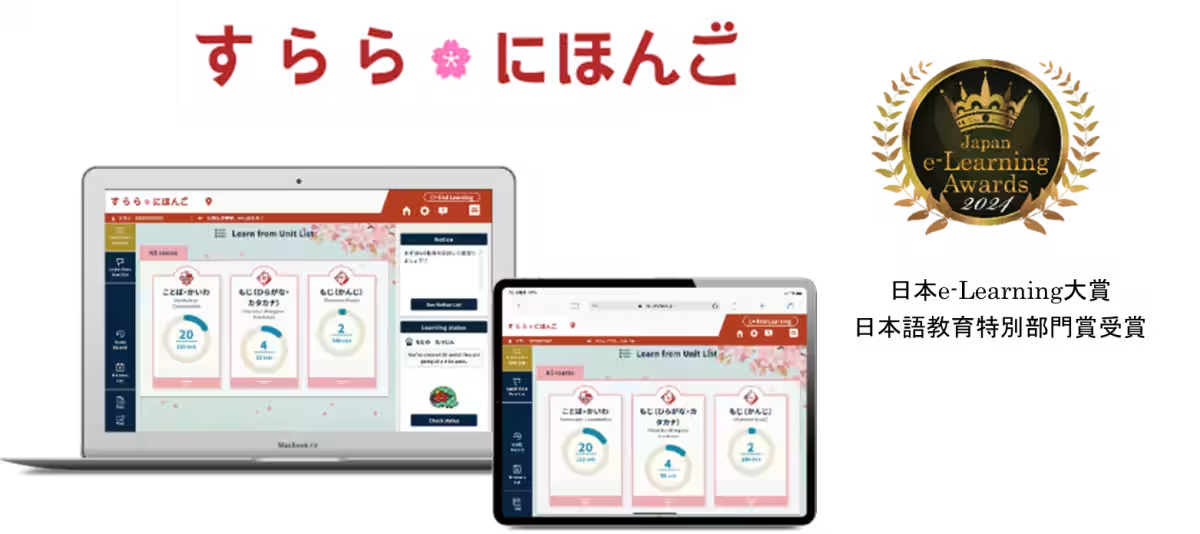
In response to these challenges, Surala Network is committed to not only providing interactive ICT educational materials but also facilitating training and community support for educators to empower them in their instructional roles. Recently, an ICT-based Japanese language training workshop was held for teachers at the Kojiya Junior High School Evening Classes in Ota City. The results of the survey indicated that 73.9% of teachers expressed a need for concrete methods of integrating ICT into lessons, while 62.5% sought efficient instructional strategies based on language acquisition processes. The increasing demand for sustained professional development has become evident, with 35.2% of educators advocating for continuous learning environments that bolster confidence and skill.
Surala Network reinforces its commitment to easing the burden on teachers and enhancing the quality of Japanese language education by refining its ICT methodologies and offering practical, relevant training solutions. Moreover, the company aims to expand its educational materials, currently catering to levels N5 and N4 of the Japanese Language Proficiency Test, with plans to introduce 11 additional languages—including Chinese, Portuguese, and Vietnamese—by 2026, to accommodate the learning needs of an even wider demographic.
Japanese language education for students with foreign backgrounds must integrate both ICT tools and expert human support, as stated by Mr. Genki Kajiura, the principal of Alpha International Academy. He emphasizes the critical need for robust support systems that transcend the capacities of individual teachers in managing the rising language instruction challenges. Experts agree that alongside technological resources, sustained guidance from specialized educators is paramount to effectively addressing the diverse linguistic backgrounds of these students. By fostering a synergistic approach that combines ICT with professional expertise, schools can significantly enhance Japanese language learning outcomes for all students.

The report also sheds light on the complexities of teaching students with varying levels of Japanese proficiency within the same classroom, as many educators expressed difficulties in balancing general subject instruction with Japanese language support. Such challenges have instigated an increased reliance on individual teachers, further straining educational environments where administrative support is minimal due to a lack of personnel and funding.
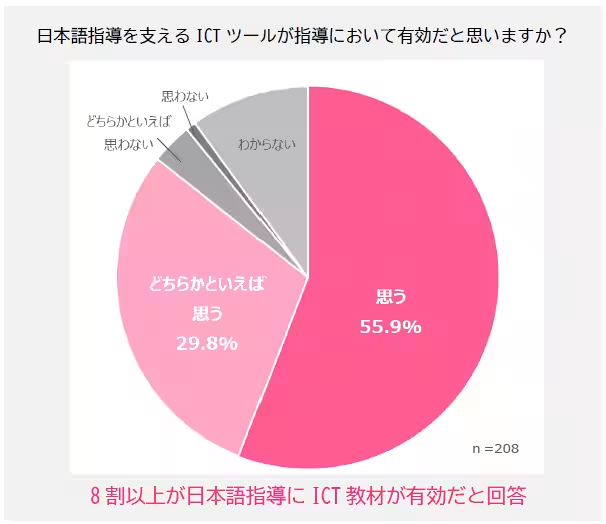
Given these pressing issues, the survey revealed that more than 80% of educators believe that ICT tools are essential for enhancing Japanese language instruction. Notably, this percentage climbs to over 90% among various education administrators, indicating a shared recognition of tech-based solutions in addressing the educational needs of foreign roots students. ICT tools are praised for their ability to offer bilingual learning environments, use AI for personalized learning experiences, and enable consistent learning regardless of location. These features make them increasingly vital in supporting diverse classrooms where traditional instructional methods may fall short.
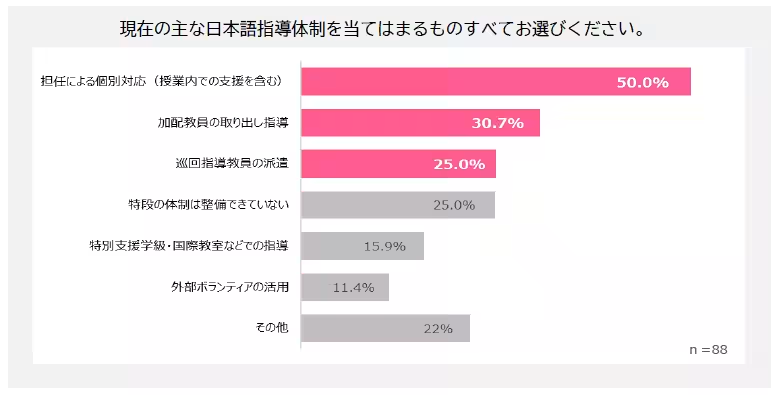
Statistics from the Ministry of Education highlight a worrying trend, with the number of students in public elementary, middle, and high schools who require Japanese language education reaching 69,123 in FY2023, a nearly twofold increase over nine years. The report indicates that while 56.1% of administrators acknowledge a rising need for language instruction, 50% of responses still revolve around classroom-based individual support, showcasing the ongoing dependence on teachers' efforts without sustainable structural changes.
Despite the advancement of the GIGA school initiative, which ensures one-to-one device access for students, the actual integration of ICT tools in Japanese language instruction remains limited. The findings reveal that 35.1% of educators do not utilize ICT for individualized learning, and a staggering 64.9% fail to use learning logs effectively, showcasing a significant disconnect between available technology and practical application in classrooms.
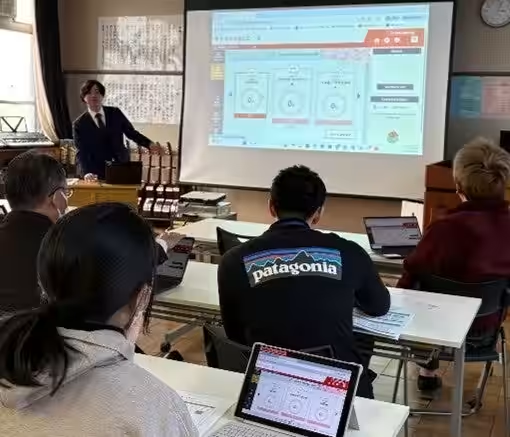
In response to these challenges, Surala Network is committed to not only providing interactive ICT educational materials but also facilitating training and community support for educators to empower them in their instructional roles. Recently, an ICT-based Japanese language training workshop was held for teachers at the Kojiya Junior High School Evening Classes in Ota City. The results of the survey indicated that 73.9% of teachers expressed a need for concrete methods of integrating ICT into lessons, while 62.5% sought efficient instructional strategies based on language acquisition processes. The increasing demand for sustained professional development has become evident, with 35.2% of educators advocating for continuous learning environments that bolster confidence and skill.
Surala Network reinforces its commitment to easing the burden on teachers and enhancing the quality of Japanese language education by refining its ICT methodologies and offering practical, relevant training solutions. Moreover, the company aims to expand its educational materials, currently catering to levels N5 and N4 of the Japanese Language Proficiency Test, with plans to introduce 11 additional languages—including Chinese, Portuguese, and Vietnamese—by 2026, to accommodate the learning needs of an even wider demographic.
Japanese language education for students with foreign backgrounds must integrate both ICT tools and expert human support, as stated by Mr. Genki Kajiura, the principal of Alpha International Academy. He emphasizes the critical need for robust support systems that transcend the capacities of individual teachers in managing the rising language instruction challenges. Experts agree that alongside technological resources, sustained guidance from specialized educators is paramount to effectively addressing the diverse linguistic backgrounds of these students. By fostering a synergistic approach that combines ICT with professional expertise, schools can significantly enhance Japanese language learning outcomes for all students.
Topics Other)
【About Using Articles】
You can freely use the title and article content by linking to the page where the article is posted.
※ Images cannot be used.
【About Links】
Links are free to use.