




The Reality of Foreign Employment in the Japanese Restaurant Industry: A Comprehensive Survey
Understanding Foreign Employment in Japan's Restaurant Sector
In recent times, the Japanese restaurant industry has grappled with the need for labor, leading to an increase in foreign employment. A comprehensive survey conducted by Alforce One, a leading B2B matching service linking companies considering foreign hires with organizations that support foreign talent, sheds light on the current landscape of hiring foreign workers in this sector.
Survey Overview
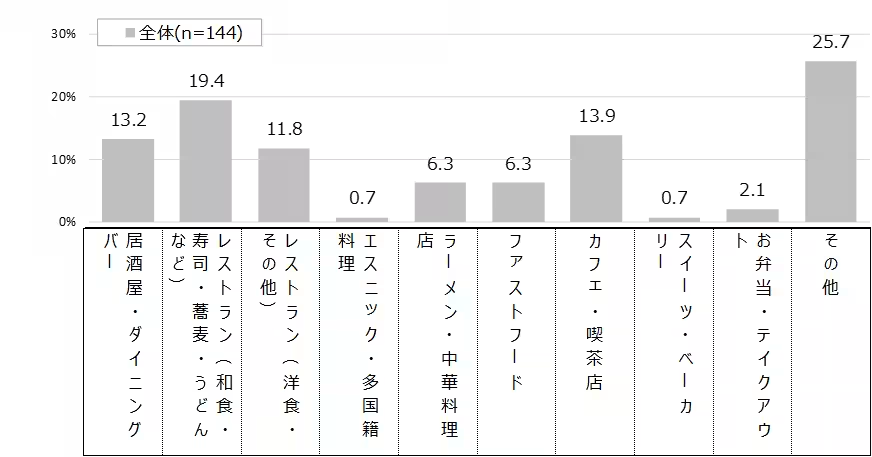
The survey, conducted through a web-based questionnaire from March 28, 2025, received responses from 144 participants working in the restaurant industry across Japan. Here's a breakdown of the respondent demographics:
- - Age Distribution:
- 20-29 years: 8
- 30-39 years: 21
- 40-49 years: 44
- 50-59 years: 63
- 60 years and older: 7
Employment Status of Foreign Workers
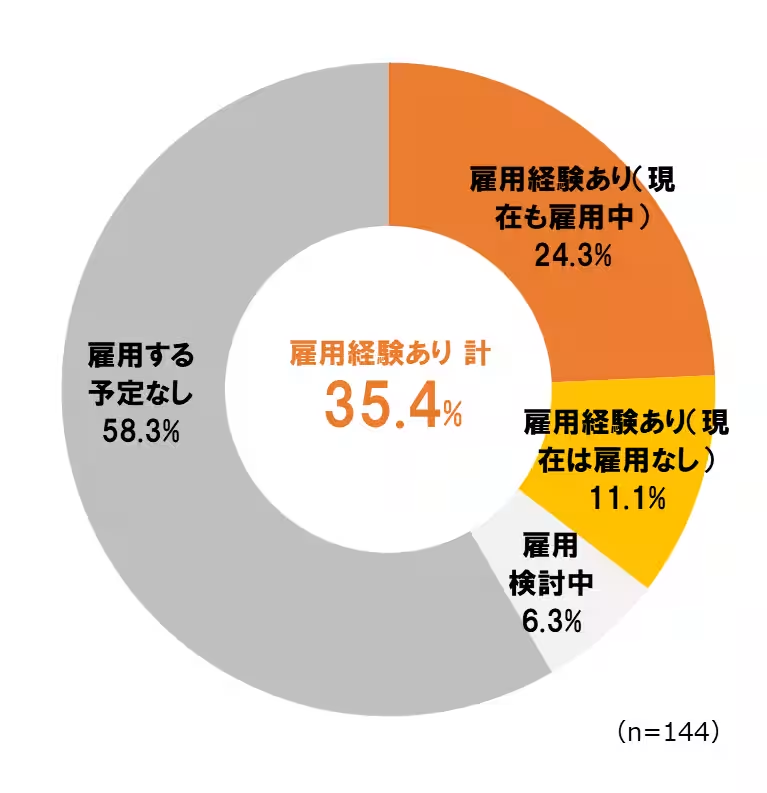
According to the survey, approximately 24.3% of respondents currently employ foreign workers. However, 58.3% indicated that they have no plans to hire foreign talent, which suggests underlying challenges within the employment process. The total reported labor shortage was 57.6%, indicating that while there is a pressing need for workers, foreign employment remains limited.
Types of Work Visas Held by Foreign Workers
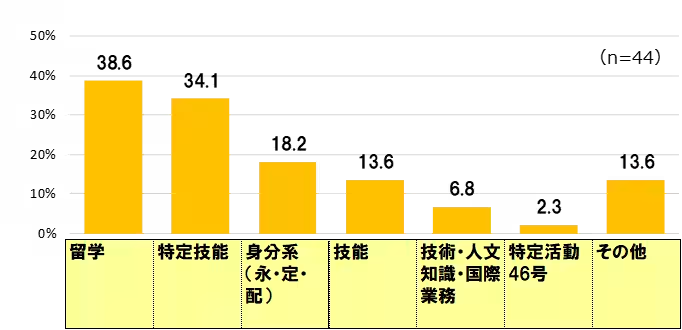
An analysis of the types of visas held by those currently employed revealed that 38.6% are students and 34.1% possess skilled worker visas. This reliance on student labor emphasizes the need for part-time employment opportunities, particularly in a sector where non-regular jobs dominate, as highlighted by a Ministry of Internal Affairs report stating that 75% of jobs in the accommodation and food service sector are non-permanent.
Success Rate of Foreign Worker Employment
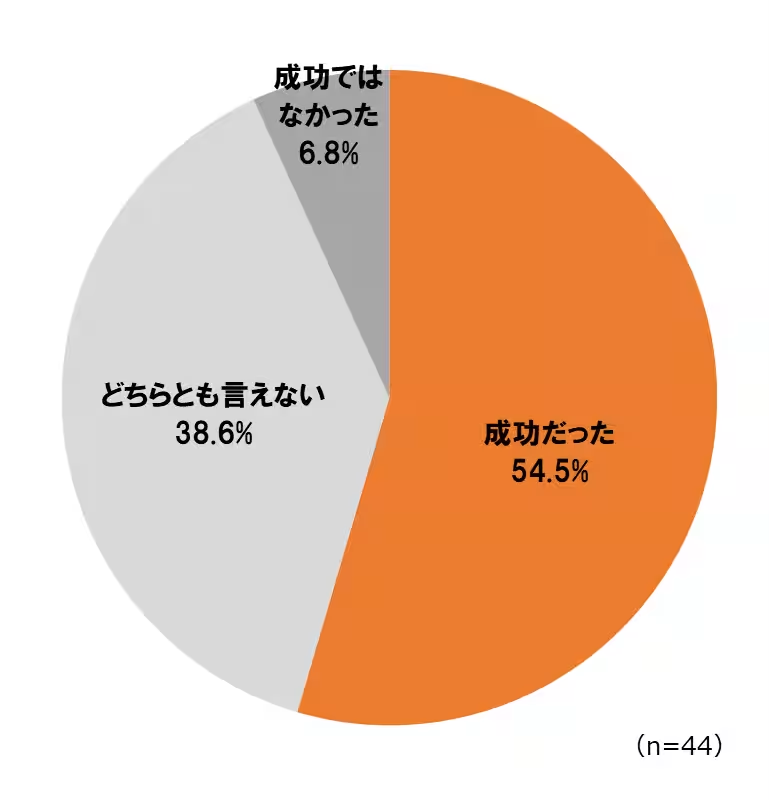
When asked about the success of employing foreign workers, 54.5% of respondents viewed it positively, while 38.6% remained neutral and 6.8% deemed it unsuccessful. This mixed feedback suggests that while foreign worker hiring can yield benefits, it also presents challenges that need addressing.
Language Barrier: A Significant Challenge
In examining reasons for not hiring foreign workers, the survey highlighted the language barrier as a pressing issue, with many respondents citing a lack of Japanese language proficiency among potential hires. This was echoed in questions regarding challenges faced in employing foreign labor. The prevalent concern emphasizes the critical need for language training as part of the hiring process to enhance integration and communication within the workplace.
Conclusion
The survey conducted by Alforce One presents a detailed illustration of the current state of foreign employment in Japan’s restaurant industry. While there are evident opportunities for integrating foreign talent to address labor shortages, significant challenges, particularly regarding language proficiency, must be tackled to optimize this resource effectively. For more in-depth results and insights, the complete survey can be accessed here.
About Alforce One
Alforce One is dedicated to bridging the gap between companies looking to hire foreign workers and organizations that provide necessary support. Their platform facilitates the connection between potential employers and foreign talent, making the recruitment process more efficient. For additional details on Alforce One's services, visit here.


Topics Other)
【About Using Articles】
You can freely use the title and article content by linking to the page where the article is posted.
※ Images cannot be used.
【About Links】
Links are free to use.