



Farnell's Podcast Explores Cutting-edge AI and Human-Centric Innovation
Farnell's Podcast: A Deep Dive into AI and Neuroscience
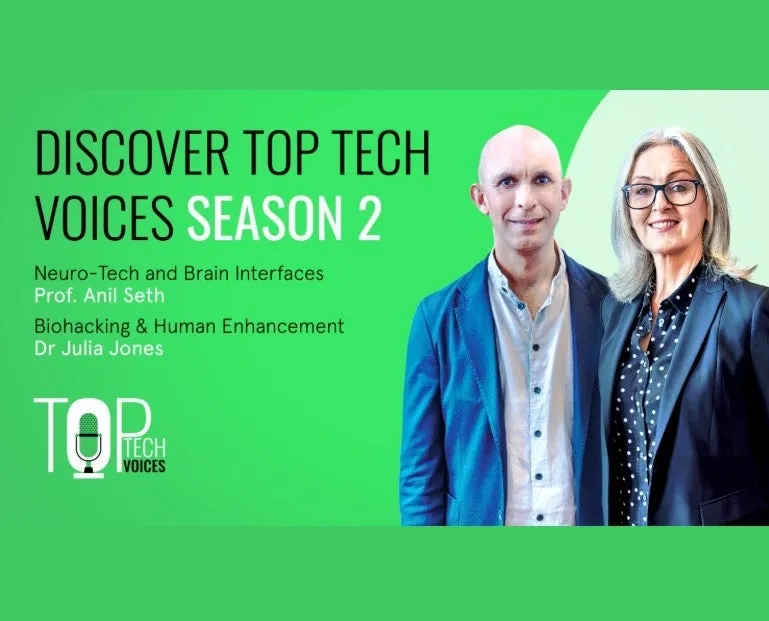
Farnell's podcast, "Top Tech Voices," has entered its second season, unveiling two captivating episodes that explore the transformative effects of neuroscience, artificial intelligence (AI), and healthcare technology on human thought, behavior, and lifestyles. The podcast has become a vital platform for discussing the intersections of technology and the human experience.
Episode Highlights
Episode 3: Neurotechnology and Brain Interfaces
In the third episode, titled "Neurotechnology and Brain Interfaces," listeners are introduced to Anil Seth, a prominent neuroscientist and professor of cognitive and computational neuroscience. Seth dives into one of today's profound scientific questions: how does the brain generate conscious experiences? He intriguingly describes perception as a "controlled hallucination," suggesting that our brains actively construct reality by combining predictions with sensory input. This perspective challenges the common notion of perceiving the world as an objective experience, shedding light on why individuals can experience the same reality in vastly different ways.
The episode also touches upon the rapid advancements in brain-computer interfaces (BCIs), highlighting how they are revolutionizing treatments for conditions like epilepsy and paralysis. While recognizing the potential of neural data, Seth raises crucial ethical issues, particularly regarding accuracy, misuse, and the need to protect "thinking privacy" as access to neural data becomes more prevalent.
Moreover, Seth issues a warning against the design of systems aimed at mimicking or replacing human thought. He advocates instead for technologies that enhance human intelligence, cautioning that excessive standardization could foster a "mental monoculture," diminishing cognitive diversity. The conversation culminates with a call for engineers and technologists to reevaluate their view of the brain—not as a digital machine but as a dynamic, energy-efficient biological system. This shift could encourage more sustainable, human-centered innovation.
Episode 4: Biohacking and Human Enhancement
The fourth episode, titled "Biohacking and Human Enhancement," shifts focus to the future of preventive healthcare with Dr. Julia Jones, a neuroscientist and founder of the health tech startup Validity. Drawing from over 30 years of research, Dr. Jones challenges the increasingly popular trend of "extreme optimization" often associated with biohacking. Instead, she proposes a more sustainable approach that emphasizes extending healthy lifespan rather than merely increasing overall lifespan.
Dr. Jones sheds light on neuroscience's foundation for behavioral change, explaining that forming lasting habits requires time and consistent repetition to physically reconstruct neural pathways. This insight offers a compelling explanation for why many traditional health interventions fail to yield lasting effects.
Additionally, the episode explores music as a biological tool, backed by research in elite sports and military settings. Dr. Jones demonstrates how sound can regulate mood, enhance performance, and support nervous system function, while also expanding applications in fields like dementia treatment. A central theme in this discussion is compassion. Dr. Jones argues that modern environments often conflict with our biological characteristics, suggesting that shifting focus from blame to understanding could significantly improve health outcomes.
Looking to the future, Dr. Jones outlines a vision where health technology combines data and human connection. By utilizing AI to assist coaches, personalize interventions, and enhance engagement, the goal is to maintain a sense of responsibility and empathy that encourages genuine behavior change.
Insights from Farnell
Rebecca Obregon, President of Farnell Global, emphasizes that as technology increasingly permeates our thoughts, work, and lifestyles, innovation must be rooted in human needs. She states, "These dialogues represent a pivotal shift from creating technology driven solely by efficiency to designing systems that support human thought, behavior, and health maintenance. Regardless if it's AI or healthcare technology, the opportunity lies in leveraging innovation to enhance human potential."
Listeners can now tune in to the latest episodes of "Top Tech Voices," a series focusing on human-centric innovations in AI, healthcare, and emerging technologies, with more episodes expected in the coming weeks. Join Farnell's YouTube channel and Spotify for updates.
For more details, visit farnell.com/top-tech-voices.
About Farnell Global
Farnell Global is a trusted distributor of products and technologies for designing, maintaining, and repairing electronic and industrial systems. With over 80 years of extensive experience, a website supporting 48 regions, and a professional staff of over 3,300, Farnell is essential in providing components needed for future technology development. In the Americas, the company operates under the Newark brand, while in Europe, the Middle East, and Africa, it operates as Farnell, and as element14 in the Asia-Pacific region.
Since 2016, Farnell has been a part of Avnet (Nasdaq: AVT), a globally recognized technology distributor, allowing the company to provide comprehensive support across all product lifecycle stages, including unique distribution models and expertise in end-to-end delivery and product design.
For further inquiries, media personnel can contact:
Priyanka Praharaj
APAC Communications Specialist
Email: [email protected]
Naoko Sugimoto
Farnell Japan Marketing
Email: [email protected]
Topics Entertainment & Media)


【About Using Articles】
You can freely use the title and article content by linking to the page where the article is posted.
※ Images cannot be used.
【About Links】
Links are free to use.