



Check Point Introduces Context-Based AI Protection for Cybersecurity Enhancements
Check Point's New AI Protection Feature
In an era where artificial intelligence is increasingly integrated into business operations, Check Point Software Technologies, a leading player in the cybersecurity domain, has announced a groundbreaking feature in AI protection. This new context-based technology is designed to prevent harmful actions by AI agents before they are executed, a significant step forward in safeguarding organizational data.
The Role of AI Agents in Modern Enterprises
AI agents have become essential in various operational domains. Coding agents handle tasks such as writing and executing code, interacting with repositories, and accessing cloud infrastructures, while workforce agents process documents and handle messages to fulfill business workflows. As the autonomy of these systems increases, the complexity of potential security vulnerabilities escalates. Malicious actions might arise not from single prompts but from combinations of seemingly legitimate sequences. Thus, a robust security approach that comprehensively understands these contexts is more critical than ever.
Continuous Contextual Evaluation
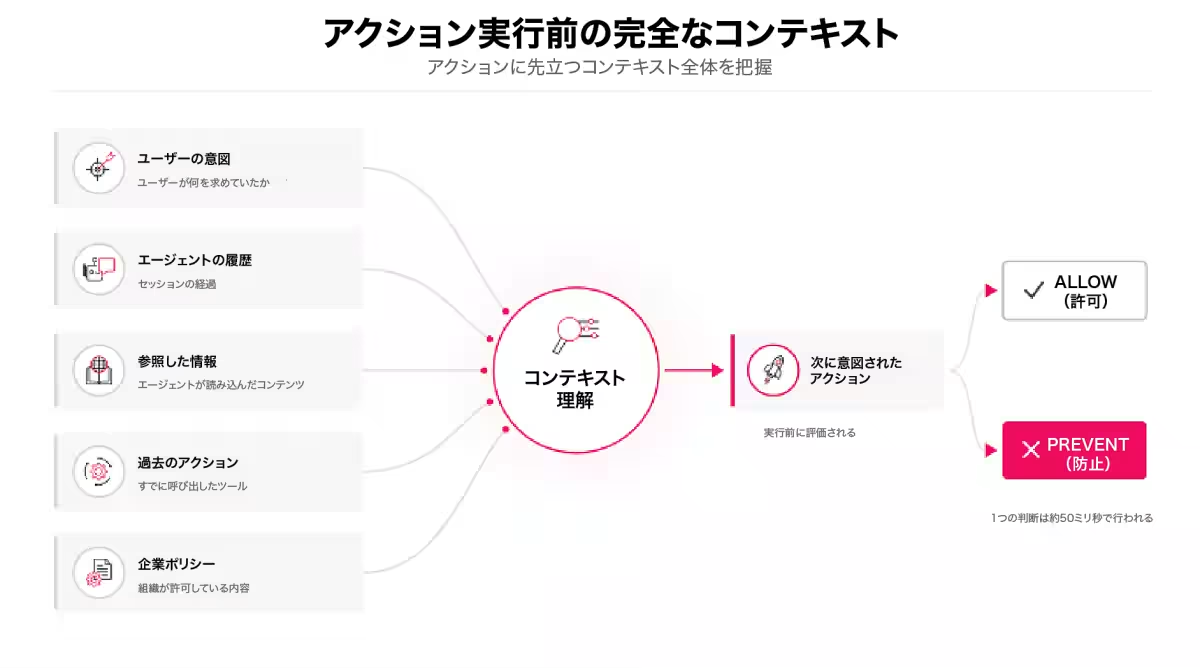
Check Point's innovative protective feature assesses the intentions behind user actions and the context in which agents operate. This includes evaluating prior actions, the information encountered, and the policies applicable at that moment. By continuously correlating these signals in real-time, harmful actions—including unauthorized tasks or actions contradicting intended goals—can be effectively intercepted before they materialize.
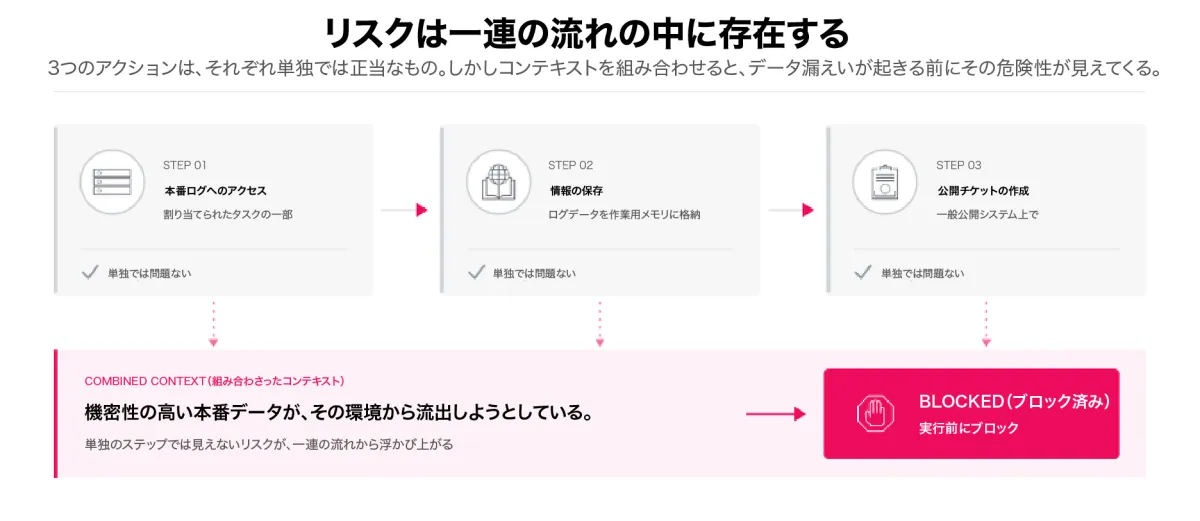
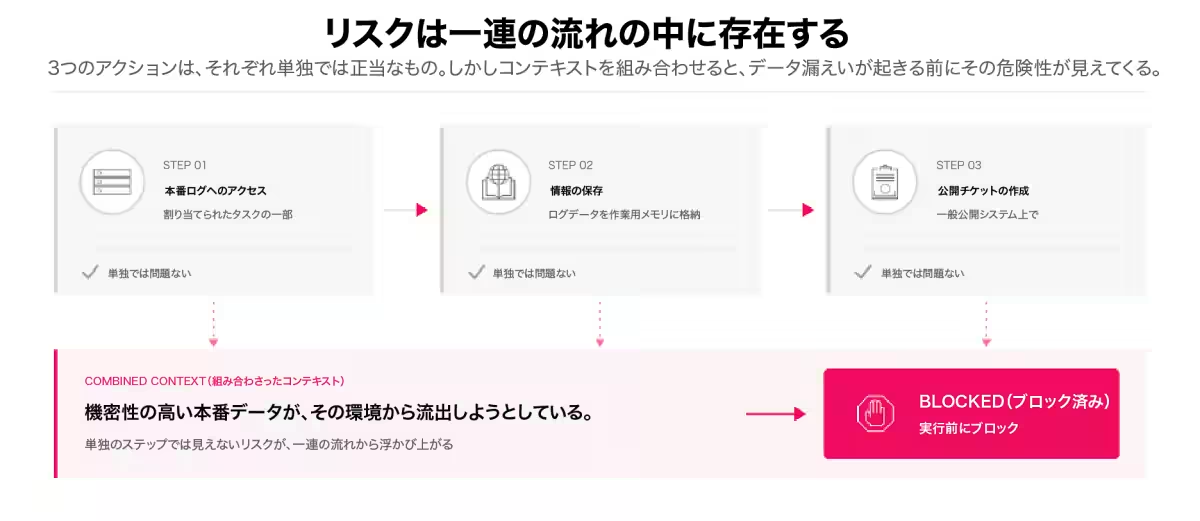
For instance, if a coding agent accesses production logs as part of a legitimate task but subsequently attempts to utilize that information in a public system, the context-based protection evaluates the entire sequence and can prevent data leakage by blocking the final malicious action.
The Importance of Understanding Action Sequences
Existing AI security solutions often overlook the broader sequence of actions, focusing instead on isolated threats. Check Point’s context-driven technology does not rely on predefined rules or signatures for specific behaviors. Instead, it provides a holistic understanding of the tasks and actions to identify potentially harmful outcomes that could result from valid actions in isolation when viewed in the entirety of context.
An example illustrates this well: if a self-operating coding agent tries to directly upload files to an S3 bucket—a move not requested by the user and misaligned with the expected development workflow—the technology can recognize this inconsistency and prevent unauthorized uploads. This demonstrates how the flexibility of AI agents can lead to their strength while also opening doors to unintended actions that deviate from user intent.
Real-time Signal Integration for Enhanced Security
Ofir Israel, VP of AI Security R&D at Check Point, explained the essence of this protection mechanism: “AI agents are useful because they can uncover approaches we hadn’t anticipated. However, when rules are set, the scope of protection is limited to what we assumed at that time. Our security model evaluates the entire context of tasks; if actions do not match the user’s requirements, they are blocked. This is what our customers seek, and that’s why this function is vital today.”
By integrating signals in real-time, Check Point maintains an understanding of how current actions relate to previous ones throughout the workflow. The context includes user intent, previously acquired information, past tool operation histories, task statuses, and applicable policies. This meticulous approach allows for more informed security decisions at the moment an agent attempts to perform an action, maintaining system speed and productivity while enhancing security.
Revolutionizing Protection for Autonomous AI
This innovative protection feature supports not only coding agents but also those involved in various organizational activities, from email and document management to accessing sensitive business data. In multi-agent systems, where information sharing between agents affects actions, the security requirements remain consistent. Whether monitoring a coding agent or a workforce agent, the goal is clear: to ensure the performed actions align with intended ones.
As AI agents become more autonomous, Check Point is poised to offer advanced flexibility while ensuring control over the outcomes of their actions.
The new protection feature is already in operation in real-world environments and is being rolled out gradually for customers utilizing Check Point AI Security. It is available through several integration methods, including Workforce AI Security and Native AI Gateway, utilizing direct APIs and plugins.
Through this development, Check Point reaffirms its mission to protect global organizations from evolving cyber threats, allowing them to innovate confidently while minimizing risks in their journeys toward safe AI transformation.
Topics Other)
【About Using Articles】
You can freely use the title and article content by linking to the page where the article is posted.
※ Images cannot be used.
【About Links】
Links are free to use.