



Exploring Sustainable Cocoa Value Chains at COP31 Japan Pavilion
A Sustainable Approach to Cocoa at COP31
Meiji Co., Ltd. is set to participate in the COP31 virtual exhibition at the Japan Pavilion, running from November 9 to November 20, 2026, in Antalya, Turkey. This event, organized by the Ministry of the Environment of Japan, aims to showcase innovative strategies for promoting sustainable cocoa production and addressing climate change.
Enhancing Cocoa Value through Circular Economy
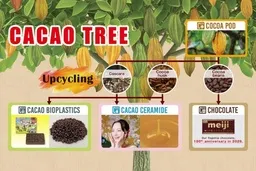
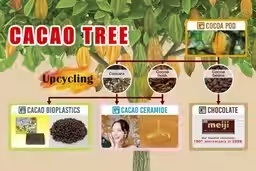
Building on the initiatives presented at COP30, Meiji introduces the concept of a circular cocoa value chain. This approach focuses on repurposing underutilized parts of cocoa, such as the seed husks, into high-value materials. By doing so, we aim to not only enhance the economic status of cocoa farmers but also advocate for a sustainable cocoa production model.
The circular cocoa value chain seeks to transform neglected cocoa byproducts into valuable resources, redistributing the resulting economic advantage back to the local communities. This model is designed to improve farmer income while ensuring sustainability.
Key Innovations Introduced
1. Cocoa Bio-Plastics
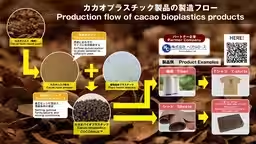
Cocoa bio-plastics, a joint venture with Hemicellulose Co., is a bioplastic material derived from cocoa seed husks. Preliminary life cycle assessments indicate that these bio-plastics can reduce CO2 emissions by 30-40% compared to petroleum-based plastics. The material exhibits a balance of hardness and flexibility, and Meiji plans to further develop its applications to maximize the value of previously overlooked resources.
For more details, visit the virtual showcase: Cocoa Bio-Plastics.
2. Cocoa Ceramides
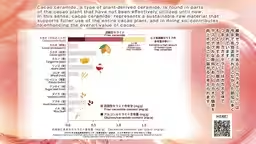
Cocoa ceramides, extracted from cocoa seed husks, represent a breakthrough as a moisturizing agent for both food and cosmetic products. Meiji has successfully pioneered the materialization of these ceramides, creating a unique opportunity to leverage previously unused parts of the cocoa plant, furthering the holistic use of cocoa.
Explore the virtual showcase: Cocoa Ceramides.
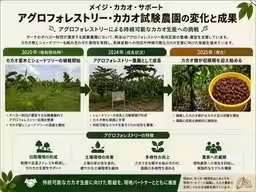
3. Agroforestry Practices
The agroforestry method integrates trees and crops to cultivate diverse products while resembling natural ecosystems. This technique is vital for reducing environmental impacts and maintaining soil health over the long term. Since 2006, Meiji has championed initiatives to support cocoa farmers, such as the “Meiji Cocoa Support” project, which incorporates agroforestry techniques, particularly in regions like Ghana.
Learn more at the virtual showcase: Agroforestry.
Building a Sustainable Future
Through the virtual platform, Meiji's presentation will detail the journey toward establishing a circular cocoa value chain, from maximizing the value of unused cocoa parts to supporting local cocoa farming communities. Continuous efforts are underway to bridge the gap between waste and resourcefulness in the cocoa industry, reinforcing the importance of sustainable practices.
Additionally, on September 14, 2026, Meiji celebrated the 100th anniversary of its Milk Chocolate in Ghana, where it reaffirmed its commitment to sustainable cocoa sourcing and development. During this celebration, a memorandum of understanding was signed with the Ghanaian government to explore future collaborations concerning sustainable cocoa production and economic initiatives.
Learn more about this commitment: Meiji Cocoa Support.
Meiji has been selected for the Ministry of Economy, Trade, and Industry’s initiative to develop a business model using cocoa byproducts for bio-plastic manufacturing across Ghana, Ecuador, and Mexico. This initiative serves to assess the viability of circular economic models in international markets.
For more information, click the release: Meiji Press Release.
About COP31 Japan Pavilion
The COP31 serves as a major international forum for discussions and negotiations regarding climate change. This year marks the 31st session of the Conference of the Parties, emphasizing Japan's technological advancements in tackling climate issues under the theme 'Solutions to the World.' The Japan Pavilion serves as a platform to display Japan's commitment to carbon footprint reduction and sustainable initiatives.
For further details, visit the official websites for COP31 and the Japan Pavilion:
Join us in discovering innovative solutions for a sustainable future and supporting cocoa farmers through a circular economy at COP31!




Topics Environment)
【About Using Articles】
You can freely use the title and article content by linking to the page where the article is posted.
※ Images cannot be used.
【About Links】
Links are free to use.