



Examining Magnetic Environment of the Early Solar System Through Ryugu Sample Analysis
Investigating the Magnetic Properties of Ryugu Samples
Recent magnetic measurements have shed light on the environmental conditions present during the formation of the early solar system, using samples from asteroid Ryugu collected by the Hayabusa2 spacecraft. The research team, composed of esteemed scholars from Tokyo University of Science, Hokkaido University, Okayama University of Science, Tohoku University, and Nagoya University, utilized a high-sensitivity SQUID magnetometer to analyze fine samples from Ryugu, leading to significant findings.
Summary of the Research Findings
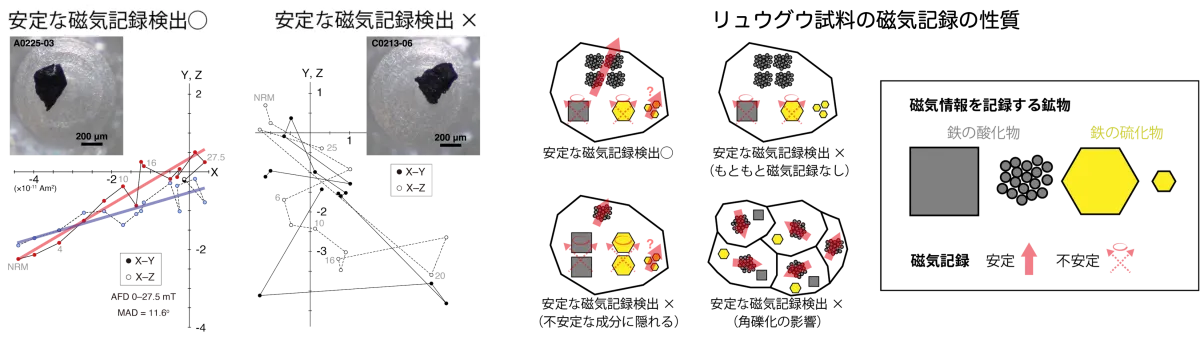
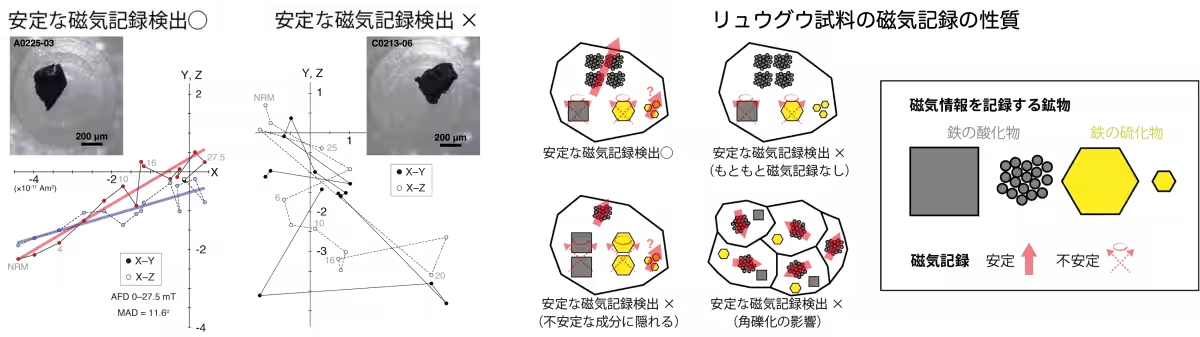
The analysis was successfully conducted on approximately 30 sub-millimeter-sized Ryugu samples. This breakthrough marks a notable advancement in our understanding of the magnetic records contained within these samples, overcoming previous limitations where only fewer and larger samples were analyzed. The acquired magnetic data allowed the researchers to unify diverse interpretations that had previously arisen among different research groups. This work strongly suggests that the samples contain records of the magnetic environment during water alteration on Ryugu's parent body, occurring approximately 3 to 7 million years after the formation of the solar system.
As a vital step towards comprehending the early solar system's material evolution and planetary formation, these findings were officially published online on February 10, 2026, in the Journal of Geophysical Research: Planets.
Background of the Study
To unravel the formation and evolution of the solar system, understanding the physical and chemical conditions under which the primordial solar system was formed is essential. The primordial solar disk's magnetic field is generated by the movement of weakly ionized gas and influences the development of materials within the nebula itself. Thus, the data recorded by primitive materials like chondritic meteorites regarding the magnetic environment of the solar nebula act as crucial constraints in deciphering the evolutionary history of the solar system. Ryugu, being a carbonaceous asteroid, is believed to have preserved valuable information from this period, and the sample return mission by Hayabusa2 has provided a unique opportunity to study these initial conditions directly. However, the samples collected were exceedingly small and weakly magnetized, making the measurement process technically challenging.
Detailed Research Results
Previously, research efforts focused primarily on larger, millimeter-sized Ryugu samples, with magnetic analyses limited to fewer than ten samples in total. As a result, conclusions drawn by various research teams regarding the magnetic information contained within these samples varied widely. In contrast, this current study illustrates a substantial improvement, as the team employed the developed high-sensitivity SQUID magnetometer to systematically measure magnetic properties across 30 fine samples.
This increase in sample size marks a significant advancement, enabling a coherent and synthesized analysis of magnetic properties and revealing that these samples likely record the external magnetic field environment during water alteration on their parent body during the formation period, 3 to 7 million years after solar system formation. The findings provide new constraints regarding the magnetic environments in the early solar system and demonstrate the potential of magnetic measurements on small return samples to elucidate the history of solar system evolution.
Future Prospects
Future investigations will further examine the magnetic data recorded by Ryugu samples to deepen our understanding of the early solar system environment. The techniques developed for measuring tiny samples in this study might also be adapted for various other return samples and meteorite studies. This could lead to a more detailed reconstruction of the chronological and spatial changes in the magnetic environment of the solar system's formation era. Moreover, the outcomes from this research will serve as a foundation for utilizing magnetic data as a pivotal scientific indicator in future extraterrestrial body exploration and sample return missions.
In conclusion, this research, funded by the Japan Society for the Promotion of Science (JSPS) with grant number JP21H01140, paves the way for richer insights into the evolutionary narrative of our solar system, unlocking the potential for future studies across multiple scientific fronts.
Topics Other)
【About Using Articles】
You can freely use the title and article content by linking to the page where the article is posted.
※ Images cannot be used.
【About Links】
Links are free to use.