



Unlocking the Power of Human Resources with AI: Japan AIOperations Report 2026
Unlocking the Power of Human Resources with AI: Japan AIOperations Report 2026
Introduction to the Japan AIOperations Report 2026
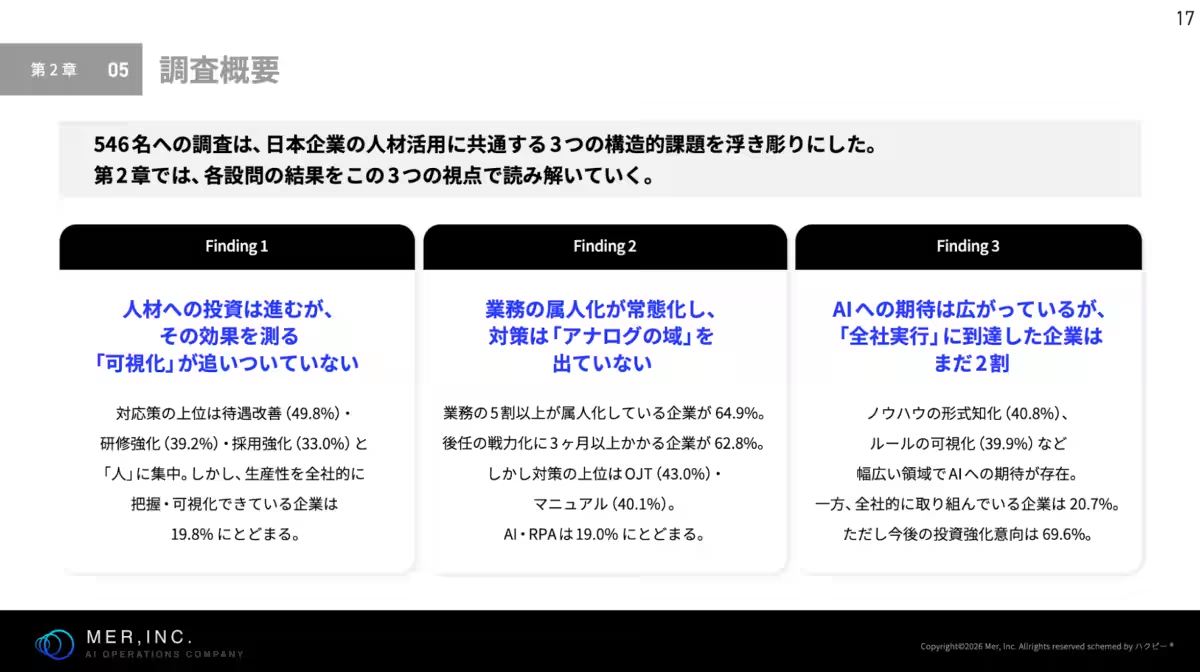
The Japan AIOperations Report 2026 Spring, released by Mer, a Tokyo-based company specializing in AI Operations, explores the current state of human resource utilization in Japanese companies amid a chronic labor shortage. This extensive report, which is now available for free, is based on comprehensive insights from 546 professionals involved in operational processes and workforce management across businesses with over 100 employees.
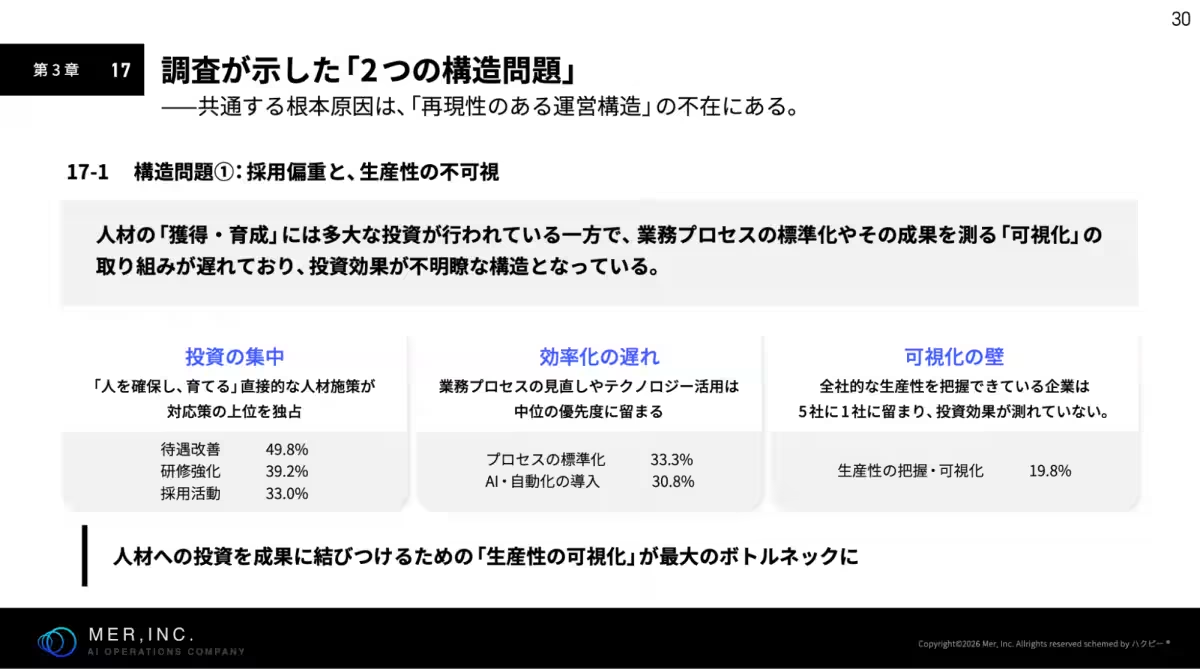
This research revealed alarming truths: while 49.8% of companies see salary and benefits adjustments as a primary solution to talent acquisition, only 19.8% possess a company-wide understanding of productivity per employee. Furthermore, 64.9% of organizations are characterized by a dependency on specific personnel, leading to widespread 'human-centric' operations. This contradiction highlights the urgent need for a paradigm shift in how companies approach their workforce.
The Pressing Labor Shortage in Japan
From 2024 onward, Japan's workforce scarcity is expected to escalate dramatically, with a projected decline of 13 million in the working-age population from 2020 to 2040. The impacts are dire, with bankruptcies attributed to labor shortages reaching an unprecedented 427 annually by 2025. Many sectors, particularly in sales and IT, see extremely high job-to-candidate ratios, with 2.35 times more job openings than suitable applicants for sales roles and 1.65 times for IT positions. It's not just about quantity; the problem lies in the scarcity of individuals with specific skills. This narrative demonstrates that merely increasing hiring efforts will not address the deep-rooted issues within the labor market.
In contrast, advanced companies abroad are redesigning their operational frameworks around AI, achieving substantial results without expanding headcounts. For instance, Klarna reported a 24% reduction in average staffing while simultaneously boosting revenues by 29%. In industries with advanced AI integration, revenue growth per employee far exceeds that of sectors lacking such technologies, suggesting that leveraging AI could be a pathway for Japanese firms to improve productivity amidst labor challenges.
Key Findings and Recommendations
The report outlines essential findings:
- - A staggering 80% of surveyed companies acknowledge experiencing talent shortages, revealing a cyclical dilemma leading to reduced productivity.
- - The most common remedy for workforce shortages, highlighted by 39.2% of survey participants, was enhancing training programs. However, this approach fails to address the systemic issues of employee dependency and underutilization of existing assets.
- - Only 20% of organizations can accurately gauge productivity across their teams, hampering their ability to implement effective operational strategies.
The report emphasizes the need for a radical shift from merely increasing workforce size to creating repeatable operational structures that maximize the capabilities of existing employees. By adopting methodologies that incorporate AI-driven processes, firms can build sustainable frameworks capable of thriving even with reduced personnel.
Practical Roadmap for Transformation
The report provides a roadmap for transitioning to operational models that leverage current talent effectively. Some practical steps include:
1. Standardization of Operations: Streamlining processes allows companies to decrease dependency on specific individuals and democratize knowledge across teams.
2. Data-Driven Insights: Establishing a culture of productivity metrics helps in identifying areas of improvement and enhances decision-making.
3. Automating Routine Tasks: Utilizing AI and automation to relieve key personnel from mundane tasks allows them to focus on strategic initiatives, optimizing their contributions.
Case studies from companies like Geekly, Hmlet Japan, and Timers illustrate how integrating structured operational methodologies leads to significant productivity gains:
- - Geekly achieved double the industry average sales per employee by implementing systemic processes
- - Hmlet Japan enhanced sales productivity by 240% through the integration of effective operational structures.
- - Timers liberated managers from non-core tasks, improving overall efficiency.
Conclusion
The Japan AIOperations Report 2026 Spring sheds light on the current and future state of workforce management in Japan—arguing for an urgent need to rethink how companies approach employee utilization. Companies must confront the reality that it is not merely a shortage of personnel but a lack of cohesive operational structures that hinders success in this new labor landscape. By shifting focus from traditional hiring practices toward innovative structural designs that maximize the capabilities of existing employees, organizations can not only survive but thrive. For detailed insights, visit the full report here.


Topics Business Technology)
【About Using Articles】
You can freely use the title and article content by linking to the page where the article is posted.
※ Images cannot be used.
【About Links】
Links are free to use.