



Japan Airlines Submits Application for International Cargo Fuel Surcharge Effective August 2025
Japan Airlines Submits Application for New Fuel Surcharges
Japan Airlines (JAL) has recently taken a significant step towards adjusting its international cargo fuel surcharges. As of August 1, 2025, the airline intends to implement new surcharge rates, marking an essential response to fluctuating jet fuel prices.
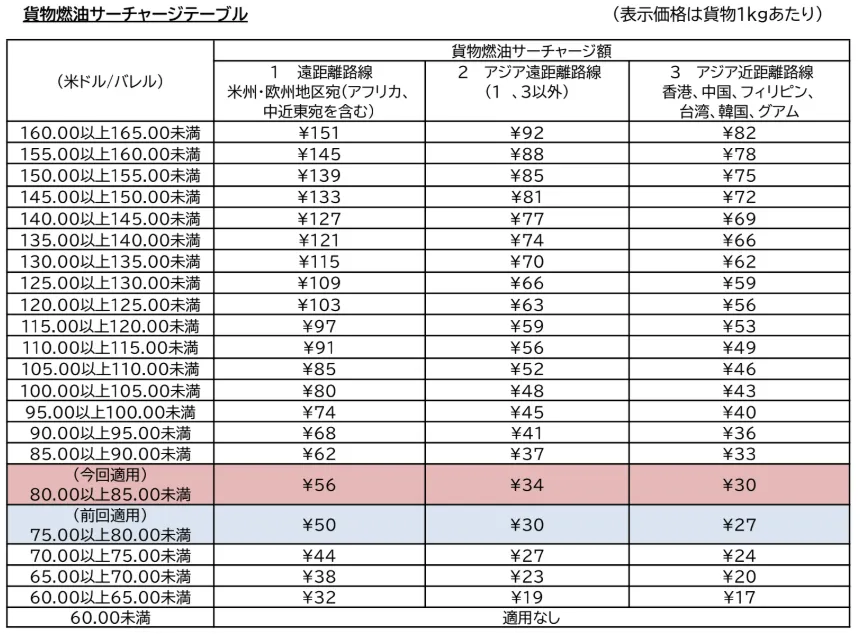
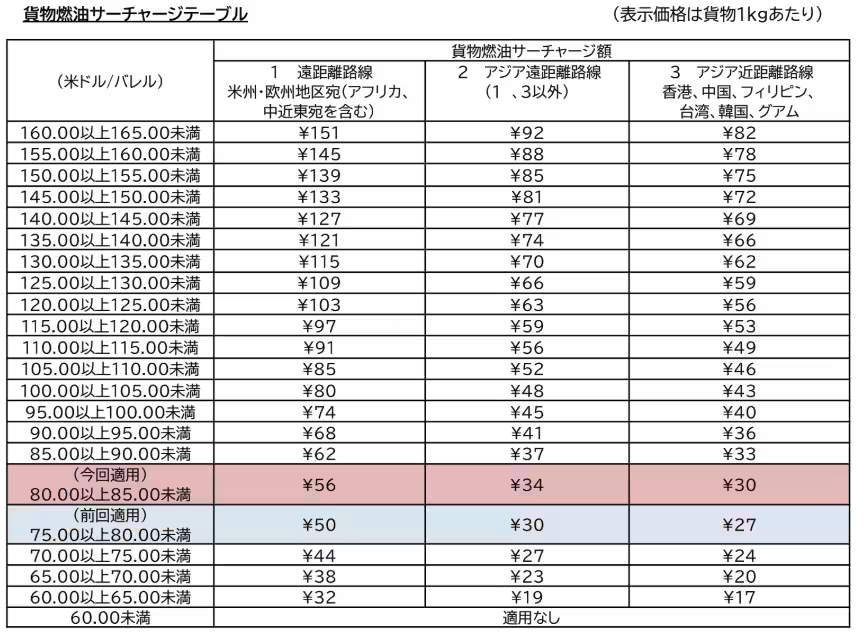
The application made by JAL to the Ministry of Land, Infrastructure, Transport and Tourism in Japan reflects the average price of jet fuel, which stood at $84.70 per barrel in June 2025. Based on these fuel prices, the fuel index price has been set between $80.00 and $85.00. Consequently, the surcharge will vary depending on the cargo route:
- - For long-distance routes to regions like the Americas and Europe, the surcharge is set at 56 yen per kilogram.
- - For long-distance routes to Asia, the charge will be 34 yen per kilogram.
- - As for short-distance routes within Asia, the amount will be reduced to 30 yen per kilogram.
In order to maintain transparency and adaptability in pricing, JAL has established a policy to revise these surcharges monthly—12 times a year. This ensures that adjustments can be made in alignment with the evolving costs of jet fuel and reflects the dynamic nature of the aviation industry. The surcharge amounts will be calculated using the average price of jet fuel (kerosene) traded in Singapore from the month prior to the adjustments, specifically implementing a new table of rates introduced in April 2024.
With this move, JAL aims to ensure that its freight services remain competitive while adequately handling the costs associated with fuel procurement. The air cargo market is highly sensitive to fuel expenses; thus, implementing such surcharges is vital for balancing operational costs with pricing strategies. The decision also underscores the importance of agility and responsiveness in the logistics industry, particularly amidst the ongoing global economic fluctuations.
As airlines worldwide face similar challenges regarding inflation and rising operational costs, JAL's proactive strategy could serve as a reference point. By remaining aligned with market trends and changes in fuel pricing, JAL is positioning itself to navigate the economic landscape more effectively.
Stakeholders in the logistics sector, including businesses relying upon international shipping services, are advised to stay informed about these changes. Adjusted surcharges not only affect the cost of logistics but can also have downstream impacts on pricing for consumers and businesses alike.
In conclusion, the submission of JAL’s application for new fuel surcharges marks a critical juncture for the airline and the air cargo industry. As the implementation date approaches, continuous monitoring and adjustments will be essential to ensure that both JAL and its clients can navigate the financial implications effectively.
Topics Other)
【About Using Articles】
You can freely use the title and article content by linking to the page where the article is posted.
※ Images cannot be used.
【About Links】
Links are free to use.