




The Transformation of Engineering Careers in Japan: A Study by Randstad
The Transformation of Engineering Careers in Japan: A Study by Randstad
Randstad, a leading global human resource service provider, has released the findings of its latest report titled "Randstad Employer Brand Research 2026 (Engineering)." This comprehensive survey evaluates the current state of the engineering talent market in Japan and highlights significant shifts in the job expectations and career philosophy of Japanese engineers.
Key Findings
The survey reveals that engineering professionals in Japan have developed a unique perspective toward their careers, characterized by a strong desire for autonomy concerning their skills and market value. Unlike their counterparts in other sectors, these engineers tend to maintain a low rate of physical mobility—whether that means transferring to another company or moving within their current organization. Instead, they are focused on enhancing their expertise while staying in their current roles, which they perceive as a strategy for securing employment stability.
In today's fast-paced technological landscape, the urgency for continuous upskilling (reskilling) has become paramount for these professionals. For them, the opportunity to enhance their skills is not merely an organizational benefit but a critical self-defense mechanism in a volatile job market.
Businesses aiming to attract and retain proficient engineers must rethink traditional employment practices that rely on lifelong job security and uniform personnel systems.
Compensation as the Core Attractor
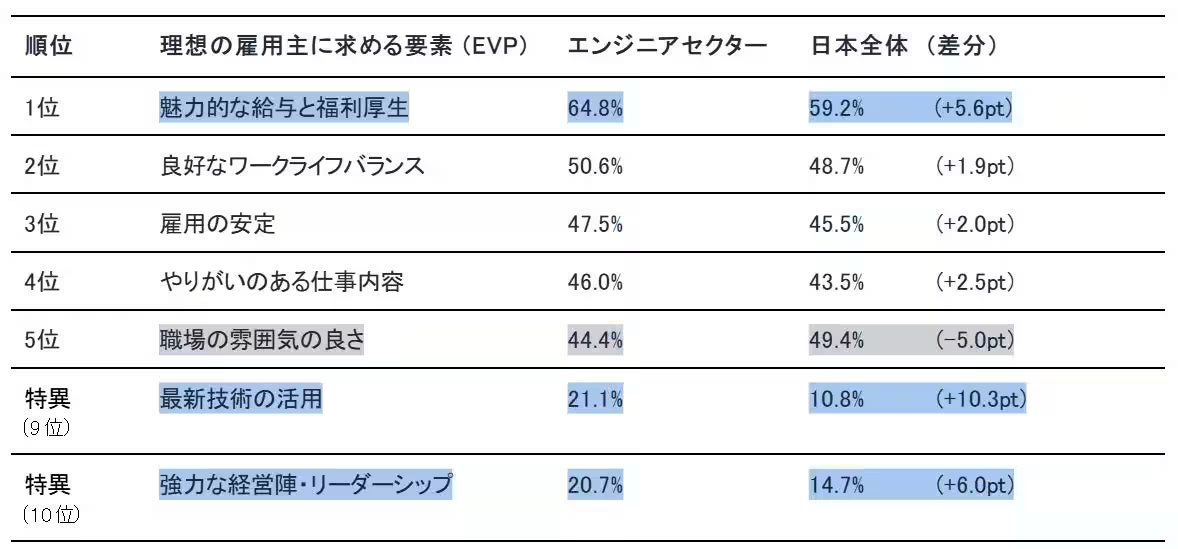
The survey indicates that an appealing salary and benefits package is a significant determinant in the choice of workplace among engineers, with a striking 64.8% of respondents emphasizing its importance. This figure substantially surpasses the national average of 59.2%.
In a time when technological advancements directly tie a professional's skillset to a company’s competitive edge, compensation has transformed from merely being a means to support oneself to functioning as a strict performance evaluation—a 'scoreboard' reflecting their technical prowess and market value. Emotional appeal, such as workplace camaraderie and pride in craftsmanship that once attracted talent, now falls flat for top engineers.
Legacy Systems as Career Stagnation
A closer analysis of employment intentions reveals a stark reality: only 12.4% of engineers intend to seek jobs outside their current companies, and just 4.2% are looking for internal transfers. Both figures are below the national averages of 13.5% and 4.9%, respectively. This does not indicate contentment with the status quo; rather, it reflects a strategic decision whereby engineers actively pursue autonomous growth to bolster their market capability. Notably, 30.3% cite enhancing their market value through reskilling as an essential component of their job security—well above the national average of 20.6%.
When asked about their ideal employers, 21.1% of engineers prioritize companies that invest in cutting-edge technologies, surpassing the national average by over ten points. For engineers, engagement with the latest advancements is not merely a professional interest but a powerful retention factor. Conversely, companies that hesitate to invest in technology are quickly labeled as having no future.
Redefining Workplace Appeal
Interestingly, the emphasis on a comfortable workplace atmosphere has diminished among engineers. Their preference for a strong leadership vision over vague notions of workplace friendliness is evident in the findings: only 44.4% rate pleasant working conditions as a priority, lower than the national average of 49.4%. Engineers crave clear guidance and a robust leadership structure; a mere emphasis on a friendly environment often breeds caution about potential constraints on personal freedoms and professional growth.
Summary and Strategic Recommendations
The results showcase a significant shift in the career outlook of engineers in the traditionally conservative Japanese manufacturing landscape. Engineers no longer rely on the allure of lifelong employment; instead, they uphold skills autonomy as their security in employment stability. While some may appear satisfied in their current roles, their commitment to continual learning and market relevancy is what drives their career decisions.
To successfully attract and retain top engineering talent, companies must implement transparent compensation frameworks that align with market expectations, offer flexible work-life balance initiatives, create personalized retention strategies based on employees' diverse backgrounds, and focus on the integration of technology with sincere human touch in recruitment processes.
By addressing these areas, companies can build a compelling value proposition that resonates with the desires of today’s engineers, ensuring they remain valuable contributors to the company's future success.
Additional Information
For more details, the full report can be accessed by downloading it from Randstad's website.


Topics People & Culture)
【About Using Articles】
You can freely use the title and article content by linking to the page where the article is posted.
※ Images cannot be used.
【About Links】
Links are free to use.