



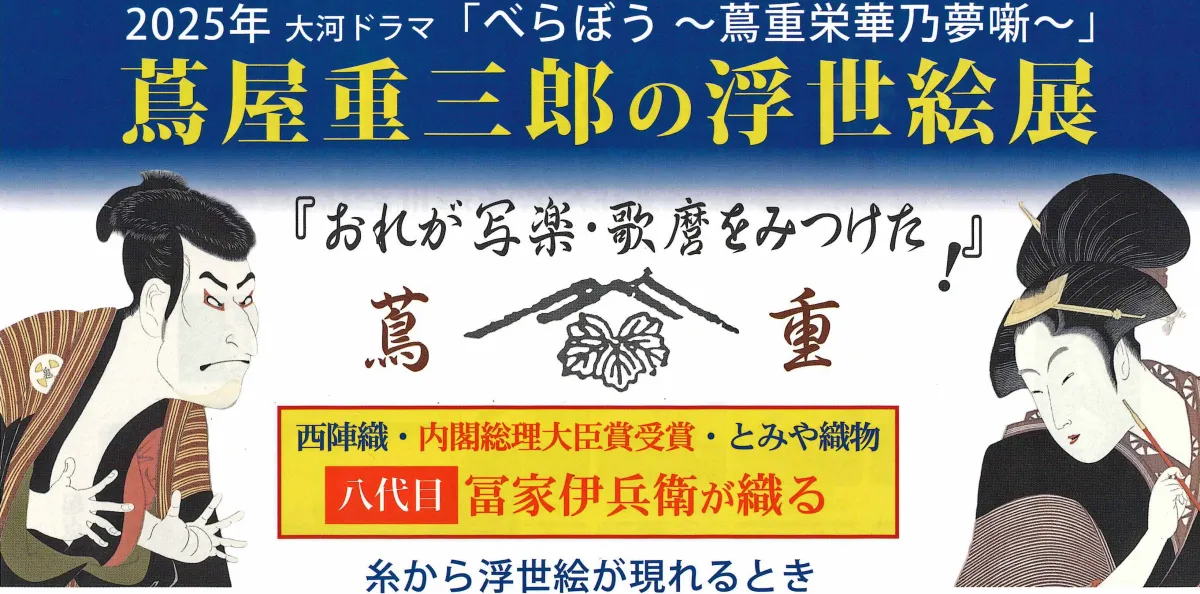
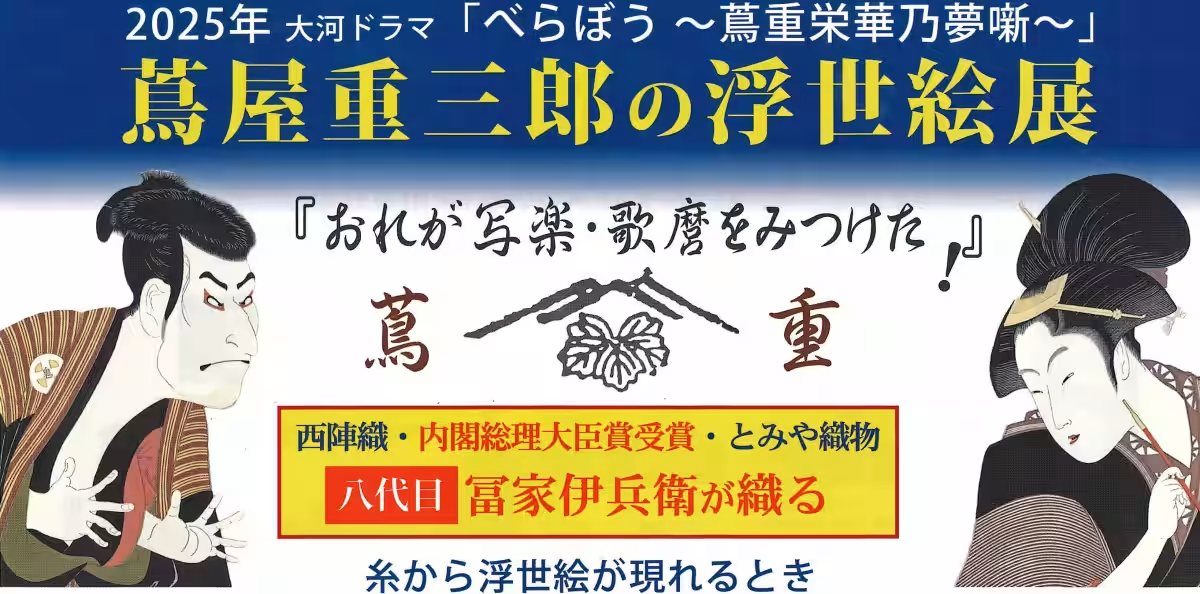
Experience the Unique Ukiyo-e Exhibition Featuring Tsutaya Juzaburo at Gunze Museum
Discover the Special Ukiyo-e Exhibition
Starting from May 2nd and running for five days, the Gunze Museum in Ayabe, Kyoto, is hosting a remarkable Ukiyo-e exhibition featuring works inspired by Tsutaya Juzaburo, the protagonist of the currently airing NHK historical drama, "Bera Bō - Tsuta Jūeikan no Yume Banashi." This exhibition offers a rare opportunity to explore the exquisite world of Ukiyo-e as it intertwines with the legacy of this famous figure.
The exhibition will display elaborately crafted pieces that pay homage to notable artists such as Sharaku, Utamaro, and Hokusai. These artworks are not mere reproductions; they are intricately produced using the Nishijin textile technique, recognized for its exceptional craftsmanship and aesthetics.
Exhibition Details
Period:
May 2 (Friday) – May 6 (Tuesday, holiday)
10:00 AM – 4:00 PM
Location:
Gunze Museum Collection Room
1 Aonocho, Ayabe City, Kyoto Prefecture
Gunze Museum
Admission Fee:
Free
Featured Works
The exhibition will include:
- - A large head portrait of Sharaku expressed in Nishijin textile
- - An interpretation of Utamaro's beauties, depicted using Nishijin textile techniques
- - Hokusai’s "Thirty-Six Views of Mount Fuji" in Nishijin textile format
- - Hiroshige's "Fifty-Three Stations of the Tōkaidō" presented in Nishijin textile
About Nishijin Textile
Nishijin textile is characterized by the use of several strands of fine threads, resulting in a detailed and complex weaving technique. It was developed in the early Meiji era by Tomiya Textiles in Kyoto, applying traditional Nishijin weaving techniques. The extraordinary precision of the fabric can make it appear photographic when viewed from a distance, capturing depth and engaging the onlooker’s gaze. Each piece requires over double the number of threads used in ordinary kimono obi, with a multitude of silk threads dedicated to emphasizing the delicate shadows found in Ukiyo-e scenes. This intricate process necessitates skilled artisans who weave every single piece by hand, as it cannot be replicated by machinery.
Highlighted Artworks
One of the showcased pieces includes:
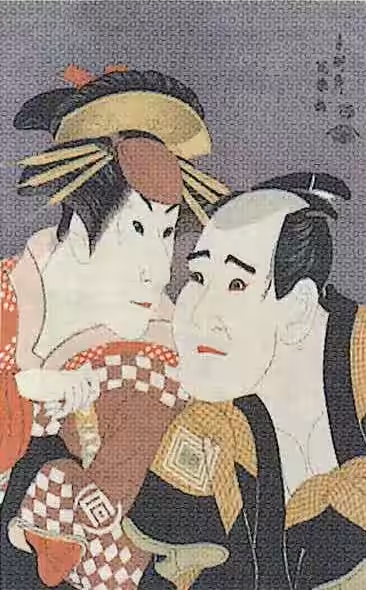
- - Sharaku's "Ichikawa Tōmemon's Crabbing at the Togoshi Hill and Sanogawa Ichimatsu (Nishijin textile): This notable large head portrait features a character from a true story of revenge that transpired in Genroku 14, showcasing the poignant tale of two young brothers avenging their family's wrongful death after 28 years, set in Kameyama Castle.
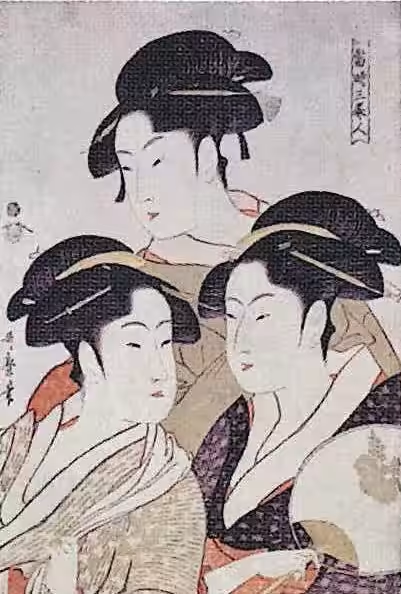
- - Utamaro's "Three Beauties of the Kansei Era: A portrayal that reflects the vibrant life of oiran and women from the entertainment districts entwined with town maidens, emphasizing the elegance of feminine grace through detailed line work. This piece represented three iconic figures, the geisha Tomimoto Toyohina, the signboard girl Oki from Nambaya, and Ohisa from Takashimaya.
Join us at the Gunze Museum to explore these meticulously crafted Ukiyo-e representations that blend artistry and storytelling, honoring the rich cultural heritage and craftsmanship of Japan.
Topics Entertainment & Media)
【About Using Articles】
You can freely use the title and article content by linking to the page where the article is posted.
※ Images cannot be used.
【About Links】
Links are free to use.