



JAL Group Achieves Its Green Transformation Management Goals for 2025
JAL Group's Commitment to Sustainability and Green Transformation
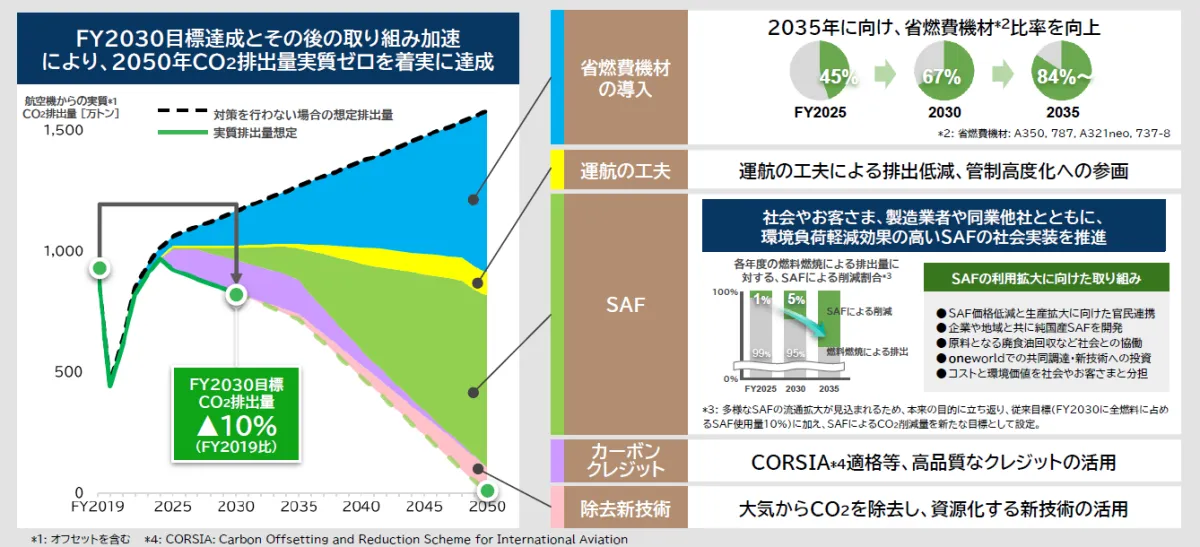
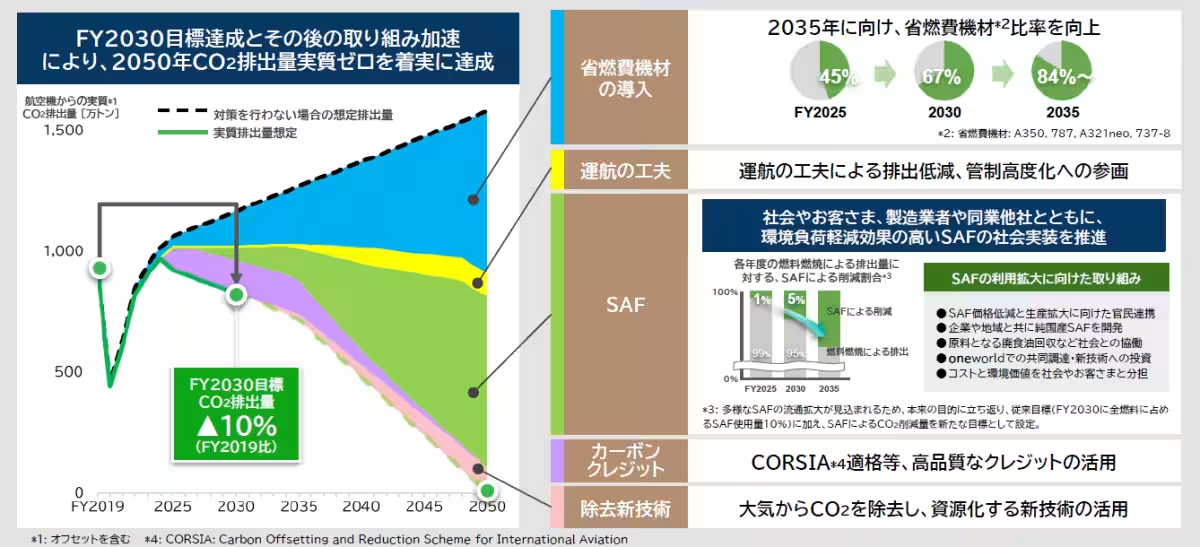
In April 2026, the JAL Group proudly announced that it has met its management goals for Green Transformation (GX) set for the fiscal year 2025. This ambitious target was established back in 2020, making JAL the first domestic airline to commit to achieving net-zero CO₂ emissions by 2050. Specifically, the group aimed to reduce its CO₂ emissions from aircraft to below the 2019 level of 9.21 million tons by the fiscal year 2025.
To achieve this, the airline implemented a series of strategic measures including the modernization of its fleet with fuel-efficient aircraft, operational enhancements for daily flights, and the use of Sustainable Aviation Fuel (SAF) along with carbon credits. Through these measures, the JAL Group not only met its CO₂ reduction targets but also successfully replaced 1% of its total fuel consumption—equivalent to about 40,000 kiloliters—with SAF.
Embracing CORSIA Standards
One of the fundamental frameworks guiding JAL’s sustainable practices is CORSIA (Carbon Offsetting and Reduction Scheme for International Aviation), which is established by the International Civil Aviation Organization (ICAO). Under CORSIA, airlines worldwide, including those in Japan, are mandated to monitor and reduce their CO₂ emissions through various strategies, including the use of SAF and carbon credit mechanisms.
The JAL Group is set to source SAF compliant with CORSIA standards by fiscal year 2024 and begin procuring and retiring CORSIA-compliant credits by fiscal year 2025. By adhering to the CORSIA guidelines, JAL ensures transparency and quality in its emissions management, aiming to further reduce its net CO₂ emissions going forward.
Looking Ahead to 2030
With an eye towards the future, JAL has also announced its management objectives for fiscal year 2030, which include a target to decrease CO₂ emissions by 10% compared to 2019 levels, equating to 8.28 million tons. Part of this strategy involves reducing 5% of the carbon emitted from fuel combustion through the utilization of SAF.
Moreover, JAL continues its efforts toward achieving 10% of its total fuel requirements being met through SAF, while employing various techniques to minimize emissions both within and outside the value chain. These include investing in fuel-efficient technologies and adopting innovative operational practices.
JAL's multilevel approach showcases its commitment to not only meeting regulatory requirements but also contributing significantly towards a more sustainable and environmentally friendly aviation industry. As the company moves beyond 2025, its persistent efforts and strategic planning are positioned to enhance its sustainability credentials in a rapidly evolving global landscape.
For more detailed information, you can visit the official JAL press release at JAL Press Release and learn about CORSIA at CORSIA Information.
Topics Other)
【About Using Articles】
You can freely use the title and article content by linking to the page where the article is posted.
※ Images cannot be used.
【About Links】
Links are free to use.