




Innovative Development of Biodegradable Bio-Based Polymers from Plant Resources
Introduction
In the pursuit of a circular economy, researchers are urgently developing biodegradable biomaterials that do not rely on petroleum resources. This innovative approach aims to create high-performance biomass plastics that can undergo chemical recycling and decomposition.
Development of Bio-Based Polymers
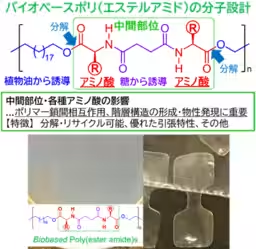
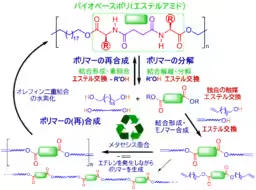
A research team from Tokyo Metropolitan University, led by Professor Kotohiro Nomura, has successfully developed high-functionality bio-based polymers (polyester amides) from non-edible plant oils and amino acids. These newly developed materials exhibit remarkable mechanical properties, including flexibility and strength surpassing that of conventional plastics like polyethylene. The researchers discovered that the polymer's unique characteristics arise from a novel catalytic process, enabling reversible bonding formation and dissociation, which is pivotal for synthesizing and degrading polymers from biomass sources.
Importance of Biodegradable Materials
Creating biodegradable materials is essential Not only for reducing reliance on fossil fuels but also for addressing waste management issues. The bio-based polymers developed in this research can be recycled chemically, transforming waste into usable raw materials, thus contributing to resource circularity.
Performance Analysis
The research focused on utilizing non-edible plant oils and amino acids to synthesize a new class of bio-based polymers. Through a meticulous process, the team achieved a polymer with superior tensile strength and elongation at break compared to common synthetic plastics. The environmental impact of this innovation could be profound, as it offers an alternative that aligns with sustainable practices, reducing ecological footprints significantly.
Self-Repairing Functionality
A standout feature of the newly developed materials is their self-repairing capabilities. After experiencing stress or breakage, these polymers can return to their original state, enhancing their practicality and lifespan. This aspect of the polymers makes them highly attractive for various applications where durability and sustainability are paramount.
Future Implications
Looking towards future applications, the research team envisions a wide array of uses for these bio-based polymers, extending beyond traditional plastics into more complex systems where durability and environmental considerations intersect. The systematic approach towards polymer synthesis and degradation positions this work at the forefront of sustainable materials science.
Conclusion
In conclusion, the recent advancements in the development of bio-based biodegradable polymers highlight a significant leap towards a sustainable future, where materials are designed to be both high-performing and eco-friendly. This innovative advancement suggests a promising path for mitigating plastic waste and fostering a circular economy, making it an exciting breakthrough in the material science field.
Publication details regarding this groundbreaking research will be available on July 6, 2026, in the online edition of the journal 'JACS Au'. This study represents a significant stride towards achieving sustainable materials development and tackling critical environmental challenges.






Topics Consumer Products & Retail)

【About Using Articles】
You can freely use the title and article content by linking to the page where the article is posted.
※ Images cannot be used.
【About Links】
Links are free to use.