



The Shift in Elementary School Games: From Combat to Creativity and Connection
Introduction
In recent years, the gaming landscape for elementary school children has undergone a remarkable transformation. A survey conducted by Gametrainer, a subsidiary of Kayac, highlights a significant shift in the types of games that captivate young players' interest. This change reflects a broader trend towards creativity and collaboration rather than competition, indicating a profound evolution in the gaming culture among children.
Data Analysis: Trends Uncovered
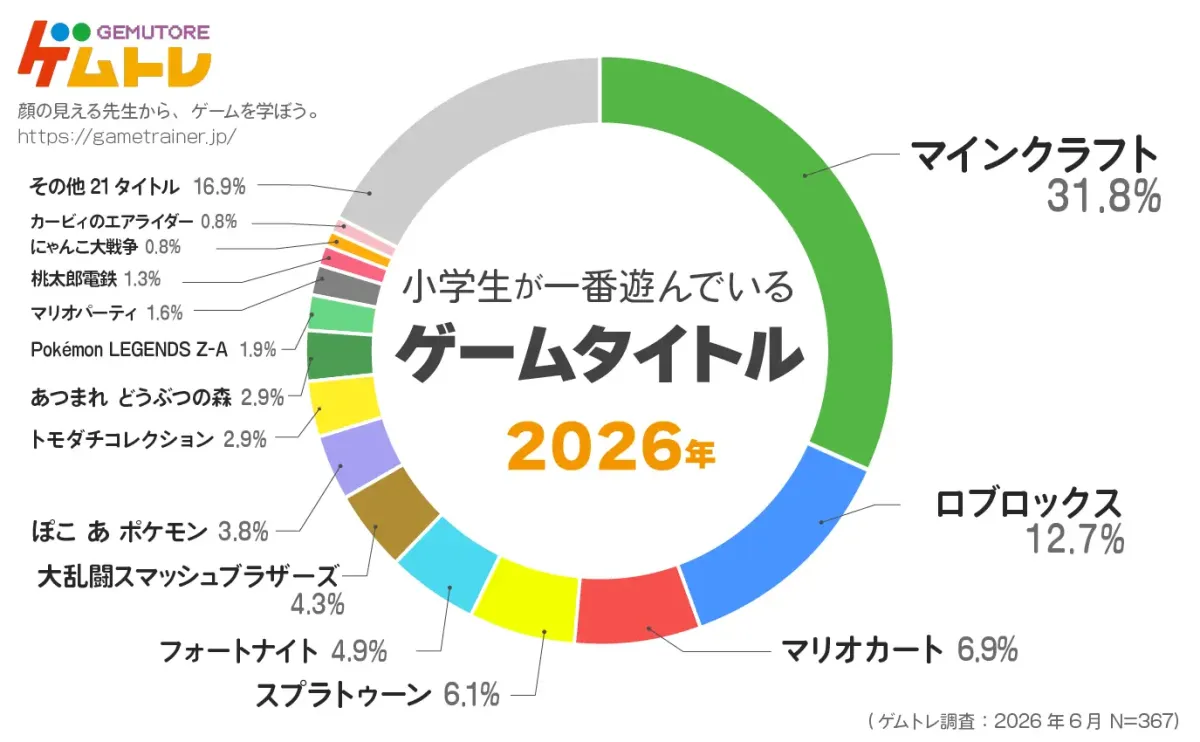
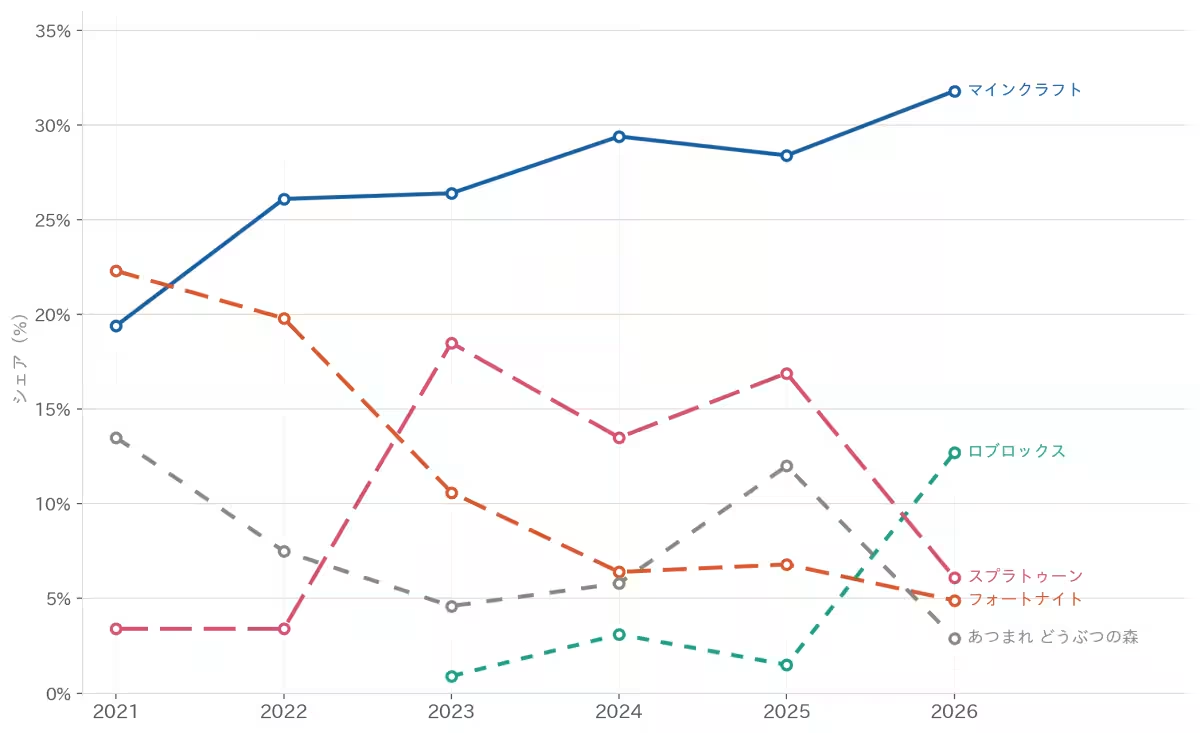
Kayac's analytical report covers data gathered over a six-year period, from 2021 to 2026, revealing a noteworthy transition from combat-centric games towards those emphasizing creation and connection. In 2021, Fortnite was at the peak of popularity, capturing 22.3% of the young gaming audience. However, by 2026, its market share plummeted to only 4.9%, positioning it at fifth place. Conversely, Minecraft has experienced an impressive surge, maintaining its top position since 2022 and achieving a market share of 31.8% by 2026.
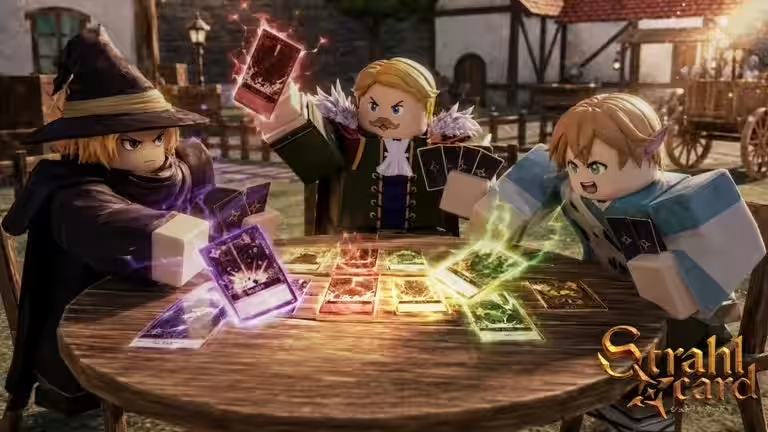
One of the standout observations is the meteoric rise of Roblox, which jumped from 0.9% market share in 2023 to 12.7% in 2026, ranking second overall. This data suggests that children today are finding new avenues for creativity and social interaction through gaming platforms like Roblox, stepping away from the traditional competitive models.
Key Trends Identified
Transition to Creation-Based Games
- - The dramatic drop in Fortnite's popularity, coupled with Minecraft's ascent, illustrates a widespread preference for games that foster creative expression over competitive achievement.
- - New titles like Poko a Pokémon and Tomodachi Collection have emerged, reflecting a growing interest in games centered around community and collaboration rather than conflict.
The Rise of Roblox: A Hub for Social Gameplay
- - Roblox’s appeal stems from its ability to offer a platform where friends can gather, play diverse games, and engage in social interactions, thereby becoming a virtual meeting place rather than just a gaming application.
- - The increase in players indicates a shift in perception where gaming becomes a shared experience rather than solo entertainment, thus redefining how children connect through play.
Collaboration and Co-Creation as New Norms
- - There has been a noticeable shift from individual play to collaborative and co-creative gaming experiences. The emergence of games that emphasize sharing and building together highlights children's preference for cooperative gameplay.
- - For parents and educators, it's becoming increasingly important to recognize the role of gaming in fostering social skills and creativity among children, paving the way for a new understanding of play.
Observations on Minecraft's Dominance
Minecraft has solidified its status as the unmatched leader in this new era of gaming. What sets it apart is the lack of predetermined objectives, allowing players the freedom to shape their worlds as they see fit. The game encourages exploration and creativity, granting children a platform where the act of creation is central to the gameplay experience.
This sustained popularity signifies not merely a preference for games but rather an intrinsic desire among children to express themselves through the act of creation, reinforcing the notion that they seek adventures that reflect their imagination.
Roblox: Redefining the Gaming Experience
Roblox’s swift ascension in popularity marks a significant change in how children perceive gaming. Unlike traditional models that isolate players, Roblox fully integrates social interaction with gameplay, allowing friends to unite not just in competition but in collaborative fun. This platform encourages creativity, enabling users to develop and publish their games, thus positioning it as a leading force in shaping gaming culture for the younger generation.
2026: A Year of New Titles
The trend towards cooperative and co-creative experiences is further underscored by the new titles that have appeared in annual rankings. Games promoting coexistence and creativity have emerged, reflecting a marked departure from competitive titles.
- - Titles such as Poko a Pokémon and Tomodachi Collection demonstrate children's evolving preferences toward games that promote shared experiences and creativity.
Conclusion
In conclusion, the data collected from Gametrainer reiterates that gaming is no longer a solitary pursuit among children but has transformed into a medium for creativity, communication, and collaboration. As children engage with games that foster these new values, the potential for developing creativity and social skills through gaming continues to expand. This trend is not just noteworthy; it highlights a fundamental shift in the way future generations will learn, interact, and express themselves through play.
Topics Entertainment & Media)
【About Using Articles】
You can freely use the title and article content by linking to the page where the article is posted.
※ Images cannot be used.
【About Links】
Links are free to use.