



The Growing Interest in Health Mahjong Among Seniors: A Deep Dive
The Growing Interest in Health Mahjong Among Seniors: A Deep Dive
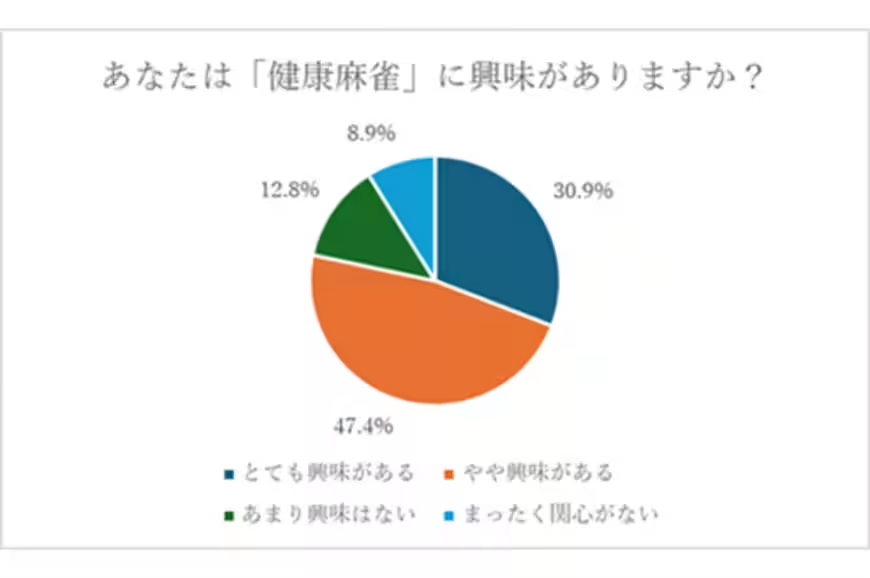
In an enlightening survey conducted by the Asahi Shimbun Re-Life Project, a media community aimed at individuals aged 50 and over, significant insights surfaced regarding the rising interest in health Mahjong. Out of 932 participants aged predominantly between 50 and 70 years old, the survey revealed that 61.8% of respondents were familiar with health Mahjong, with an impressive 78.3% expressing varying levels of interest. This reflects a burgeoning awareness and curiosity about this engaging activity, as it intertwines mental wellness with social interaction.
Interest and Expectations
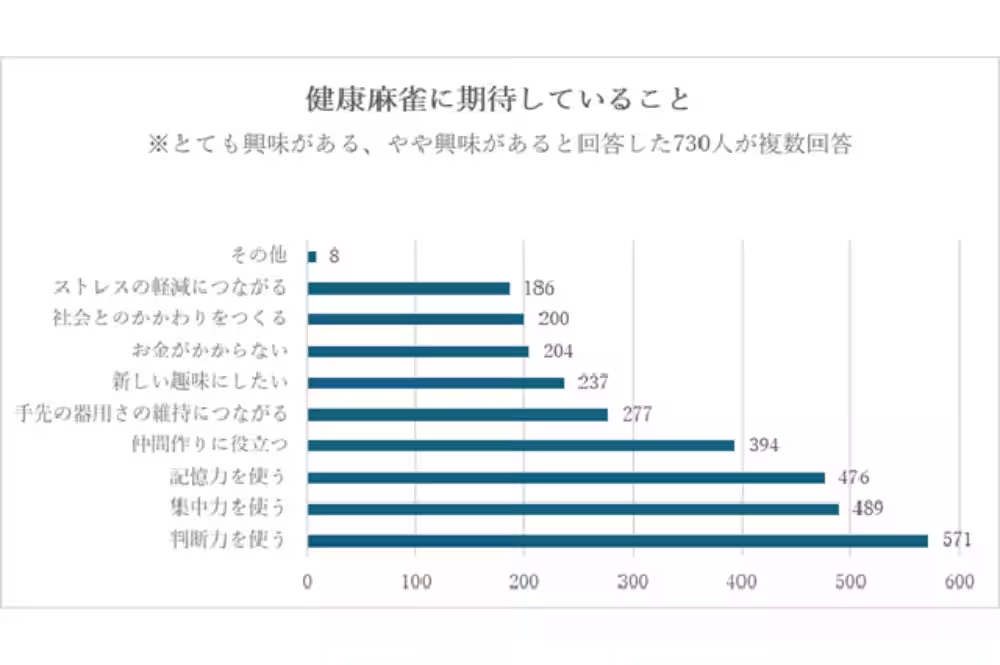
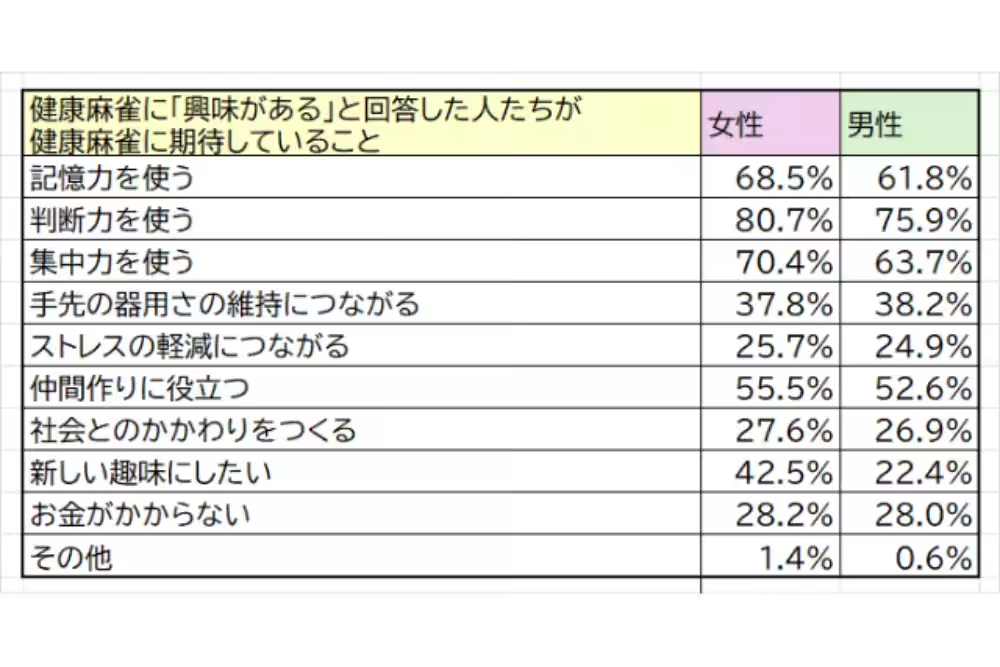
Among the respondents who showed interest in health Mahjong, a remarkable trend emerged. High expectations were noted particularly around cognitive benefits, with participants anticipating enhancements in judgment, concentration, and memory. Specifically, 571 individuals indicated they believed health Mahjong could stimulate their judgment skills, while 489 participants acknowledged its potential to improve concentration, and 476 highlighted memory enhancement.
In addition to the cognitive benefits, health Mahjong also serves as a valuable platform for socialization. With 394 individuals acknowledging it as a means to build friendships, the survey highlights its role in fostering community connections.
However, interest didn't translate seamlessly into participation. Only 11.4% of respondents reported having participated in health Mahjong, revealing a gap between curiosity and actual involvement. Approximately 37.6% indicated they had no knowledge of the rules at all, underscoring barriers to entry for potential players.
Barriers to Participation
The survey further delved into why some individuals were hesitant to engage with health Mahjong. Among those who expressed a lack of interest, 70 individuals cited the complexity of the rules as a significant barrier. Additionally, 64 respondents admitted to having a negative perception of Mahjong derived from its gambling associations, while another 64 were unaware of the existence of health Mahjong altogether.
The findings pointed out that there are notable psychological hurdles—especially for women—significantly influencing participation rates. The survey indicated that women exhibit higher levels of interest, with 37.2% of female participants showing strong interest compared to 25.5% of males. Nevertheless, many women cited apprehensions regarding the game's rules and etiquette, which are seen as more challenging compared to their male counterparts.
Experiences from Players
Despite the barriers, those who do participate in health Mahjong shared enriching experiences. Respondents conveyed that the activity had numerous benefits. One participant from Tokyo noted enjoying the interactions, especially in a post-pandemic world where in-person gatherings are cherished. Another player from Kanagawa mentioned the cognitive benefits he enjoyed in conjunction with old colleagues, emphasizing how the game served as a mental workout.
More anecdotes illustrated the health benefits of engaging in such a pastime, with participants highlighting how it offered an excellent escape from daily stressors, proving the therapeutic value of gameplay associated with health Mahjong.
Future Directions
The survey's insights suggest that while there is considerable interest and intrinsic value associated with health Mahjong, implementing introductory courses might be a crucial step toward increasing participation rates. Many respondents expressed interest in beginner classes, suggesting that as the barriers to understanding the game's complexities are lowered, more individuals will be inclined to engage.
The Re-Life Project is not only keen on promoting health Mahjong through surveys but is also committed to organizing beginner-friendly sessions in response to participant feedback. This proactive approach highlights a commitment to fostering an inclusive and supportive community around health Mahjong, aiming to debunk myths surrounding the game and encouraging its myriad benefits.
In summary, while the interest in health Mahjong is evident, there is also a clear directive on addressing the obstacles that prevent full engagement. It underscores the need for continued outreach and educational efforts, aiding seniors to embrace this enthralling and beneficial pastime. Through such initiatives, health Mahjong can emerge not just as a game, but as a tool for cognitive resilience and social bonding in the latter stages of life.
Topics People & Culture)
【About Using Articles】
You can freely use the title and article content by linking to the page where the article is posted.
※ Images cannot be used.
【About Links】
Links are free to use.