



Unveiling the Reality of Non-Cognitive Skills in Japanese Education
Unveiling the Reality of Non-Cognitive Skills in Japanese Education
In a significant move for educational research, the Institution for a Global Society (IGS) has released its latest publication titled "2025 White Paper on Non-Cognitive Skills". This report, supervised by Professor Shinji Kosho from Waseda University, encapsulates an extensive analysis of over 511,000 data points collected from more than 200,000 students across 532 schools nationwide. The publication aims to shed light on the current state of non-cognitive skills in Japan’s educational system, emphasizing the importance of these skills in a student's personal and professional development.
Background and Objectives
Non-cognitive skills, including traits like collaboration, self-regulation, communication, and leadership, play a crucial role in long-term success in education, employment, health, and community engagement. International studies have increasingly highlighted their significance, yet measuring and visualizing these competencies has remained a challenge. This white paper serves as a practical reference for educators by systematically presenting the types of data that can be collected and analyzed.
IGS hopes that this document fosters new collaborations among schools, education authorities, and research institutions, paving the way for more effective educational strategies.
Insights from the White Paper
Analysis Overview
The report covers data collected between April 2020 and November 2025, with a focus on four key areas: critical thinking, self-reflection, relationships with others, and societal interactions. The tool used for this assessment, "Ai GROW", employs both self-assessment by students and peer evaluations to visualize competencies across 25 specific areas.
Key Findings
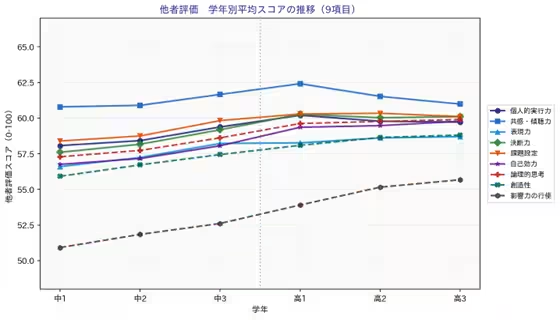
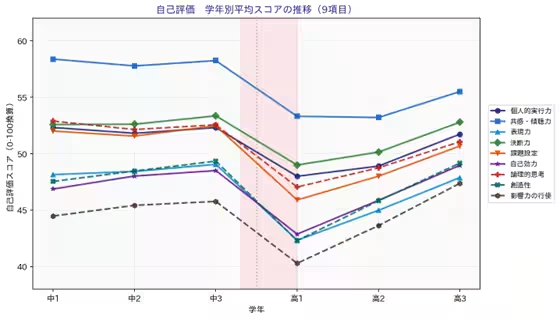
1. Significant Transition Periods: The transition from middle to high school (from 9th to 10th grade) proves critical, as self-assessment scores drop markedly, reflecting a shift in peers and self-identity rather than actual declines in ability. This observation highlights the need for timely interventions to support students during this pivotal phase.
- Graphs depict changes in peer evaluations versus self-assessments over the years, showing a clear divergence during the high school transition.
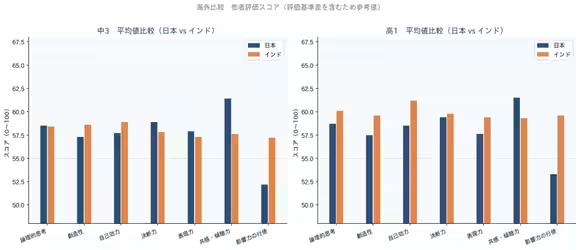
2. Low Skills in Exercising Influence: Among various competencies, "exercising influence" ranks lowest in international comparisons, trailing behind countries like India. However, distinct differences between schools indicate that the right environmental structures can enhance this skill area significantly.
- Data shows the gradual improvement of students in this area and suggests that incorporating opportunities for speaking and leadership roles could yield further development.
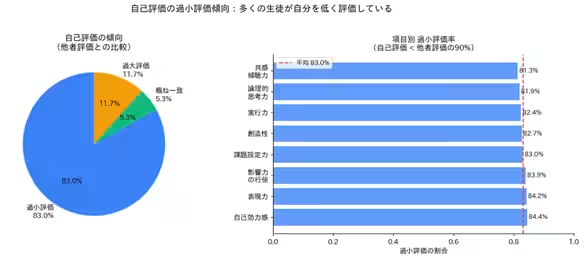
3. Value of Differentiating Assessments: The findings reveal that 83% of students underestimate their abilities compared to how they are perceived by peers, with an average discrepancy of 10 points. This calls attention to the inherent differences between self-evaluations and peer assessments, urging educators to consider both perspectives to accurately gauge student competencies.
- Analysis suggests that distinguishing between these evaluation types can lead to more tailored support for students, enhancing both self-awareness and academic performance.
Reflection from the Supervisor
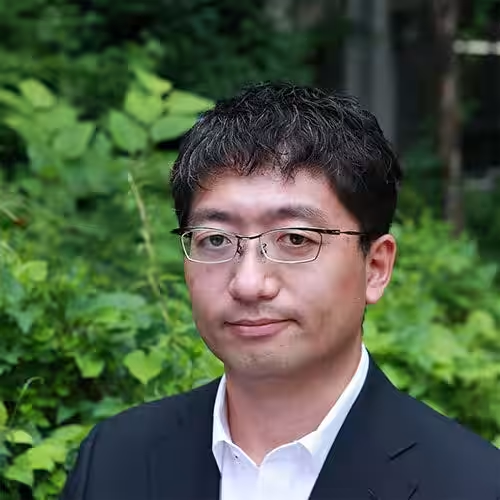
Professor Shinji Kosho expressed hope that the insights from this white paper will promote a more enriched understanding of non-cognitive abilities in educators' future approaches. He emphasized the four critical features of non-cognitive skills: measurability, predictability, and the potential for intervention. By harnessing these insights, we can create a more diverse and vibrant social fabric through education.
About IGS
Founded in 2010, IGS focuses on evaluating non-cognitive skills and competencies essential for success in life. The organization provides educational tools and services to schools, businesses, and local governments, promoting individual growth and value creation across various sectors. With a commitment to building a sustainable society without divisions, IGS continues to innovate in the educational and human-resources technology sectors.
For more detailed information, you can access the full white paper here.

Topics Other)
【About Using Articles】
You can freely use the title and article content by linking to the page where the article is posted.
※ Images cannot be used.
【About Links】
Links are free to use.