




Understanding the Importance of Health Checkups and Clinical Tests
Understanding Health Checkups and Clinical Tests
Health checkups have become a routine part of healthcare for many people, often inciting varied emotional responses depending on the results. While some may celebrate normal findings, a common question arises: Is being within the standard range truly sufficient? This was addressed by Tsunehiro Yokochi, the President of the Japanese Association of Medical Technologists (JAMT), in a recent article published in the July issue of Wedge.
The True Purpose of Health Checkups
The primary goal of health checkups is to enable early detection and treatment of diseases. However, the reality is that the results don’t always lead to prompt follow-ups or further examinations. The findings from these checkups should act as a navigator for health management, guiding individuals to better understand and utilize their test results to foster a healthier life. Regrettably, many individuals are unaware of how to effectively interpret and act upon their results.
Why Are Blood Tests Essential?
At the core of almost every health checkup is a blood test. Blood circulates throughout the body, delivering oxygen and nutrients to cells via arteries and returning waste products through veins. Consequently, any abnormalities in the body’s organs will reflect in the blood's composition. Blood tests serve as foundational assessments that can measure hundreds of substances even within standard parameters.
Key Aspects of Interpreting Test Results
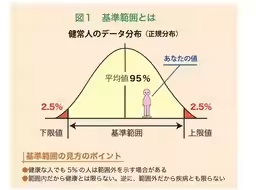
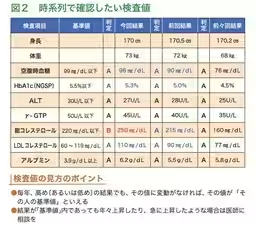
When analyzing test outcomes, it is crucial to focus on continuous (longitudinal) variations over time. Test result sheets commonly display a reference range, derived from statistical analyses of measurements among healthy volunteers, indicating the central 95% interval. As such, the range can often appear broader than expected. Even when results are within this range, a significant drop or change compared to past results should not be overlooked. Thus, consistent monitoring is key for maintaining one’s health.
Changing Perspectives on Test Results
There's a pressing need for individuals, especially in our aging society, to recognize the value of their medical data in fostering a proactive stance towards health management. As the elderly population grows, the financial burden on social security systems also escalates. It becomes imperative for every individual to be invested in their health by closely scrutinizing their test outcomes, fostering a culture of proactive health management.
Conclusion
For those interested in a deeper understanding of health checkups, more questions will be addressed in the August issue of Wedge, tackling topics such as the necessity of multiple blood draws, the methodology behind identifying specific components from mixed blood samples, and dietary restrictions prior to checkups.
About the Japanese Association of Medical Technologists (JAMT)
Founded in 1952, JAMT has evolved significantly to enhance the standing of medical technologists within society. Today, it strives to promote the importance of skilled technicians in clinical testing and contributes to the globalization of healthcare through exchanges with international associations of laboratory professionals.
For inquiries, you can reach out to JAMT at [email protected].



Topics Health)
【About Using Articles】
You can freely use the title and article content by linking to the page where the article is posted.
※ Images cannot be used.
【About Links】
Links are free to use.