



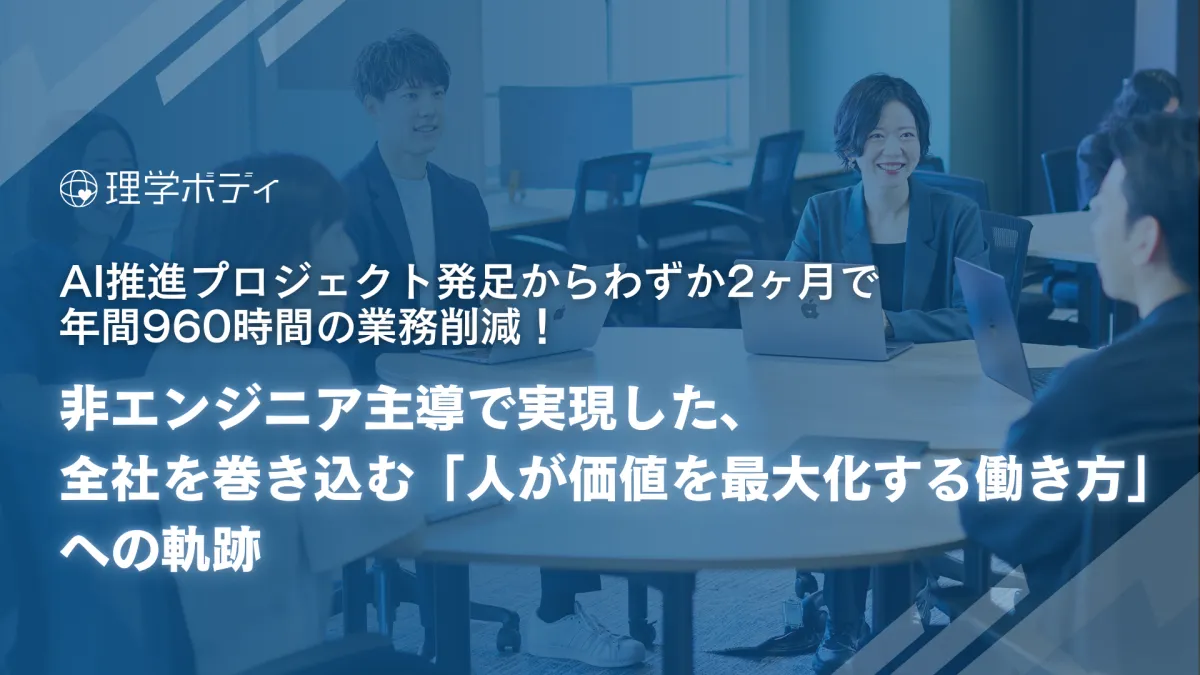
How a Non-Engineer-Led AI Project Saved 960 Hours of Work in Just Two Months
Revolutionizing Work Efficiency: The Case of Rigaku Body's AI Initiative
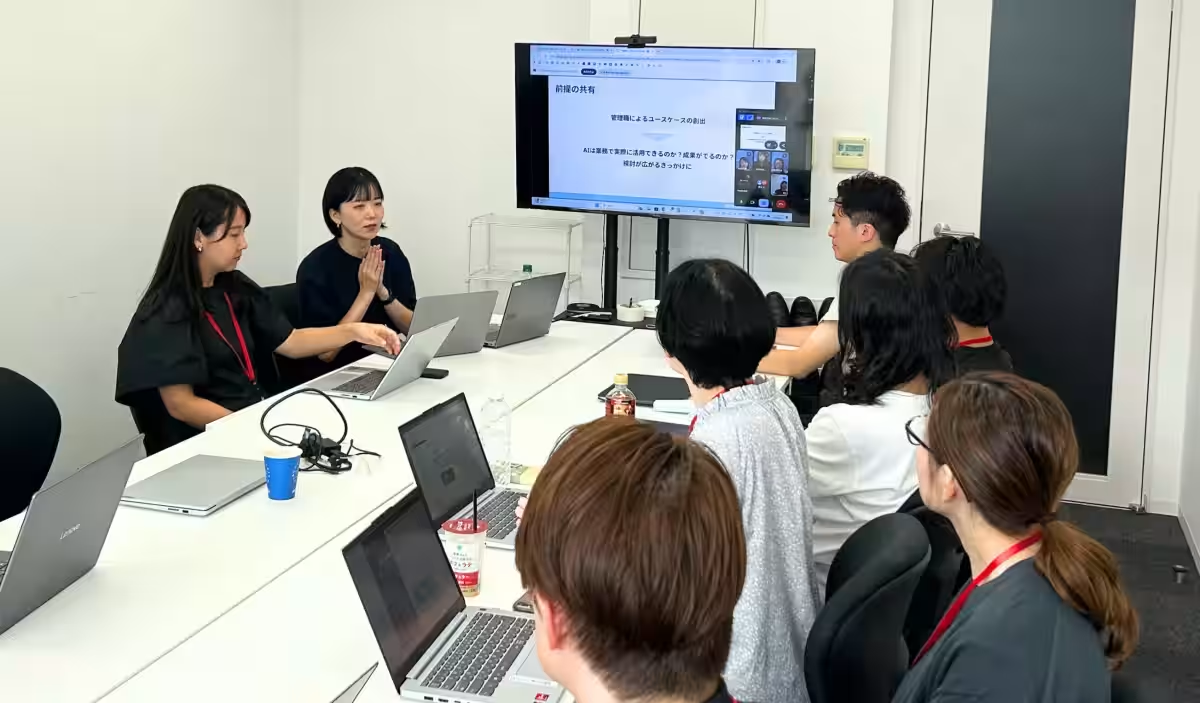
In a remarkable feat of organizational agility and innovation, Rigaku Body, a healthcare company based in Shibuya, Tokyo, has successfully implemented an AI initiative that has cut down work hours by an astonishing 960 annually within just a short span of two months. Led by non-engineers and driven by a vision to maximize human value in the workplace, this project signifies a groundbreaking shift in how companies can harness AI to enhance productivity and cultivate a culture of efficiency.
Background of the Project
As the company gears towards its ambitious target of achieving 10 billion yen in sales within five years, its leadership recognized that the usual approach to workforce expansion through mass hiring would not suffice. Instead, President Takuya Kishijo emphasized a philosophy where a compact, skilled team utilizes AI to significantly boost productivity while sharing the derived profits with employees. However, barriers such as busy work schedules and limited tool usage by specific employees often impede AI integration, making it clear that a structural change was necessary.
This led Rigaku Body to define AI not merely as a tool for efficiency but as a partner in facilitating a work culture where employees can fully maximize their capabilities. They aimed to create an environment where the adoption of AI would be a collective endeavor across all departments rather than a top-down mandate. Thus, the AI initiative was officially launched in June 2025, marking a new chapter in the company's pursuit of operational excellence.
Engaging Employees: From Pain Points to Practical Solutions
To ensure the successful implementation of the project, the management team conducted a company-wide survey to understand the employees' challenges and perspectives on adopting AI tools. Out of this feedback emerged four key initiatives aimed at addressing these issues:
1. Environment Creation: To alleviate psychological barriers, Rigaku Body introduced a subsidy of 10,000 yen per month for the utilization of AI-related tools, encouraging employees to enhance their skills independently.
2. Knowledge and Motivation: The company initiated bi-weekly study sessions, allowing staff to share real-world application experiences and best practices related to AI implementation.
3. Experience of Success: Management provided hands-on support through Proof of Concepts (PoC), guiding employees in identifying their operational challenges and discovering AI-driven solutions, effectively nurturing small successes that catalyzed larger, impactful changes.
4. Cultural Development: A dedicated Slack channel was set up for employees to freely share discoveries and insights, helping nurture an open culture of collaboration and continuous learning.
Transformative Results Across Departments
The results of these initiatives have been promising. Not limited to the IT department, employees from various sectors have actively engaged in applying AI to streamline operations. The estimated annual savings of 960 hours have stemmed from diligent efforts across different functions:
- - Accounting: An employee initially puzzled by Gas scripting took just three weeks to master it after participating in the project. The automation of complex accounting tasks, which used to take 15 hours, was reduced to a mere 30 minutes.
- - Labor Management: A


Topics Other)

【About Using Articles】
You can freely use the title and article content by linking to the page where the article is posted.
※ Images cannot be used.
【About Links】
Links are free to use.