



Breakthrough in Indigo Dye Synthesis Using Modified P450 Enzyme from Bacillus subtilis
Simplified Indigo Dye Production via Modified P450 Enzyme
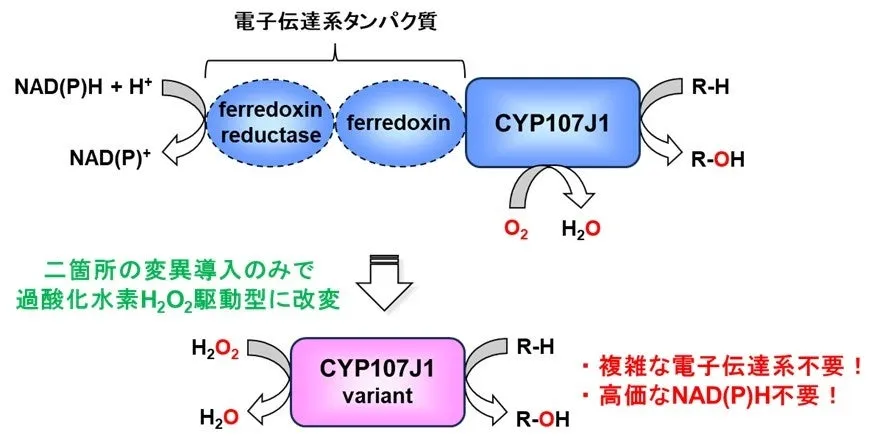
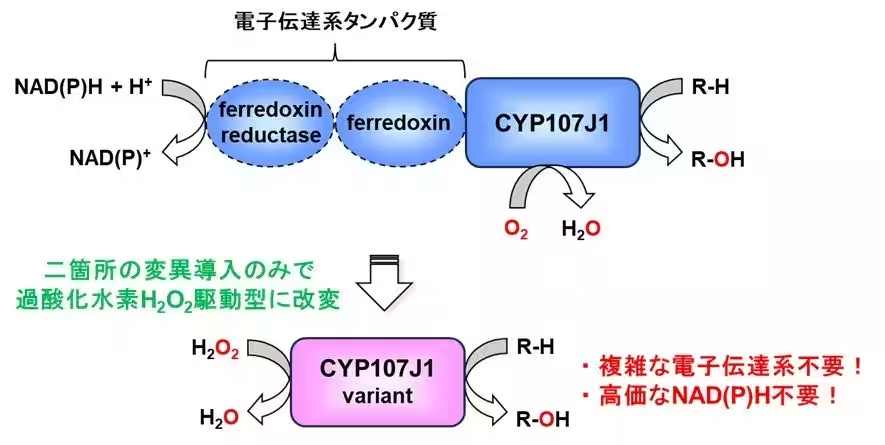
In recent advancements, researchers from Tokyo University of Science have successfully modified the P450 enzyme CYP107J1 from Bacillus subtilis, turning it into a peroxide-driven enzyme that does not require electron transport proteins. This innovative method allows for the simple synthesis of indigo dye by merely combining indole with hydrogen peroxide.
Background of the Study
P450 enzymes are important in various oxidation reactions in metabolism, being present in animals, plants, and microorganisms. Traditionally, these reactions require complex systems for electron transfer involving NAD(P)H, making them less efficient. The CYP107J1 variant was previously challenged due to a lack of understanding regarding its required electron transport proteins.
The team, led by graduate student Hideki Kato and Professor Toshiki Furuya, collaborated with Dr. Stephen Bell of the University of Adelaide. They focused on the functional analysis of the poorly defined CYP107J1 enzyme to unravel its potential.
Enzyme Modification and Findings
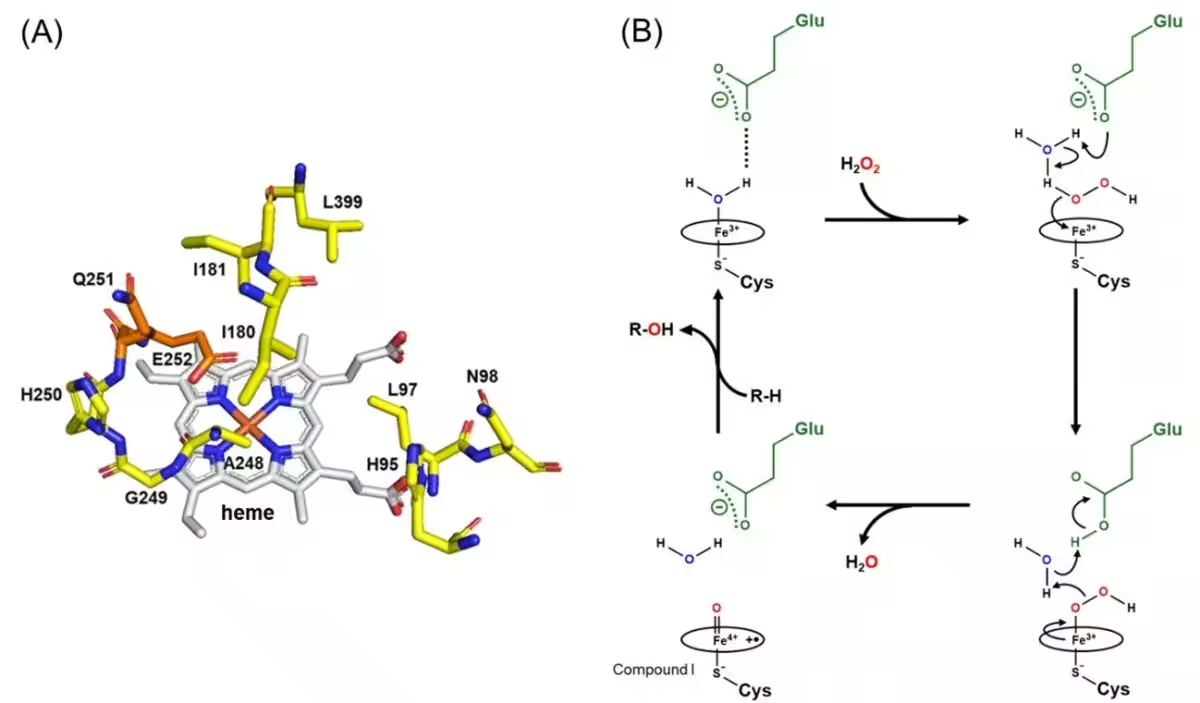
Initially, the researchers identified that CYP107J1 required electron transport proteins for its enzyme activity, which was a barrier in their studies. However, they adopted a strategy inspired by previous research, where a pair of amino acid mutations were introduced at the enzyme's active site. By substituting the 251st amino acid (glutamic acid) with glutamine and the 252nd (threonine) with glutamic acid, they successfully transformed CYP107J1 into an enzyme that operates without electron transport proteins.
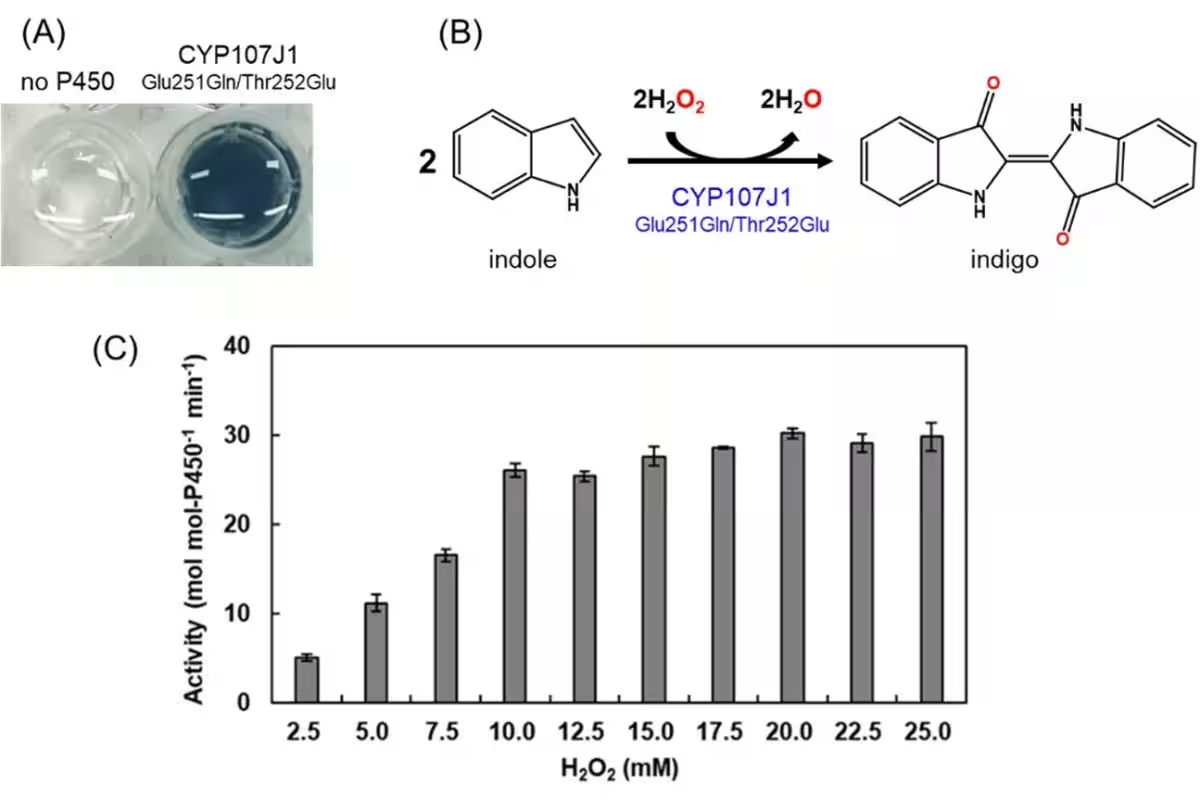
This modification significantly enhanced the enzyme's functional analysis and enabled it to catalyze the efficient conversion of indole and hydrogen peroxide into indigo dye. Under optimal conditions with 20 mM of hydrogen peroxide, the enzyme generated 0.15 mM (39 mg/L) of indigo in just 10 minutes, showcasing a highly effective method for dye synthesis.
Additionally, the modified enzyme demonstrated up to 28 times the catalytic activity compared to wild-type CYP107J1 when oxidizing compounds like p-hexylbenzoic acid.
Implications for Future Research
These findings open new avenues in catalysis, particularly for producing high-value compounds without the need for expensive cofactors like NAD(P)H. The generation of indigo dye merely with hydrogen peroxide indicates a promising industrial application, especially since the P450 enzyme can perform high-selectivity oxidations at ambient temperatures.
The results present an innovative approach to enzyme research, paving the way not only for better understandings of P450 enzymes but also for their applications in synthesizing useful compounds. As the team continues to improve enzyme activity, we can expect further developments in biocatalysis and applications across various industries.
Conclusion
This breakthrough study emphasizes the potential of modified P450 enzymes, particularly CYP107J1, as efficient catalysts in organic synthesis. The simplified process not only makes the production of indigo dye more accessible but also contributes to advancing green chemistry practices. The implications of this research extend beyond just dye production, suggesting a future where biocatalysts play a crucial role in sustainable industrial processes.
Publication Information
These findings have been published online on May 4, 2026, in the international journal Microbial Biotechnology. For more details, refer to the paper titled “Characterization of the orphan cytochrome P450 CYP107J1 from Bacillus subtilis through peroxygenase activity engineering.”
Authors
Hideki Kato, Takafumi Hashimoto, Tuhin Das, Daniel Z Doherty, Stephen G Bell, Toshiki Furuya
DOI
10.1111/1751-7915.70369
Topics Consumer Products & Retail)

【About Using Articles】
You can freely use the title and article content by linking to the page where the article is posted.
※ Images cannot be used.
【About Links】
Links are free to use.