



Japan Airlines Applies for New International Cargo Fuel Surcharge Effective February 2026
JAL's New Fuel Surcharge Implementation
On January 23, 2026, Japan Airlines (JAL) officially announced its application to the Ministry of Land, Infrastructure, Transport and Tourism for a revised fuel surcharge concerning international cargo operations. This updated surcharge structure will come into effect on February 1, 2026, following the fluctuations in jet fuel prices.
Understanding the Fuel Surcharge Structure
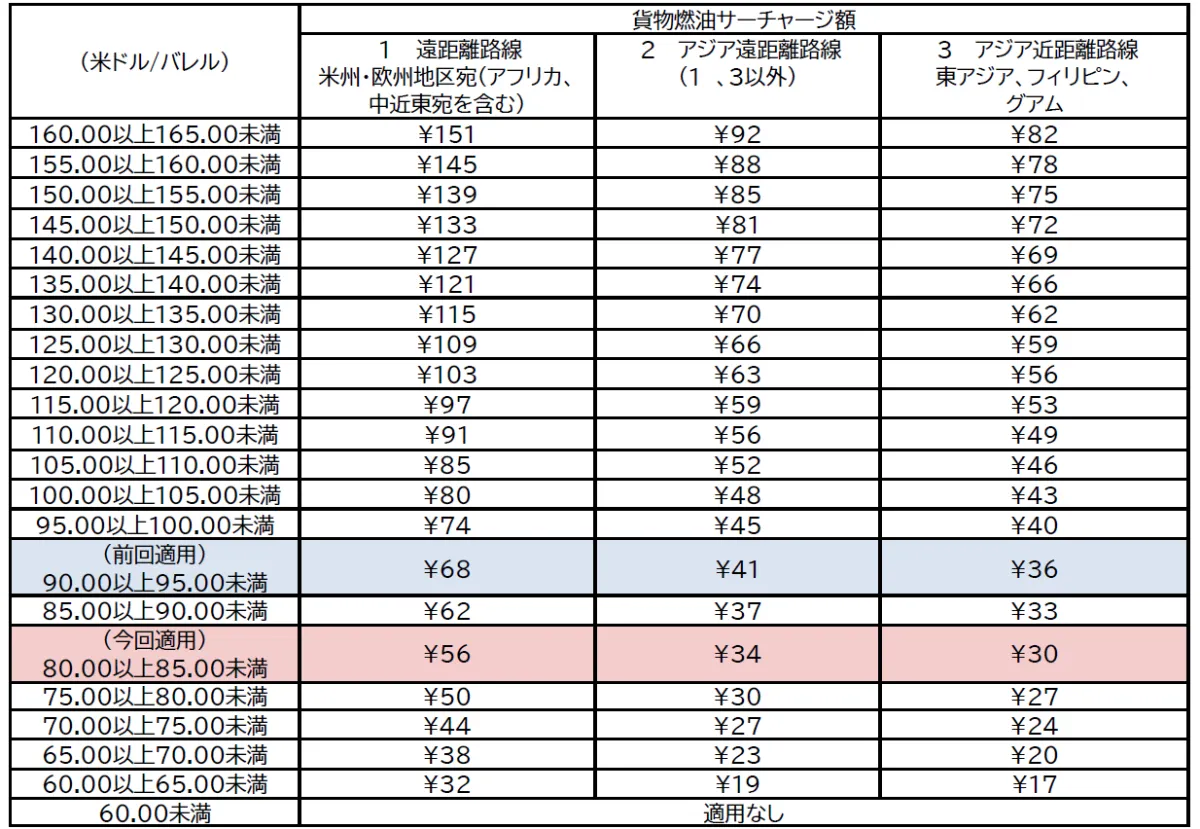
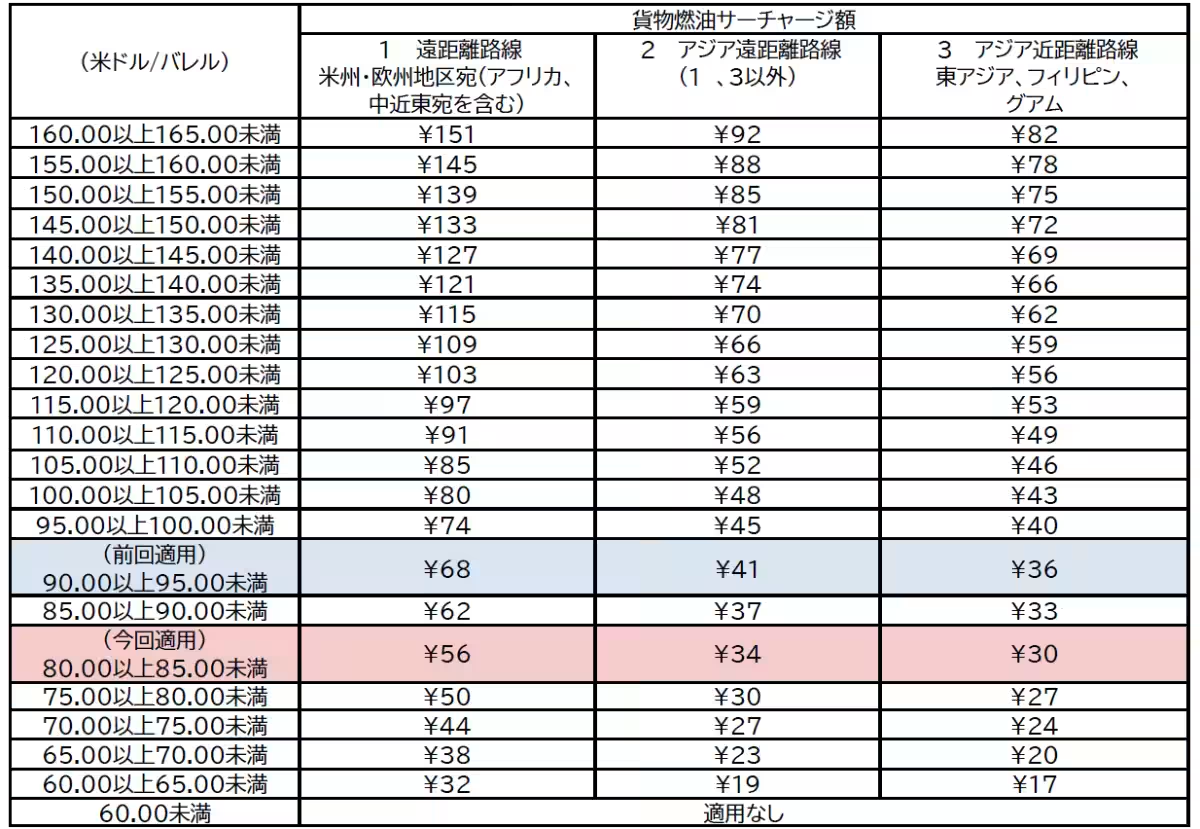
The fuel surcharge is determined based on the average price of jet fuel. For this application, the reference figure set is based on the average price from December 2025, which stood at $84.90 per barrel. Consequently, the fuel index price has been categorized between “80.00 to 85.00” dollars per barrel, leading to different surcharge amounts depending on the cargo's destination.
According to the newly proposed fees, the cargo fuel surcharge will be as follows:
- - 56 yen per kg for long-distance routes to the Americas and Europe.
- - 34 yen per kg for long-distance routes to Asia.
- - 30 yen per kg for short-distance routes within Asia.
This tiered approach ensures that the surcharge reflects the varying costs of transporting cargo to different regions, aiming for transparency and fairness in pricing.
Monthly Revisions and Future Adjustments
Japan Airlines has established a schedule for reviewing and updating their cargo fuel surcharges, set to occur monthly. This approach allows the airline to adapt quickly to changes in fuel prices and ensures the surcharges are in line with industry standards. From April 2024 onward, the fuel surcharge will be determined based on the average price of jet fuel (kerosene) traded in Singapore, specifically looking back to the prices from two months prior.
The introduction of this pricing table will be a significant move, and JAL aims to maintain its competitiveness while also ensuring its service standards meet customer expectations amidst rising operational costs.
Conclusion
The application for the new international cargo fuel surcharge is a clear indication of JAL's strategy to adapt to market conditions while continuing to offer reliable cargo services. As fuel prices fluctuate, JAL's commitment to revising the surcharges each month allows the airline to stay agile in a changing economic landscape. Stakeholders and customers alike are advised to stay informed about these developments, given their implications on shipping costs and logistics planning.
In essence, the new fuel surcharge application by Japan Airlines marks a proactive step towards maintaining service efficiency in international cargo transport, reflecting not just the changing costs of operations but also the airline's dedication to transparency and customer service.
Topics Business Technology)
【About Using Articles】
You can freely use the title and article content by linking to the page where the article is posted.
※ Images cannot be used.
【About Links】
Links are free to use.