



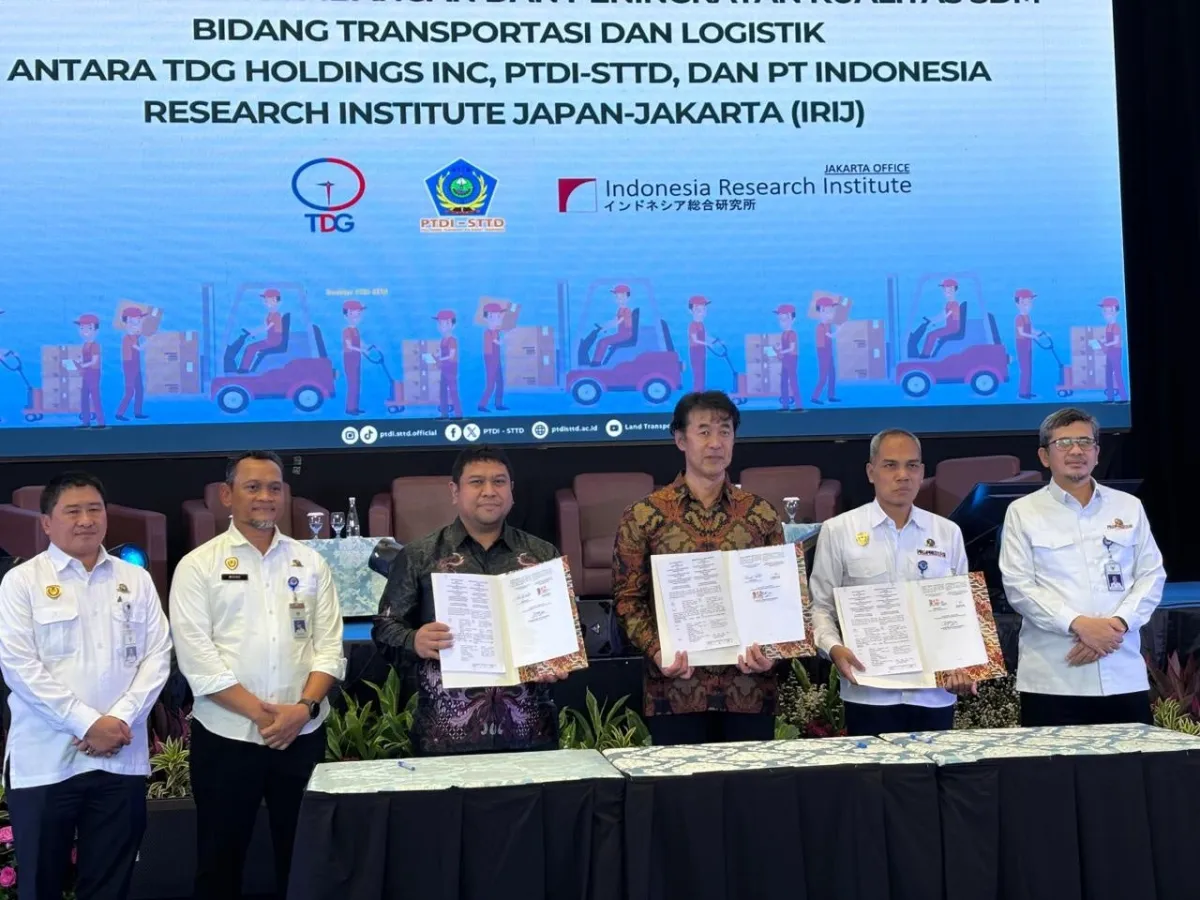
Building a Sustainable Logistics Workforce: MoU Between Indonesia Research Institute, TDG, and PTDI-STTD
Addressing the 2024 Labor Shortage Issue in Logistics
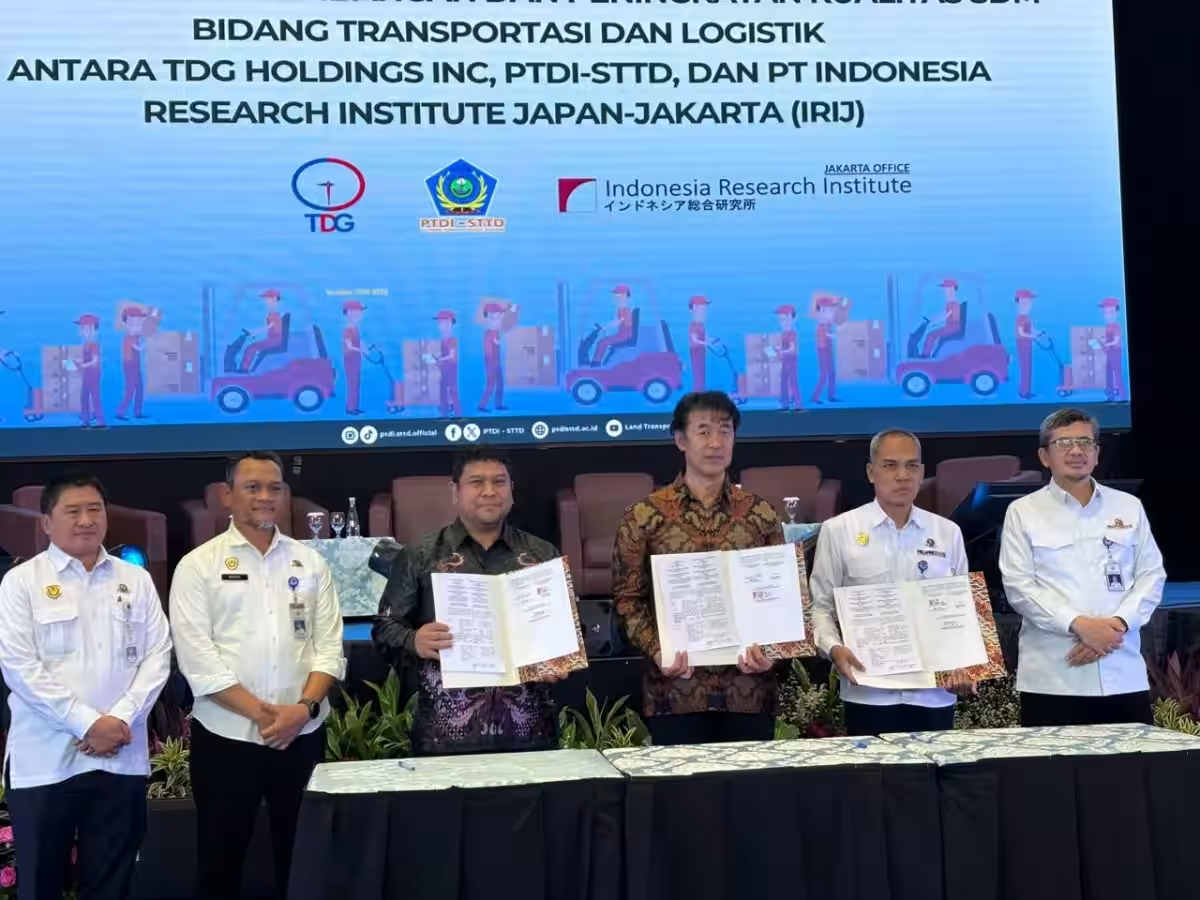
In light of the looming 2024 crisis, Japan's logistics and warehousing sectors are grappling with a persistent labor shortage. While there have been efforts to recruit foreign workers, these have mostly been limited to short-term internships, often with mismatches in Japanese language skills and practical abilities. To combat these challenges, a groundbreaking memorandum of understanding (MoU) was signed in January 2026 between the Indonesia Research Institute (IRI), TDG Holdings (based in Mie Prefecture), and the PTDI-STTD (Indonesian Transportation and Logistics School under the Ministry of Transportation).
Purpose of the Collaboration
The primary objective of this MoU is to provide a structural solution to the acute shortage of manpower in Japan's logistics sector. By partnering directly with an education institute, the initiative is poised to transform the way logistics talent is developed and integrated into the Japanese labor market.
Key Features of the MoU
Unlike traditional recruitment agencies that merely facilitate the hiring of foreign workers, this MoU focuses on creating an educational ecosystem. The collaboration will involve PTDI-STTD's multiple campuses across Indonesia (in areas such as Bekasi, Bali, Madiun, and Tegal) to deliver an industry-specific curriculum that addresses the needs of Japanese companies. This curriculum will include essential industry terms and safety management standards, ensuring that graduates can immediately contribute upon arrival in Japan.
Roles of Each Partner
1. TDG Holdings (Industrial Partner): Responsible for providing training in hard skills required in the workplace, as well as job matching with Japanese companies.
2. Indonesia Research Institute (Coordinator): Offers Japanese language education modules, supports curriculum development, and manages the overall scheme.
3. PTDI-STTD (Educational Institution): Focuses on selecting qualified students, conducting foundational education, and utilizing its extensive campus network.
Comparison with Existing Models
This new initiative boasts a significant comparative advantage over existing routes for hiring foreign workers, particularly in the aspects of education quality and retention rates.
| Aspect | New Collaborative Model | Existing Recruitment Methods | Direct Internship Partnerships |
|---|---|---|---|
| ----- | ------- | ------- | ------- |
| Talent Quality | Graduates with fundamental logistics knowledge | Primarily inexperienced candidates | Students with varied quality |
| Curriculum Content | Tailored educational curriculum for Japan | General Japanese language learning | Mainly reliant on OJT |
| Sustainability | Continuous and organized output | Project-based hiring | Dependent on individual school relations |
| Retention Rate | High (Clear career paths) | Low (Frequent mismatches) | Moderate (Often short-term shifts) |
Other companies in the industry, like Nippou Express, have been promoting e-learning for driver training, and Pertamina University has been focusing on internship-centric partnerships. However, this initiative distinguishes itself by emphasizing comprehensive participation in curriculum development.
Future Prospects
This MoU serves as a robust foundation for future practical contracts to be progressively established. The next steps will involve the formulation of specific curricula and the selection of pilot students. Ultimately, the goal is to establish a sustainable talent circulation model between Japan and Indonesia, supported by educational institutions, industries, and policy.
About Indonesia Research Institute
The Indonesia Research Institute is a specialized agency that provides comprehensive support for Indonesian business, including market research, company setup assistance, consulting, promotional support, interpretation, personnel placement, and M&A support.
Contact Information
Representative: Albi
Address: 4-27-1 Sendagaya, Shibuya-ku, Tokyo 151-0051, Japan, VORT Jingu Kitamichi II 10F
Website: Indonesia Research Institute
Contact Phone: 03-6804-6702 (Contact: Hashimoto)
Topics General Business)
【About Using Articles】
You can freely use the title and article content by linking to the page where the article is posted.
※ Images cannot be used.
【About Links】
Links are free to use.