



Understanding the Impact of Company Values on Young Employees' Job Satisfaction and Retention
The Disconnect Between Company Values and Young Employees
In a rapidly changing job market, companies are increasingly focusing on enhancing employee satisfaction and retention, particularly among younger workers. A recent study conducted by the Great Place to Work® Institute Japan uncovered critical insights regarding the understanding and importance of corporate values among employees in their 20s.
Key Findings of the Survey
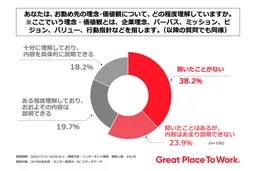
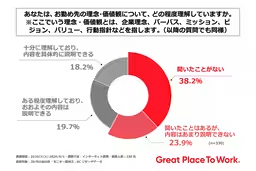
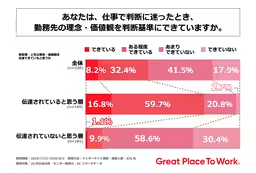
The survey, which involved 330 participants from various organizations, revealed that about 60% of young employees have either never heard of their company's values or are unable to explain them effectively. 38.2% admitted they had not heard of the values at all, while 19.7% acknowledged they had heard the terms but couldn’t provide any detailed description. Alarmingly, only 18.2% of respondents felt they had a comprehensive understanding of these principles.
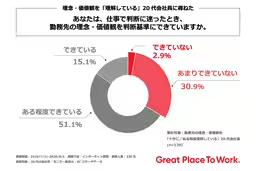
Moreover, even among those who reported some understanding of their company’s values, over one-third (33.8%) admitted that they were unable to use these values as a guideline for making job-related decisions. This disconnect raises questions about how effectively companies communicate their values and how deeply these values resonate within the organizational culture.
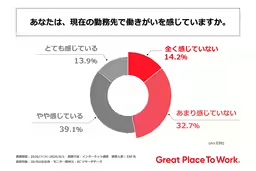
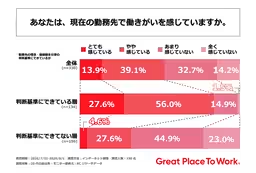
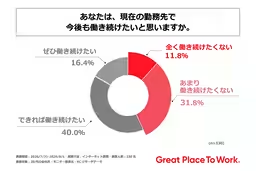
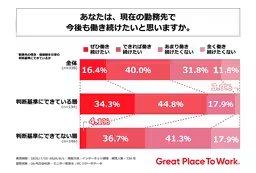
A significant observation from the study revealed that employees who believe they can apply company values in their decision-making had a markedly higher sense of job satisfaction (+51.4) and intention to remain with their current employer (+38.3). In contrast, nearly half of the surveyed employees reported feeling little to no job satisfaction, indicating that a lack of understanding could be detrimental to retention.
Lack of Communication from Management
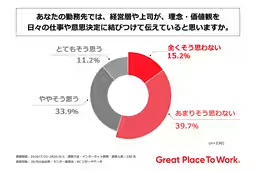
The study also highlighted a concerning trend regarding management's role in communicating company values. When questioned, over 54% of the participants felt that upper management does not effectively link values to daily work or decision-making processes. This gap in communication likely contributes to the difficulty employees face in applying these values practically in their daily tasks.
The effectiveness of a company's cultural values is not merely about proclaiming them but translating them into everyday actions and decisions. Without this translation, values can easily become empty statements rather than actionable guidelines that employees can rely on.
Recommendations for Improvement
Yoko Arakawa, the CEO of the Great Place to Work® Institute Japan, stressed the importance of embedding these values into the organizational fabric. She suggested that key management figures actively incorporate company values into their decision-making processes and exemplify how these principles guide their actions. This method creates a model for employees to refer to when navigating their own decisions and challenges at work.
By normalizing the application of company values in practical scenarios, employees will begin to see them as valuable assets, leading to greater job satisfaction and a stronger intention to remain with their employers.
Conclusion
The findings of this survey spotlight a crucial reality for organizations: simply having company values is insufficient; companies must also ensure that their employees are fully aware of, and can relate to, these values. For young employees, particularly, understanding how to infuse their work with these principles not only enhances job satisfaction but is also likely to incentivize them to stay with the company longer, thus improving overall retention rates.
As businesses continue to grapple with recruitment and retention challenges, prioritizing clear and meaningful communication about company values must become a key focus area. By fostering a culture that goes beyond just stating values and actively demonstrating them, companies can cultivate a more engaged and loyal workforce.


Topics People & Culture)
【About Using Articles】
You can freely use the title and article content by linking to the page where the article is posted.
※ Images cannot be used.
【About Links】
Links are free to use.