



Analysis of Summer Bonuses for Listed Companies in Japan for 2026
Introduction
In a recent survey conducted by the Labor Research Institute, a private research organization, critical insights into the summer bonuses for 2026 have been gathered across Tokyo Stock Exchange (TSE) Prime listed companies. As economic conditions continue to evolve, this analysis provides valuable data for stakeholders and employees alike.
Survey Overview
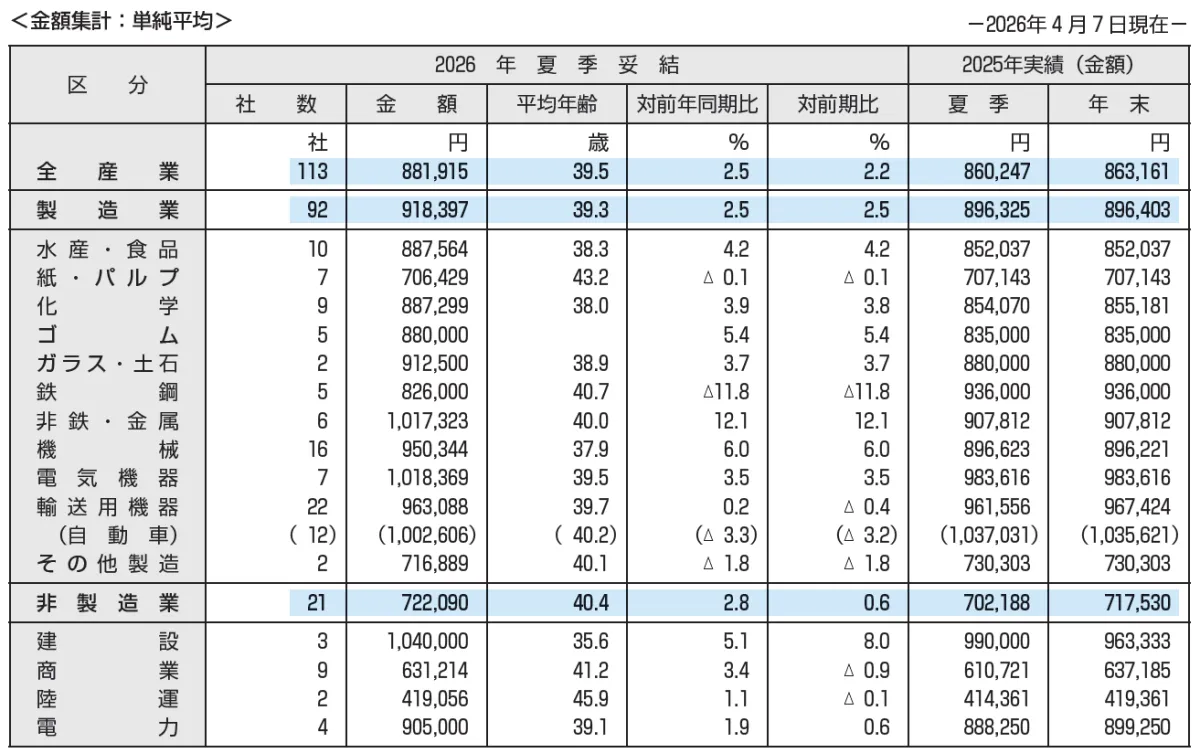
The survey focused on TSE Prime listed companies, specifically collecting data related to summer bonuses and one-time payments agreed upon around the same time as wage negotiations. As of April 7, 2026, the survey included 113 companies for payment amounts and 115 for payment months, reflecting a comprehensive cross-section of the Japanese corporate landscape.
The findings are reported based on the average bonuses distributed across all participating companies, taking into account variations across different industries.
Key Findings
1. Payment Levels:
The average summer bonus reported was ¥881,915, which represents a 2.5% increase compared to the previous year. This figure showcases a positive trend across both manufacturing and non-manufacturing sectors, with the latter reporting a slightly higher growth rate of 2.8%.
2. Trends in Bonus Amounts:
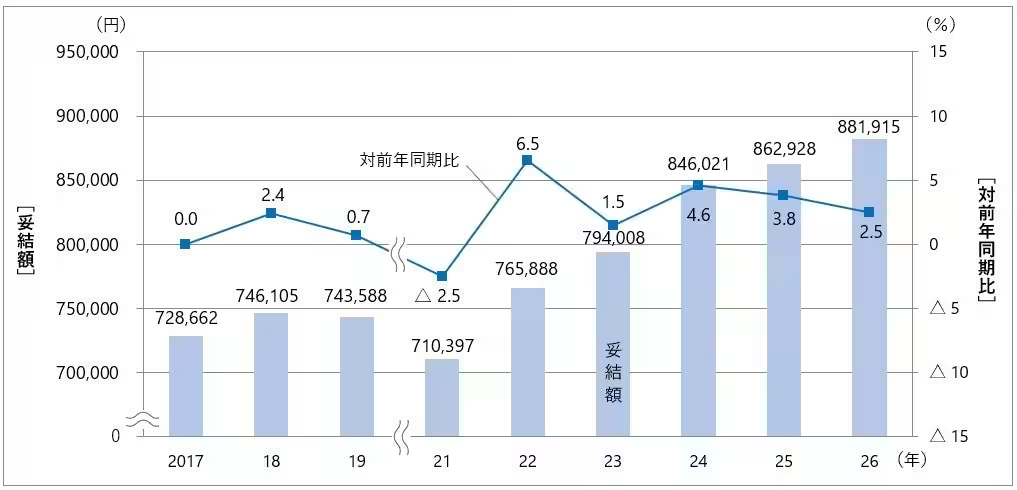
The agreements for summer bonuses have shown continuous growth since 2022. However, there is a noticeable decline in the rate of increase since 2025, indicating that while bonuses are rising, the momentum may be slowing. This trend was also represented in individual charts from the complete report.
3. Payment Duration:
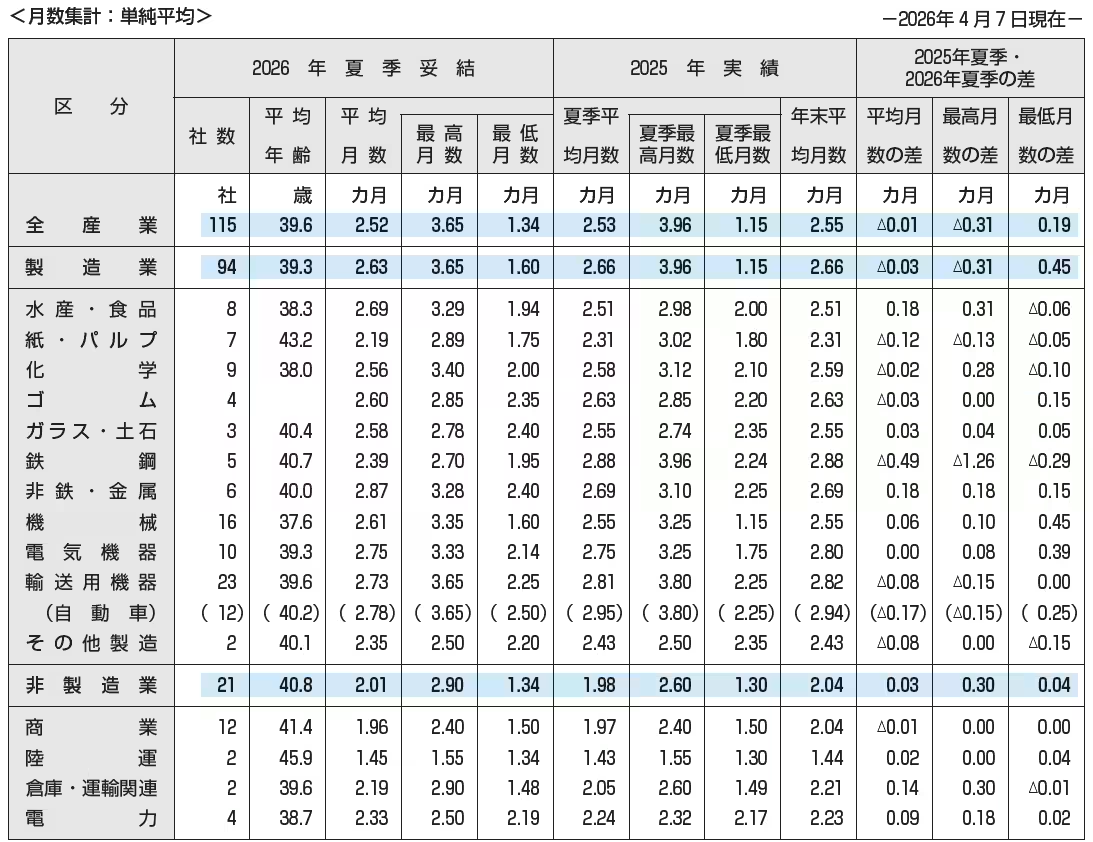
The average payment duration for summer bonuses was reported as 2.52 months, a slight decrease from the previous year's figure of 2.53 months. Within the reported data, the highest bonus duration reached 3.65 months, while the lowest was 1.34 months, indicating a mix of outcomes across the surveyed companies. This variability reflects the differing financial conditions and strategies adopted by firms in Japan.
Survey Methodology
The research methodology was rigorous, focusing on TSE Prime listed companies with a solid labor union presence. A significant number of these companies participated in the surveys, with data collected strictly through verified channels related to bonuses for the summer of 2026, as well as historical references from the years 2025 and 2025 year-end bonuses.
A total of 113 companies were involved in the financial amount collection, while 115 companies provided data regarding the duration of bonus payments. The collection methods emphasized average indices calculated through simple averages, providing a clear perspective on the compensation landscape.
Conclusion
The insights gleaned from this survey underscore the ongoing efforts by Japan's corporations to adapt to economic demands while rewarding employees. While the growth in bonuses is a positive indication for workers, the slowing increase could imply consideration for broader economic conditions in the future. The data collected not only informs businesses about industry standards but serves as an essential resource for labor negotiations and corporate planning.
For more comprehensive insights, including the detailed charts and supplementary data, please refer to the PDF linked
here. This information is crucial for understanding the intricacies of employee compensation in contemporary Japan.
Topics Business Technology)

【About Using Articles】
You can freely use the title and article content by linking to the page where the article is posted.
※ Images cannot be used.
【About Links】
Links are free to use.