



Huawei Revolutionizes Token Monetization for Global Mobile Operators at MWC Shanghai 2026
Huawei's Innovations at MWC Shanghai 2026
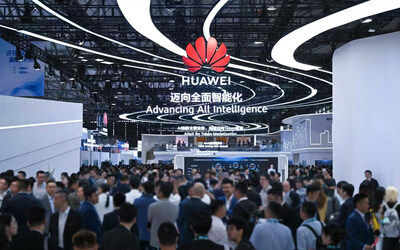
At this year's MWC Shanghai, Huawei unveiled groundbreaking innovations designed to assist global mobile operators in monetizing tokens through the integration of services, networks, and computing capabilities. With an emphasis on 'Advancing All Intelligence', Huawei aims to partner with operators, industry stalwarts, and thought leaders to explore enhanced connectivity and computational power, leveraging the fast-evolving landscapes of AI and network technology.
In a keynote address, Huawei's Deputy Chairman David Wang discussed the transformative role of AI in mobile networks, forecasting its significant impact on industry evolution over the next decade. For more than 40 years, innovation in mobile technologies has underpinned industry success, with each generation advancing spectral efficiency and performance boundaries. As Wang notes, “With each generation, we have expanded the limits of spectral efficiency and productivity.” This continuous evolution not only heightens communication capabilities but also translates network capabilities into commercial value.
The transition to an era defined by AI introduces six pivotal aspects that will catalyze industry growth into the next decade. These include:
- - Development of new services and capabilities for future mobile systems
- - Integration of AI with mobile technology to achieve three distinct levels of intelligence
- - Construction of a network architecture for seamless integrated terrestrial and satellite communication
- - Promotion of sustainable frequency planning and distribution
- - Clearly defined technical conditions for AI-native core networks
- - Exploration of novel business models and application scenarios for mobile services.
During the event, Huawei showcased a diverse array of innovations focused on facilitating AI-driven experiences and high-speed data in 5G-A networks. The company, in collaboration with three major Chinese carriers, is launching tech and business innovations that aim for effective monetization of user experiences as well as tokenization processes. They introduced an AI-targeted network designed to enhance operators' competitiveness in monetizing both data and tokens. This AI-centric infrastructure signifies a shift from traffic-driven networks to real-time interactive networks, promising guaranteed communications.
Additionally, Huawei pointed to a growing user base for 5G-A, which has surpassed 100 million globally. The company's goal is to work closely with operators to implement monetization strategies for 5G-A, transforming it into an essential part of existing operations. As operators strive to retain affluent users and enhance average revenue per user (ARPU), they seek to meet evolving user demands for sustainable revenue growth.
The upward link communication capability emerges as a critical opportunity for operator network infrastructures in this token monetization era. Increasing demand for mobile AI in uplink becomes prominent, as AI-powered lenses can now facilitate real-time multimodal interactions that necessitate an uplink communication speed of at least 20 Mbps. To meet this demand, leading global operators are swiftly pursuing high-speed commercial services that promise peak speeds, low latency, and versatile uplink capabilities.
AI agent proliferation is anticipated to drive substantial growth in token services, necessitating broadband networks that support high uplink capacity, reliability, and minimal latency. The U6 GHz band is forecasted to become the gold standard frequency for next-generation networks, with more than 20 nations earmarking it for International Mobile Telecommunications (IMT), which will encompass nearly 80% of the world’s population by 2026. Notably, the Middle East is set to witness the first commercial 5G-A deployments utilizing the U6 GHz band.
As part of its 2026 strategy, Huawei plans to work closely with operators in Guangdong, Shanghai, Hebei, and elsewhere to redefine its B2C and B2H services through AI integrations, enhancing user engagement with attractive offerings. This initiative is expected to stimulate token adoption across various sectors, such as smart home assistants and integrated consumer services.
For the B2B market, Huawei aims to partner with operators to deliver AI-driven computing services that bolster the integration of processing capabilities with network services, unveiling fresh avenues for business expansion.
Looking to the future, Huawei remains committed to leading in the innovative application of AI technologies within autonomous networks. The company is also focused on developing subject-oriented intelligence to lay down the groundwork for level-four autonomous networks. Throughout 2026, Huawei aims to implement specialized analytics in critical regions, which will augment network service quality through synergistic efficiencies in service delivery, optimization, energy management, and user experiences.
This comprehensive approach will empower operators to deliver differentiated products across various scenarios, including high-speed rail networks, event venues, and collaborative campuses, thus injecting fresh momentum into network operations.
Topics Telecommunications)
【About Using Articles】
You can freely use the title and article content by linking to the page where the article is posted.
※ Images cannot be used.
【About Links】
Links are free to use.