



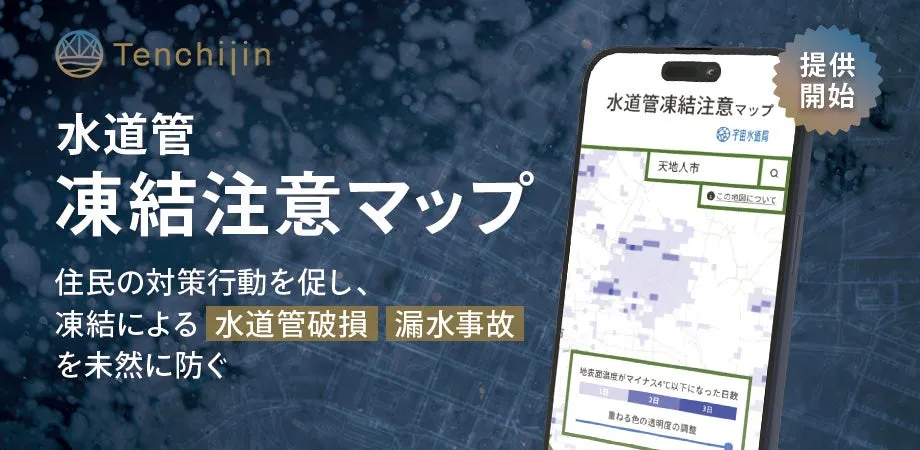
Tenchijin Launches Satellite-Powered Freeze Alert Map for Water Pipes
Tenchijin Introduces a Satellite-Based Freeze Alert Map
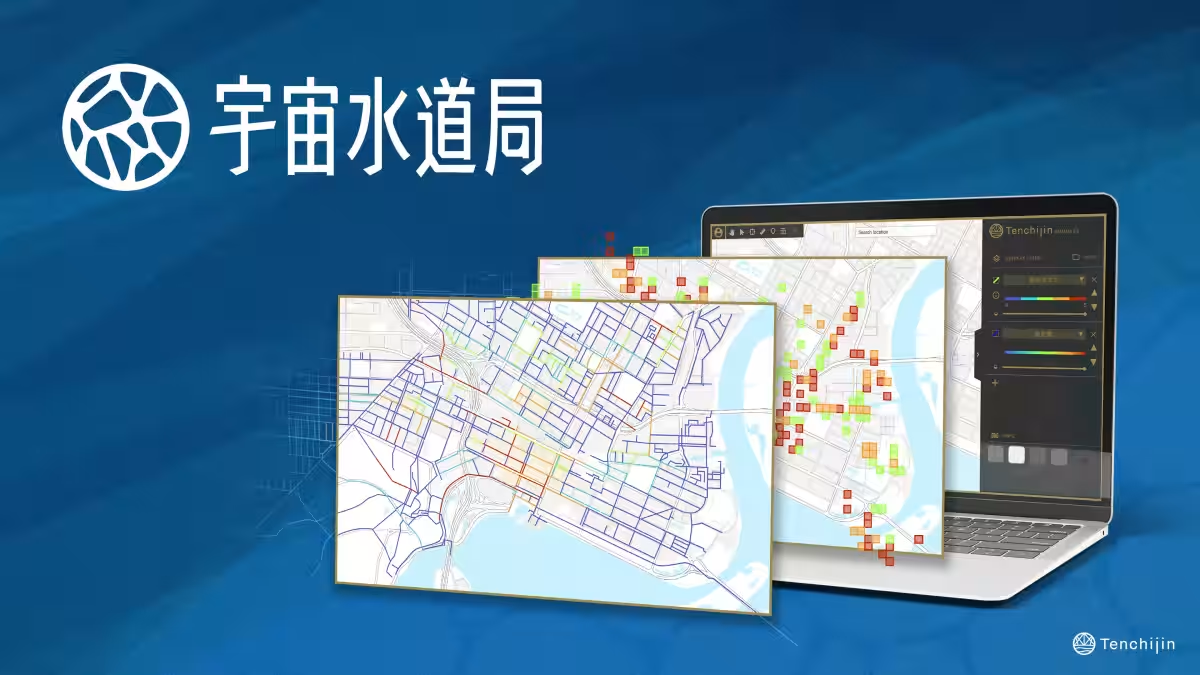
In a bid to combat the prevalent issue of frozen water pipes during winter, JAXA-accredited startup Tenchijin, led by CEO Katsuhito Sakuraba, has rolled out the "Freeze Alert Map." This innovative tool utilizes satellite-collected temperature data to provide a comprehensive view of freeze risks across neighborhoods, enabling municipalities to better inform residents about preventative measures.
Understanding the Problem: Frozen Pipes and Water Damage
During the winter months, the freezing of water pipes leads to significant water leakage incidents, posing a crucial concern for utility providers. According to a report by the Japan Water Works Association, around 22,000 incidents of pipe damage were recorded during the severe cold period in 2018. Notably, about 90% of these mishaps occurred at locations without proper insulation measures.
Conversely, regions that implemented stronger community awareness and preemptive actions drastically reduced incidents, from over 5,000 to around 800, showcasing the importance of resident participation in mitigating damage. Alarmingly, a survey revealed that roughly 70% of residents, particularly in milder areas, were not taking any precautions against pipe freezing.
Bridging the Gap: A Call for Awareness
Municipalities and water service entities have employed various strategies to raise awareness, but there remains a challenge in getting residents to view this issue as a personal responsibility. The transformative aspect of the Freeze Alert Map lies in its ability to localize data, helping residents understand their specific risks and whatever actions they need to take.
Features of the Freeze Alert Map
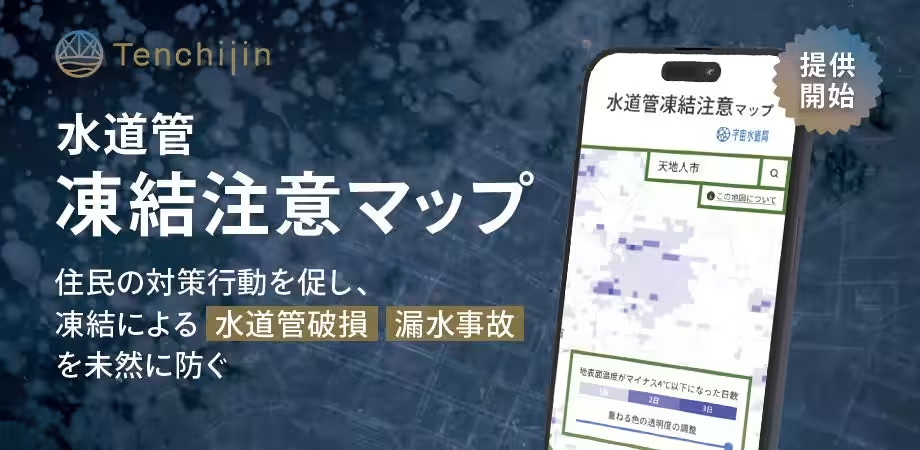
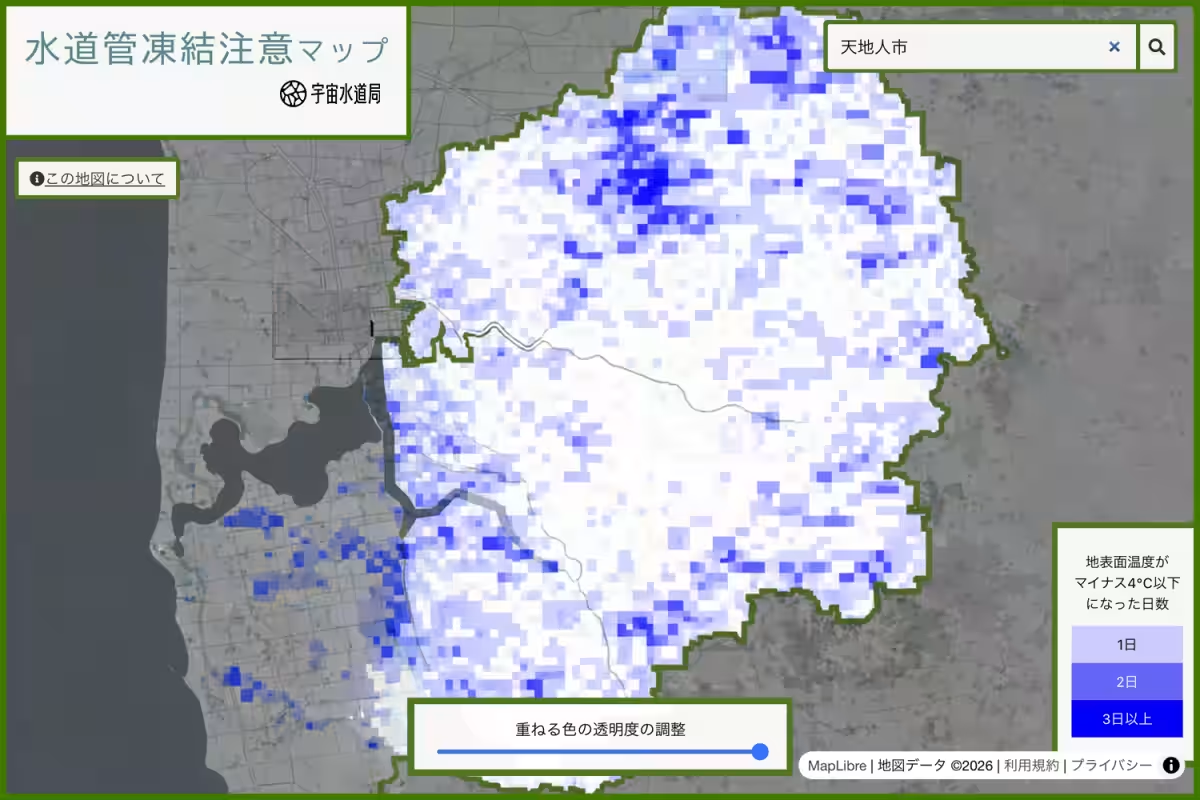
In response to the need for a practical solution, Tenchijin has developed a 250m-resolution Freeze Alert Map that presents freeze risks based on daily temperatures. Specifically, it indicates the number of days that temperatures drop below the critical threshold of -4°C, offering a risk assessment divided into three levels. This localized approach, which considers geographical nuances like the presence of rivers or railways, empowers individual residents to take proactive measures to safeguard their properties.
The map is easily accessible via smartphones, tablets, or PCs through a dedicated URL—no specialized app is needed. Residents can intuitively explore their immediate environment to assess the risk of pipe freezing.
Simplified Implementation for Municipalities
One of the key advantages of the Freeze Alert Map is its straightforward deployment, requiring no major system overhauls or specialized training. Municipalities and water service providers can generate a URL within just eight days, allowing for immediate access. By integrating the link into their existing communication channels, such as newsletters, social media, or official websites, they can effectively inform residents about local freeze risks.
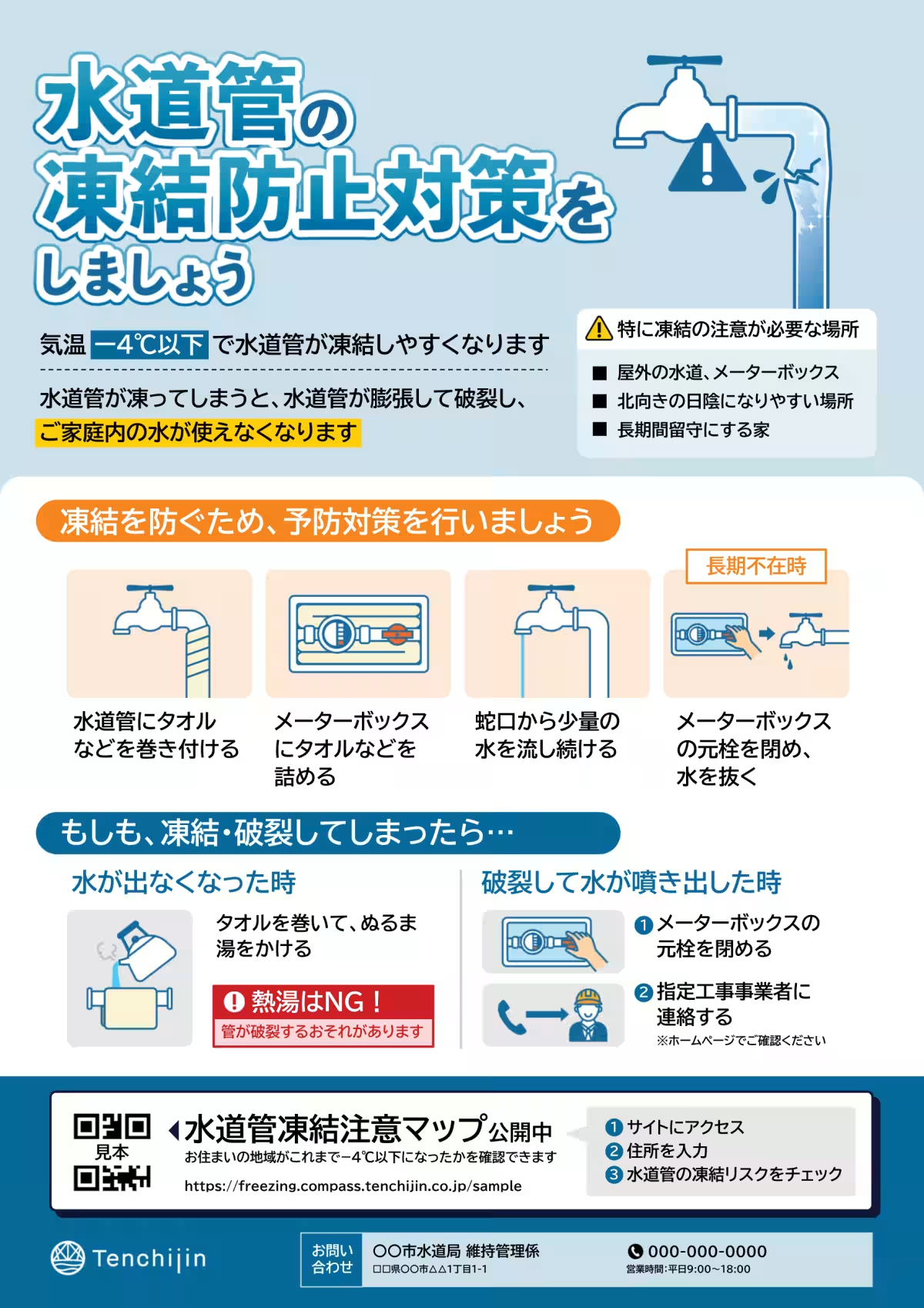
Moreover, Tenchijin also offers informational leaflets aimed at educating residents about how to respond to various freeze risk levels, further enhancing community preparedness.
Testimonies from the Field
Okada, a member of Tenchijin's business development team, has noticed an increasing public concern regarding leaks. He emphasizes the importance of residents recognizing that the pipes serving their homes are also their assets.
Topics Other)
【About Using Articles】
You can freely use the title and article content by linking to the page where the article is posted.
※ Images cannot be used.
【About Links】
Links are free to use.