



Challenges and Strategies in Hiring and Training Engineers in the Manufacturing Sector
Investigating the Current Landscape of Engineering Recruitment and Training in Manufacturing
A significant survey conducted by T-NET Japan, a company specializing in technical training services for the manufacturing industry, sheds light on the pressing challenges faced by engineers in the field. Targeting 300 individuals involved in training and development activities, the survey distributed a comprehensive 14-question questionnaire to gather insights into the realities of hiring and training electromechanical engineers. The resulting report, titled "Human Resource Strategies in an Era of Hiring Difficulties: A Unique Survey Report on the Recruitment and Training of Engineers in Manufacturing," brings forward some alarming trends and prospective strategies that companies need to adopt to overcome these challenges.
Key Findings of the Survey
1. Deepening Challenges in Recruitment
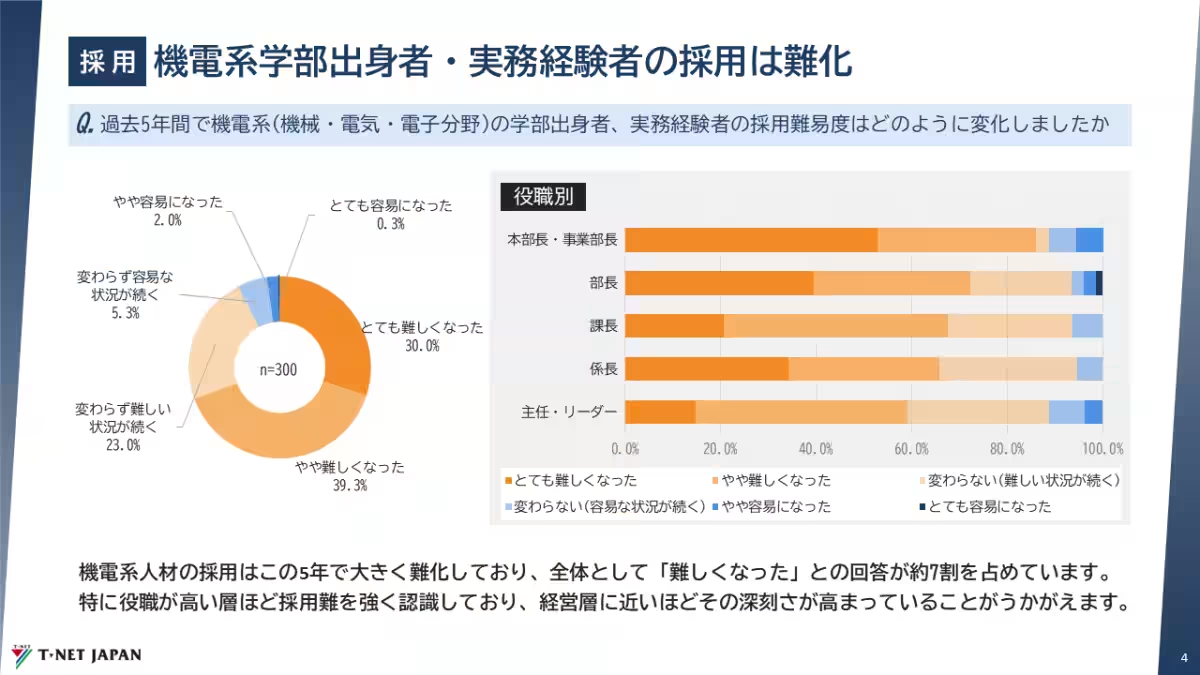
The survey results indicate that approximately 70% of respondents reported increased difficulty in recruiting electromechanical talent, underscoring the continuously stringent hiring environment in the manufacturing sector. This difficulty is particularly prevalent among management-level positions, who express even harsher views on future hiring prospects, predicting a further decline in availability. Companies now find themselves in a position where relying solely on experienced hires is no longer a viable solution for securing necessary talent.
2. Inability to Maintain Training Systems through Internal Measures Alone
In response to these hiring challenges, many companies have begun shifting their recruitment strategies towards hiring individuals with less experience, focusing on potential rather than relying solely on seasoned professionals. However, the survey revealed that nearly 60% of companies struggle to secure qualified instructors within their internal technical training programs. Specific issues noted include:
- - A limited pool of individuals qualified to teach technical skills
- - Increased burdens due to dual roles in daily operations and training
- - Insufficient progress in developing new instructors
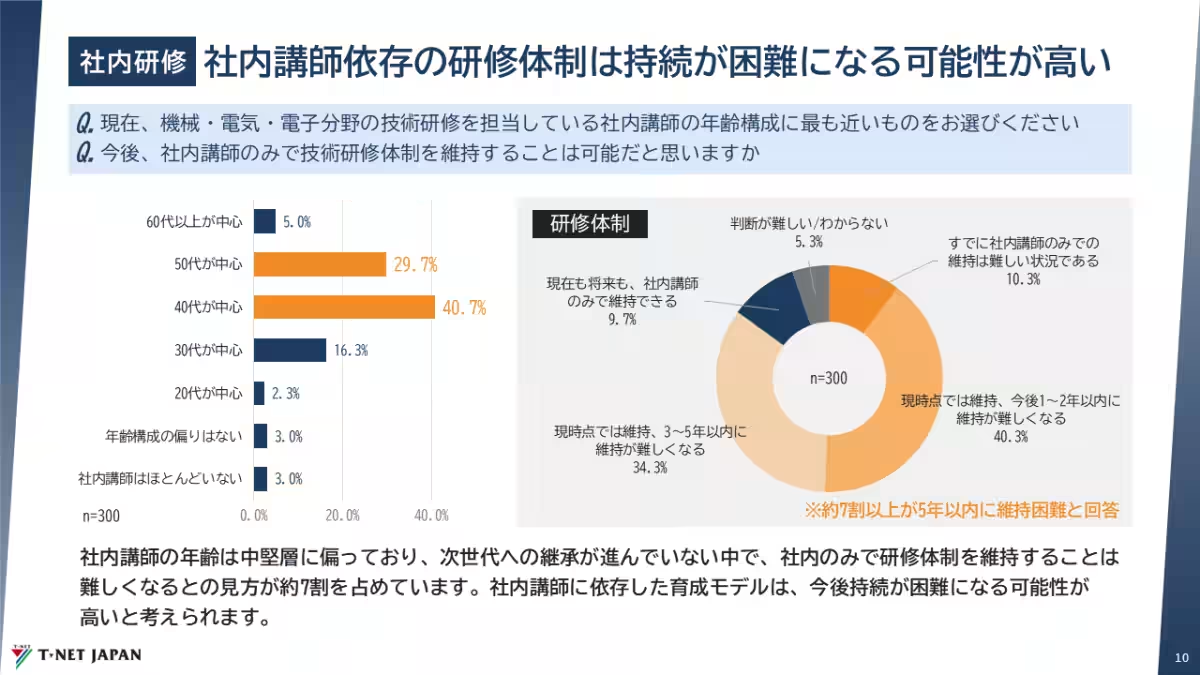
Alarmingly, over 70% of respondents indicated that maintaining an effective internal training framework using only internal instructors will become increasingly untenable within the next five years.
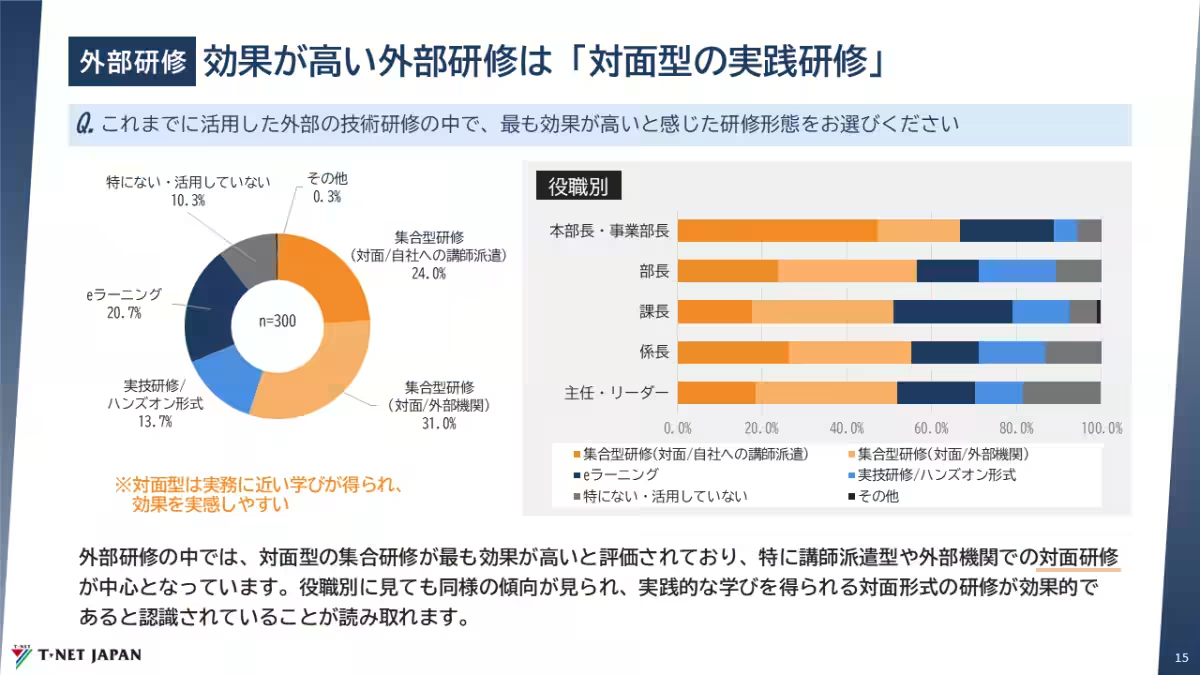
3. Effective Training Approaches: Face-to-Face and Practical Learning
Against this backdrop of challenges, there is growing attention toward utilizing external training resources. Participants recognized face-to-face and practical training formats as the most effective for electromechanical engineers, particularly programs that closely resemble real-work scenarios. Moreover, when selecting external training programs, companies considered several important factors:
- - Visualization of training effectiveness
- - Instructors' practical experience
- - Compatibility with organizational work needs
Conclusion
The survey reveals that the challenges in recruiting engineers within the manufacturing sector will persist, while the shift towards a development-based recruitment strategy is gaining momentum. However, issues of instructor scarcity and the difficulties in maintaining an effective training system internally are becoming increasingly evident. The findings advocate a vital need for a flexible training system that integrates both internal and external resources, emphasizing the importance of face-to-face and practical training methodologies.
Survey Overview
- - Theme: Recruitment and Training of Electromechanical Engineers
- - Method: Web-based questionnaire
- - Target Audience: Individuals engaged in training and development in manufacturing
- - Valid Responses: 300 participants
- - Number of Questions: 14
For those interested, the complete survey report is available for free download on T-NET Japan’s website.
About T-NET Japan's Manufacturing Technical Training Services
T-NET Japan has acknowledged the issues highlighted by this survey, particularly the challenge of sustaining quality internal training. The company provides:
- - Face-to-face training that combines theoretical and practical experiences
- - Customized design tailored to individual business operations
- - Real-world application focus through experienced instructors
For more details on the technical training services and consultations, please visit our technical training service site.
Company Profile
- - Company Name: T-NET Japan
- - CEO: Yasu Takemi
- - Headquarters: 930-10 Nariai-cho, Takamatsu City, Kagawa 761-8081, Japan
- - Tokyo Office: 18F Blue Front Shibaura Tower S, 1-1-1 Shibaura, Minato-ku, Tokyo 105-0023, Japan
- - Founded: April 1976
- - Website: Corporate Site

Topics Consumer Products & Retail)


【About Using Articles】
You can freely use the title and article content by linking to the page where the article is posted.
※ Images cannot be used.
【About Links】
Links are free to use.