



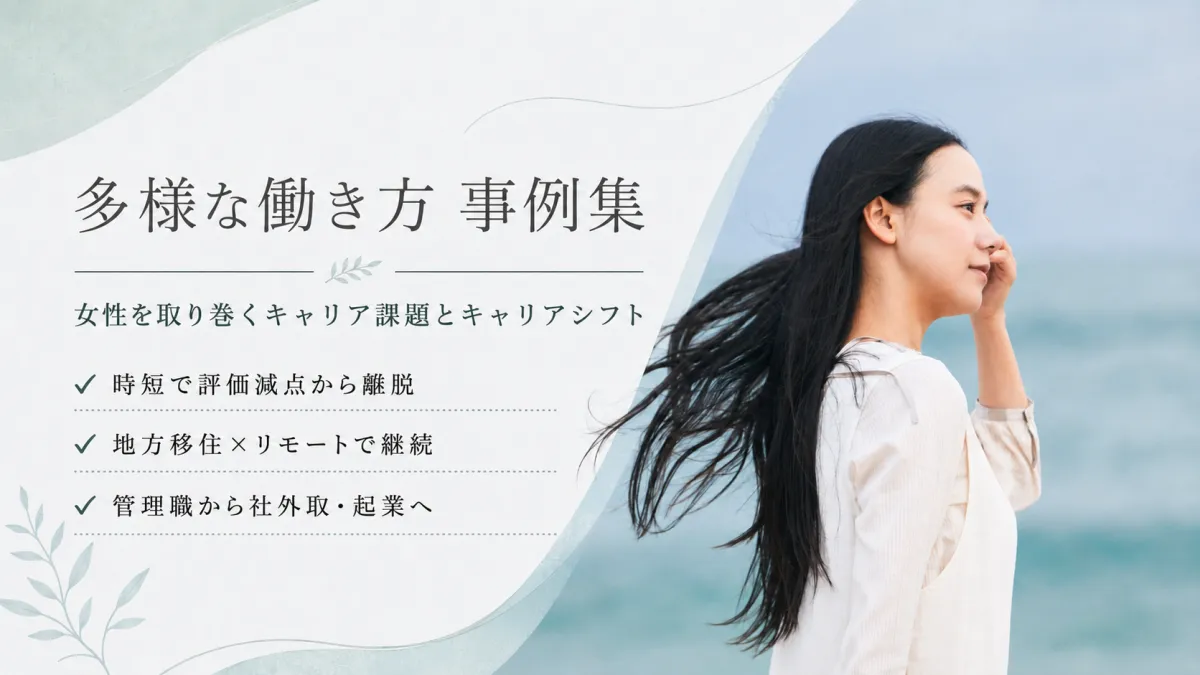
Empowering Women's Careers: Diverse Working Styles and Success Stories
Introduction
In recent years, there has been a growing awareness of the diverse challenges women face in their careers, especially in balancing work and family responsibilities. Waris, a human resource service company based in Minato-ku, Tokyo, aims to tackle these career obstacles through support for various working styles. This article showcases inspiring examples of women who have successfully navigated their professional paths by embracing freelancing, remote work, and entrepreneurship amidst personal and work-related challenges.
Breaking Down Barriers: Shortened Work Hours and Career Continuity
One significant issue that many working mothers encounter is the negative impact of part-time work on their career evaluations. Often, when women request shorter hours or flexible work arrangements to manage childcare, they face a backlash in the form of lower performance ratings.
Case Study: A Shift to Freelancing
One woman, in her 40s, experienced this firsthand in her previous role as a full-time employee, where she was the only working mother on her team. Her request for part-time hours led to detrimental performance evaluations. Despite existing remote work policies, she found that they were not genuinely acknowledged, prompting her to leave her job. Driven by her desire to prioritize raising her children while maintaining her career, she decided to explore freelance opportunities.
Another woman in her early 50s also shifted her career due to her child's needs. She moved from a full-time position in a major IT consulting firm as a manager to freelancing in fundraising and donor relations for an NPO. This change allowed her to balance her professional responsibilities while caring for her child with developmental disabilities.
Related Research
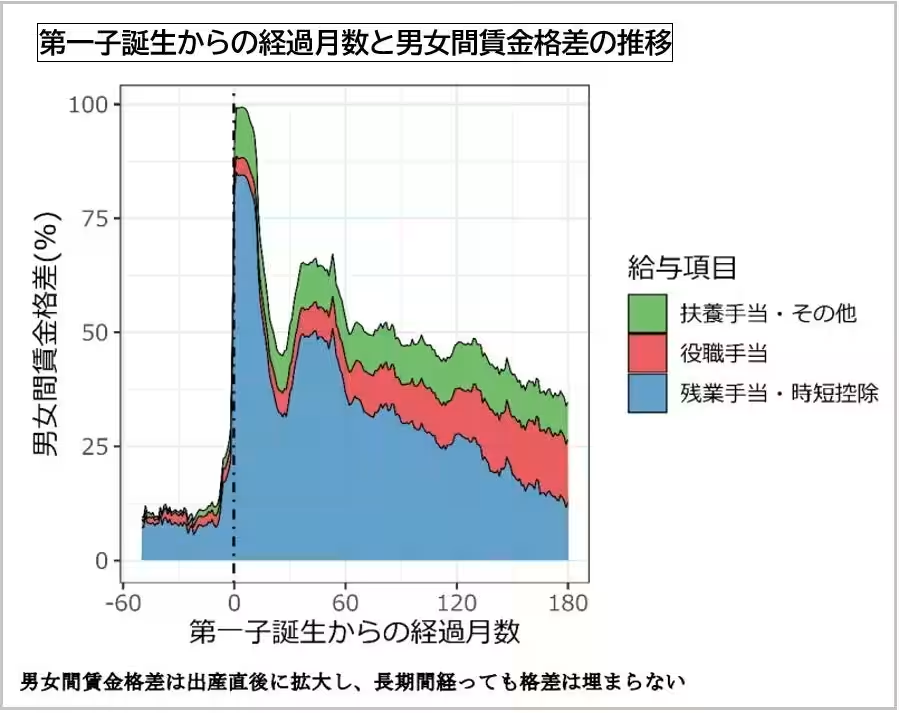
According to a 2025 study by the University of Tokyo, the internal promotion systems within companies often create a ‘parenting penalty’ that disproportionately affects working mothers, demonstrating the need for comprehensive reform in workplace evaluations that consider parenting responsibilities.
Remote Work and Relocation: A Pathway to Professional Growth
With the rise of remote work, the traditional belief that relocation due to a spouse's job equates to a career pause is gradually fading. Many women are now successfully continuing their careers regardless of their geographical location.
Case Study: Embracing Remote Work
After her husband’s job transfer, a woman in her late 30s made the decision to transition to freelancing in sales and marketing. She now resides in Shizuoka while maintaining her career through remote work, keeping the option of returning to full-time employment on the table once her children are older.
Another woman, in her early 30s, followed her husband to Malaysia. Upon moving, she shifted from a full-time role to freelancing in accounting, allowing her to balance family and work. Currently based in Fukuoka, she continues her career fully remotely. Additionally, a woman in her early 40s embraced freelancing with her partner by moving overseas, actively maintaining a remote work lifestyle from abroad.
Related Studies
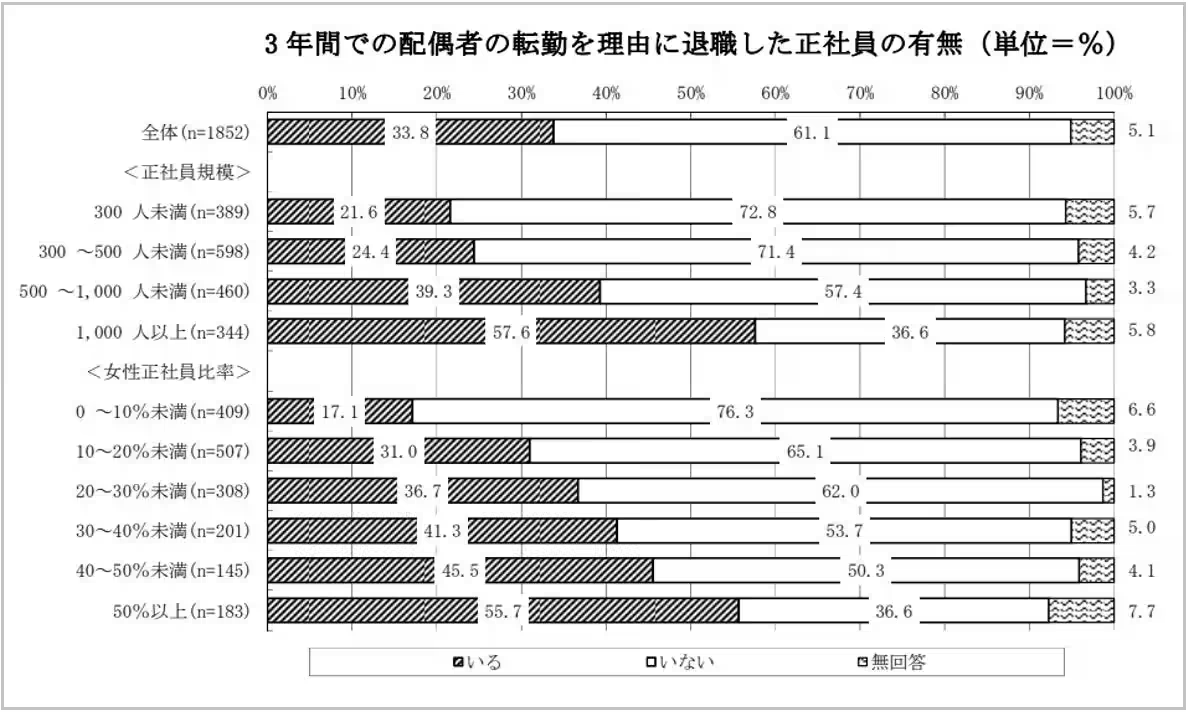
Research by the Japan Institute for Labor Policy and Training highlights the evolving landscape of workplace mobility for women, emphasizing the value of remote work arrangements in preserving career trajectories despite family transitions.
The Shift Towards Entrepreneurship: Women in Leadership Roles
For some women, pursuing roles as external directors or starting their own businesses represents a strategic advancement in their careers. Freelancing is increasingly viewed as a stepping stone towards these goals.
Case Study: Building Experience for Future Opportunities
One woman in her late 40s transitioned into freelancing after accumulating significant experience in financial management and executive roles in various firms. Her focus is now on client work to prepare for potential appointments as an external director. Another woman, also in her late 40s, is exploring entrepreneurship by channeling her freelance experiences into starting her own business, viewing this as a challenge in her next career phase.
A woman in her late 30s transitioned from a managerial position at a large company to freelance work, laying the groundwork for her future entrepreneurial ambitions, currently engaged in sales and new business initiatives for startups.
Related Research
The Gender Equality Bureau of the Cabinet Office's 2026 report on women's empowerment confirms the continuing barriers women face in the workplace, underscoring the importance of supporting diverse career paths and entrepreneurship among women.
Conclusion
The examples of women showcased within Waris's network highlight just a few pathways available in navigating career challenges. Their experiences reflect a broader cultural shift towards recognizing and supporting diverse working styles. For those interested in exploring deeper insights or connecting with other women in similar situations, further interviews and discussions can be arranged through Waris.
About Waris
Waris is dedicated to supporting individuals in achieving their unique life goals through various human resource services, including talent matching, reskilling initiatives, and professional networking for women. With around 30,000 registered candidates and nearly 2,900 client companies, Waris continues to empower women's professional journeys.
(For more details, visit Waris)
Topics People & Culture)
【About Using Articles】
You can freely use the title and article content by linking to the page where the article is posted.
※ Images cannot be used.
【About Links】
Links are free to use.