



Discovering High Concentrations of Ceramides in Cocoa Bean Shells for Sustainable Production
Groundbreaking Research on Cocoa Bean Shells
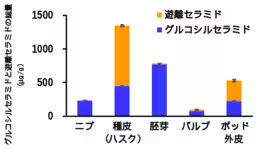
In an impressive breakthrough, a research group led by Professor Hichi Koga from Teikyo University has revealed that the shells of fermented cocoa beans—known as cocoa husks—contain high concentrations of ceramides, a valuable component widely used in cosmetics and health foods. The concentration detected was over 0.14%, which indicates that the cocoa husks, previously regarded as waste, can now be reconsidered as a sustainable resource contributing to environmentally friendly cocoa production.
The Significance of Ceramides
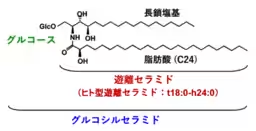
Ceramides are complex lipids composed of glucose, long-chain bases, and fatty acids. In the skin, free ceramides play a crucial role in maintaining moisture and barrier functions. Unfortunately, the amount of free ceramides decreases with aging, leading to dry skin and other texture issues. While ceramides are also present in plants, their natural concentration is generally low (about 0.02-0.04%), making extraction processes expensive and limiting their use in cosmetic and health products. The discovery of high ceramide concentrations in cocoa husks may provide a new, more affordable source for these beneficial compounds.
Major Research Findings
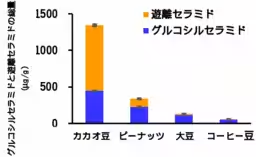
The study identified that the cocoa husk not only contains ceramides at concentrations significantly higher than peanut, soybean, and coffee bean shells, but it also includes a specific type of free ceramide analogous to that found in human skin. The implications of this finding hint at cocoa husks being a potent source of natural, plant-derived ceramides suitable for cosmetic formulations.
By leveraging previously untapped resources, this research paves the path for upcycling cocoa husks, supporting efforts toward sustainable materials in various industries. It showcases how environmental sustainability can be achieved through innovative research while creating high-value products that contribute positively to the economy.
Collaboration with Meiji Co., Ltd.
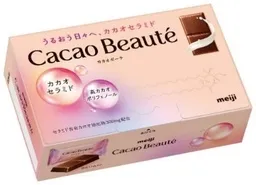
This pioneering study stems from a collaboration with Meiji Co., a major player in the chocolate manufacturing industry. As part of their commitment to sustainable practices, the company is exploring ways to utilize cocoa husks more effectively. In fact, the first product featuring ceramides extracted from cocoa husks—a beauty-focused chocolate known as "Cacao Beaute"—is set to launch in September 2025.
Analytical Techniques Employed
To understand the composition of ceramides present in the cocoa husks, advanced analytical methods like LC-ESI-MS/MS were employed. This sophisticated technique allows for the precise detection and quantification of various ceramide components without the need for intensive purification, unlocking the potential for innovative product development.
Future Directions and Sustainability Goals
The study's findings present exciting opportunities to further investigate the physiological roles of ceramides from cocoa and the reasons behind their high concentration in cocoa husks. Moreover, this research highlights a sustainable approach in transforming agricultural waste into valuable materials while minimizing environmental impact. As consumers become increasingly aware of sustainability, such innovations could reshape the landscape of cosmetics and health products.
In the broader context, this research speaks to a growing trend where scientific inquiry meets sustainable practices, demonstrating that what was once deemed waste can indeed become a valuable asset. Through continued exploration of cocoa husks and their properties, the industry can move forward in a more environmentally conscious manner, bolstering both scientific and commercial interests.
Conclusion
The discovery of high ceramide concentrations in cocoa bean shells is not only a promising advancement for the cosmetic and health food industries but also signals a shift towards more sustainable agricultural practices. The collaboration between academia and industry exemplifies how research can lead to the innovative repurposing of resources that benefits both consumers and the environment.

Topics Consumer Products & Retail)
【About Using Articles】
You can freely use the title and article content by linking to the page where the article is posted.
※ Images cannot be used.
【About Links】
Links are free to use.