



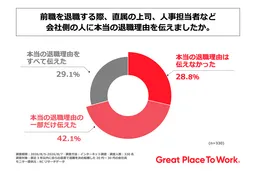
Over 70% of Young Professionals Don't Fully Disclose Why They Quit Jobs
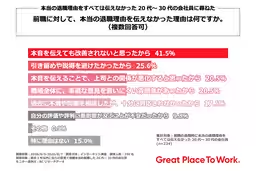
In an insightful study conducted by Great Place To Work® Institute Japan, it was revealed that more than 70% of young professionals aged between 20 and 30 do not fully disclose their real reasons for resigning when leaving a company. This statistical insight emerges from a survey targeting individuals who have voluntarily resigned within the last three years. A significant portion of respondents reported that they limited their disclosure during exit interviews with supervisors or HR personnel. Surprisingly, over 41% of those who withheld full disclosure indicated they believed their true concerns would not lead to any improvement in the workplace, showing a deep-seated disenchantment with company culture.
It was also found that more than 60% of respondents felt they were unable to communicate openly with their direct supervisors about workplace issues before resigning. This lack of communication appears to correlate with the willingness of employees to share the full scope of their resignation reasons. Notably, over 52% of those who reported having a transparent relationship with their managers were willing to fully disclose their resignation reasons. In stark contrast, this figure plummeted to 18% for those who did not feel comfortable expressing their concerns.
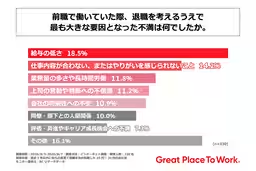
The research highlights pressing issues surrounding employee retention in an ongoing competitive job market. Organizations face the challenge of not only comprehending why employees choose to leave but also understanding the real, often hidden, reasons behind their decisions. Many employees cite various factors impacting their job satisfaction, including low salaries, unsuitable job descriptions, and poor workplace relationships.
A closer look at the responses revealed that reluctance to speak the truth about job dissatisfaction stems from a lack of perceived effectiveness in communicating with management. Many employees expressed doubts about whether their feedback would be taken seriously or lead to significant change. Such skepticism could contribute to a toxic atmosphere where employees feel their voices are not valued.
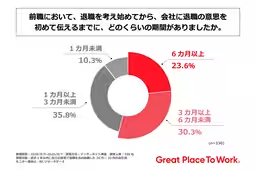
Moreover, over half of the respondents indicated it takes them three months or longer to formally communicate their intent to leave after deciding to resign. This finding emphasizes that contemplation and analysis of their circumstances prior to resignation are common among young professionals.
Yoko Arakawa, the President of Great Place To Work® Institute Japan, commented on the study's findings, underscoring the importance of fostering an open and trusting environment. She noted that if organizations wish to effectively retain talent, they must cultivate workplaces where employees feel comfortable sharing their concerns on a regular basis. Creating an environment where feedback is welcomed can drastically improve retention rates and lead to actual progress in employee satisfaction.
The results of this study serve as a critical reminder for companies regarding the significance of communication. The creation of a psychologically safe workspace where employees can freely discuss concerns and seek resolutions is vital in today’s challenging employment landscape. With effective communication channels in place, firms can identify potential issues early and implement proactive measures to improve the work environment. In conclusion, understanding the subtleties behind employee resignations and fostering an open communication culture stands as a priority for organizations aiming for sustainable growth and employee satisfaction.
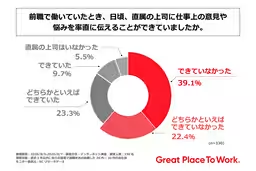
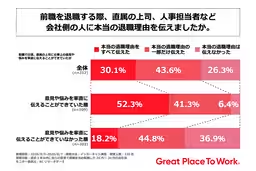


It was also found that more than 60% of respondents felt they were unable to communicate openly with their direct supervisors about workplace issues before resigning. This lack of communication appears to correlate with the willingness of employees to share the full scope of their resignation reasons. Notably, over 52% of those who reported having a transparent relationship with their managers were willing to fully disclose their resignation reasons. In stark contrast, this figure plummeted to 18% for those who did not feel comfortable expressing their concerns.
The research highlights pressing issues surrounding employee retention in an ongoing competitive job market. Organizations face the challenge of not only comprehending why employees choose to leave but also understanding the real, often hidden, reasons behind their decisions. Many employees cite various factors impacting their job satisfaction, including low salaries, unsuitable job descriptions, and poor workplace relationships.
A closer look at the responses revealed that reluctance to speak the truth about job dissatisfaction stems from a lack of perceived effectiveness in communicating with management. Many employees expressed doubts about whether their feedback would be taken seriously or lead to significant change. Such skepticism could contribute to a toxic atmosphere where employees feel their voices are not valued.
Moreover, over half of the respondents indicated it takes them three months or longer to formally communicate their intent to leave after deciding to resign. This finding emphasizes that contemplation and analysis of their circumstances prior to resignation are common among young professionals.
Yoko Arakawa, the President of Great Place To Work® Institute Japan, commented on the study's findings, underscoring the importance of fostering an open and trusting environment. She noted that if organizations wish to effectively retain talent, they must cultivate workplaces where employees feel comfortable sharing their concerns on a regular basis. Creating an environment where feedback is welcomed can drastically improve retention rates and lead to actual progress in employee satisfaction.
The results of this study serve as a critical reminder for companies regarding the significance of communication. The creation of a psychologically safe workspace where employees can freely discuss concerns and seek resolutions is vital in today’s challenging employment landscape. With effective communication channels in place, firms can identify potential issues early and implement proactive measures to improve the work environment. In conclusion, understanding the subtleties behind employee resignations and fostering an open communication culture stands as a priority for organizations aiming for sustainable growth and employee satisfaction.
Topics People & Culture)
【About Using Articles】
You can freely use the title and article content by linking to the page where the article is posted.
※ Images cannot be used.
【About Links】
Links are free to use.