



The Remarkable Transformation of Costa Rica's Export Model Over 40 Years
The Transformation of Costa Rica's Export Model
Costa Rica has undergone an extraordinary transformation in its export sector over the past 40 years. From the early 1980s, when the country exported merely four traditional products, it has evolved to offer over 4,000 diverse goods and services on nearly 150 international markets. This insightful analysis, carried out by the Costa Rican Trade Promotion Agency (PROCOMER), highlights one of the most significant productive shifts in the nation’s economic history.
Throughout the last decade, Costa Rican exports have experienced a remarkable annual growth rate averaging 8% between 2014 and 2024. This growth occurs alongside a structural change in the country's export composition. Currently, advanced manufacturing industries contribute to 84% of the industrial goods macro-sector, while knowledge-intensive services account for 58% of exports. Such a shift showcases a transition towards sophisticated activities that require specialized talents and adherence to international standards.
The impact of foreign trade is profound on the labor market, with exports generating over 709,000 jobs by 2024. Notably, women make up 43% of total employment in this sector, contributing significantly outside of the Greater Metropolitan Area, where nearly 19% of export activities are concentrated. These statistics confirm that export-driven growth is not only limited to urban centers or a singular production profile but extends across the entire country.
Laura López, the CEO of PROCOMER, commented on this long-term process, stating that the evolution of the country's exports stems from sustained decisions and a shared vision between public and private sectors. "The leap from four primary export products in the early 1980s to over 4,000 today demonstrates an economy that has learned to transform, innovate, and remain competitive in increasingly demanding markets. This study reveals how diversification expands opportunities, creates jobs, and enhances economic development throughout the country," she emphasized.
Historically, the study illustrates how Costa Rica has successfully reduced its dependency on traditional exports. In the late 1980s, over 90% of shipments comprised traditional goods. Today, this trend has reversed, with a clear dominance of non-traditional exports linked to advanced manufacturing, differentiated agro-industry, and specialized services. This evolution has empowered Costa Rica to broaden its export portfolio and respond more efficiently to external demand.
The diversification of products has accompanied a steady expansion into new export markets. The study notes that Costa Rica maintains a strong presence in North America, Europe, Asia, and Latin America, witnessing positive outcomes in regions demanding high-value-added goods and services. While the United States remains the primary destination for the nation’s exports, a remarkable growth of 18% in Europe and 39% in Asia until September 2025 underscores the significance of strategies aimed at market expansion and reducing dependency.
The analysis identifies emerging opportunities in nearshoring, digitalization, the transition to clean energy, and the growth of knowledge-based services—areas where Costa Rica already boasts established capabilities. In this context, the study concludes that the country is entering a new phase in its export development, characterized by a broader and more sophisticated productive base, better positioned to meet the demands of international trade in the years to come.
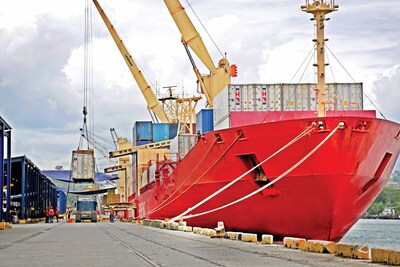
Costa Rica's remarkable journey from merely four export products to a multifaceted export economy is not just a story of growth, but a narrative steeped in innovation, resilience, and strategic foresight.
Topics General Business)
【About Using Articles】
You can freely use the title and article content by linking to the page where the article is posted.
※ Images cannot be used.
【About Links】
Links are free to use.