



Okayama University Discovers Magnesium Transporter Influencing Rice Seed Development and Taste
Discovery of OsMGR2: A Key Magnesium Transporter in Rice
On June 16th, 2026, a team of researchers from Okayama University announced a significant breakthrough in the study of rice. They discovered a magnesium efflux transporter known as OsMGR2, which is crucial for transporting magnesium ions from the roots to the seeds of the rice plants.
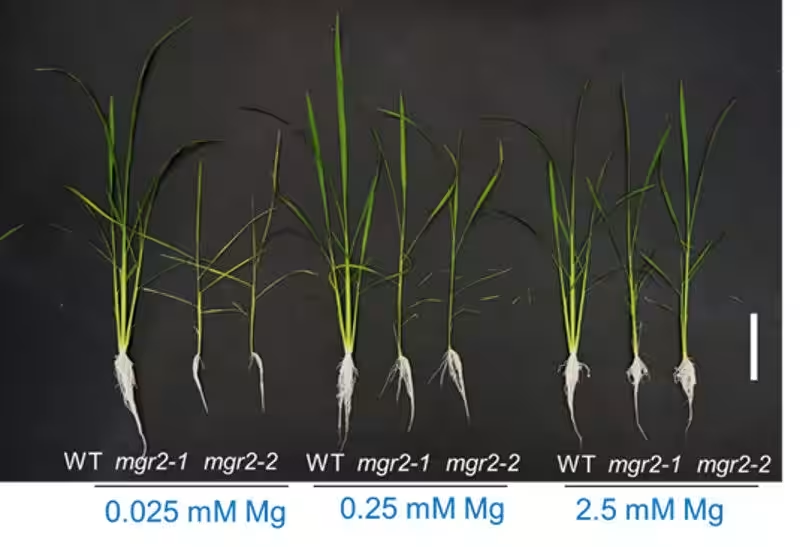
This transporter operates primarily by facilitating the movement of magnesium out of cells into the surrounding environment, which is essential for the overall health and development of the rice plants. The expression of OsMGR2 was found to be concentrated in various parts of the rice plant, including the roots, nodes, and grains. The study revealed that when the OsMGR2 gene was disrupted, not only did the rice seeds become lighter, but their taste quality also suffered.
Significance of Magnesium in Rice
Magnesium is known to be an essential nutrient for both plants and animals, playing a key role in many biological processes. However, prior to this discovery, the pathways through which magnesium from soil reaches the seeds—along with its impact on seed development and quality—had remained poorly understood.
The identification of OsMGR2 sheds light on the critical transport mechanisms involved. The research highlighted how this protein efficiently directs magnesium to the seeds, thereby informing efforts to enhance rice yield and quality.
Research Collaboration and Publication
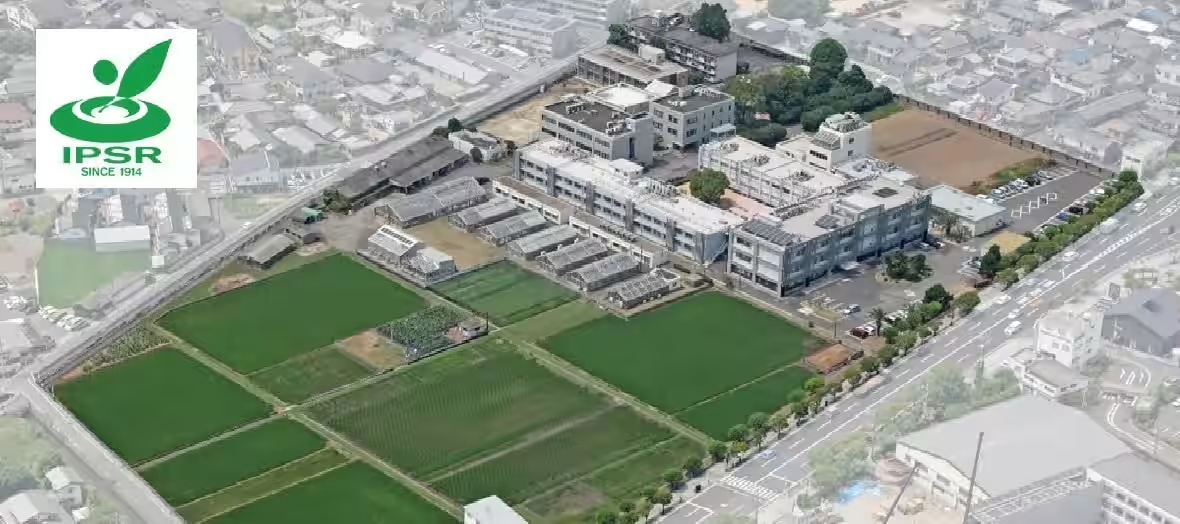
The research was led by Professor Keng-Po Ma at the Institute of Resource Plant Science of Okayama University, alongside Professor Takaaki Miyaji from the Graduate School of Medicine, Dentistry and Pharmaceutical Sciences. The collaborative team included Dr. Kiyosumi Hori from the National Agriculture and Food Research Organization. The findings were published in the prestigious journal Proceedings of the National Academy of Sciences on April 22, 2026, emphasizing the robustness and impact of their work.
Professor Ma commented on the study's origins, noting that it began over five years ago under the guidance of Dr. Sheng Huang, who was a visiting researcher from Hunan Agricultural University in China. Their collaborative efforts linked magnesium transport to rice quality and yield, earning high praise from reviewers.
Future Implications
The implications of this discovery are significant for the future of rice cultivation. One potential application includes developing rice strains that are more resistant to magnesium deficiencies, which could be crucial for maintaining crop quality and yield, particularly in regions with suboptimal soil nutrient content. Additionally, the research paves the way for creating rice varieties that can accumulate higher levels of magnesium, thereby enhancing their nutritional value.
The announcement of these findings and their potential applications was made on May 23, 2026, sparking interest in both academic and agricultural circles worldwide. With magnesium’s pivotal role in plant health recognized, further studies may build upon this foundation to address global food security and agricultural sustainability challenges.
For further details on this groundbreaking research, please visit the official press release by Okayama University at their website.
Conclusion
The discovery of the OsMGR2 protein represents a significant advancement in our understanding of nutrient transport in rice, demonstrating the integral relationship between agricultural science and food quality. Continued research into magnesium transport in rice may not only enhance our knowledge of plant biology but also provide practical solutions to improve food production systems globally.


Topics Consumer Products & Retail)
【About Using Articles】
You can freely use the title and article content by linking to the page where the article is posted.
※ Images cannot be used.
【About Links】
Links are free to use.