




Is It Possible to Pass Challenging University Entrance Exams Without Attending School? A Bold Experiment Begins.
Can You Pass Entry Exams for Top Universities Without Attending School?
The ambitious project launched by former high school teacher Takashi Ito introduces "Shin-Gakkou Schorbit", a pioneering online school model set to commence operations in January 2026. The central goal of this initiative is to assess whether it's feasible to develop the academic skills and learning habits necessary for success in challenging university entrance exams without any physical attendance at a traditional school. As part of this effort, the project is now inviting its first cohort of monitor students, particularly those in high school, to collaborate in establishing this new learning paradigm.
Background: The Challenge of Online Learning
In today’s digital age, accessing top-tier lectures from renowned instructors on platforms like YouTube has never been easier. The disparity in the quality of materials has diminished significantly. Yet, despite the abundance of resources available, students learning independently—especially those from correspondence high schools or who have dropped out—continue to face substantial barriers in securing admission to prestigious universities.
According to data from the Ministry of Education, Culture, Sports, Science and Technology, nearly 340,000 elementary and junior high school students are currently absent from school, and over 290,000 are enrolled in correspondence schools—the highest numbers on record. While approximately 70% of conventional high school graduates advance to university, this figure drops to only 20-30% among correspondence students, creating a stark contrast in academic prospects post-graduation.
Ito believes that the critical factors contributing to this disparity lie in feelings of isolation and uncertainty. He asserts that fostering an environment where students can collaborate and receive guidance—even in the absence of a physical school—can lead to significant growth. This proof-of-concept (PoC) study seeks to validate this hypothesis.
Testing Two Core Hypotheses
In examining the potential efficacy of an online school framework without a physical campus, this PoC will focus on two key axes:
Hypothesis 1: Community and Peer Motivation
The first hypothesis posits that re-creating the motivating atmosphere of a traditional school online is crucial. By establishing a transparent environment where students can observe their peers' learning progress, the program aims to alleviate the feelings of isolation that often accompany at-home study and bolster collective motivation.
Hypothesis 2: Mentoring Over Lecturing
The second hypothesis emphasizes the importance of personalized mentoring rather than traditional lecturing. Sifting through vast educational resources can be overwhelming for beginners. By providing dedicated mentorship, akin to personal training, the program aims to demonstrate that students can enhance their academic skills without the need for expensive preparatory schools.
Overview of the Pilot Program
The PoC will enlist participants, particularly those from correspondence high schools and dropouts who are not currently engaged in daytime educational activities. The program will feature:
- - Fully Online Environment: Students can access learning materials from their homes via Microsoft Teams, eliminating the need for physical attendance.
- - Collaborative Learning: Participants will share time and space online, working collectively toward university admission.
- - Daily Mentoring: The program will incorporate feedback and shared progress tracking to form consistent study habits and enhance academic performance.
Structure of Daily Activities
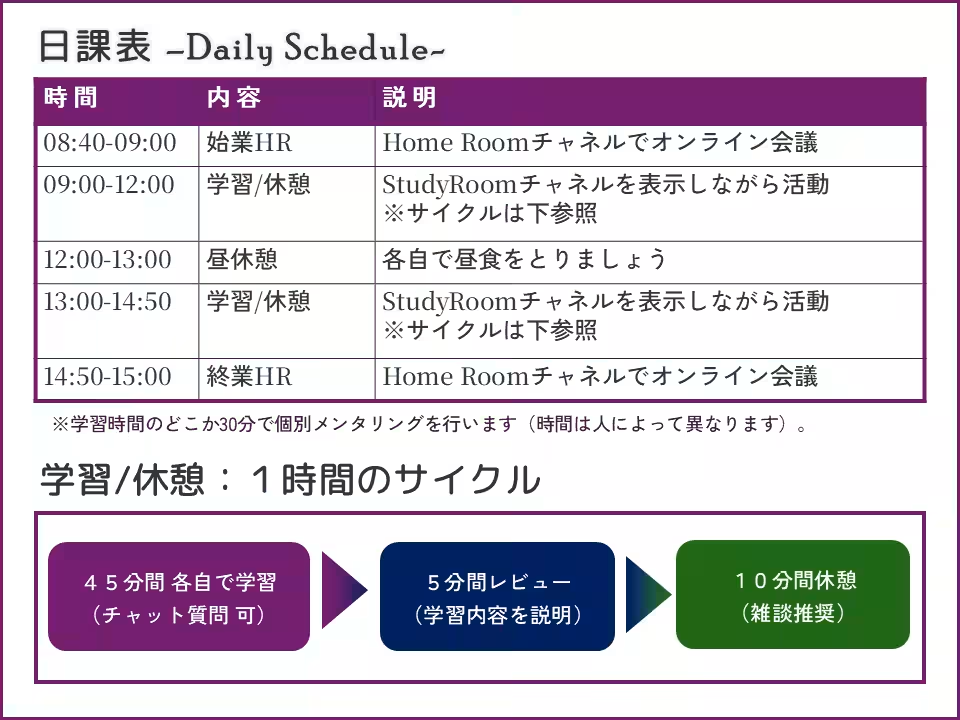
The program includes structured online homerooms at both the beginning and end of the day, encouraging a regular daily routine. The learning schedule is designed around focused cycles of 45 minutes of study followed by 5 minutes of reporting, promoting efficient time management and maintaining engagement in at-home study environments.
Evaluation Metrics for the Pilot Program
Throughout the three-month trial, the efficacy of this online school model will be evaluated based on three categories:
1. Academic Improvement: Students will take nationwide mock exams at both the start and end of the program to monitor scoring trends, alongside tracking the number of completed study units to visualize understanding.
2. Study Habit Formation: The program will assess the establishment of consistent learning habits, beginning with lifestyle adjustments and quantitatively measuring engagement in learning activities.
3. Mental and Attitudinal Changes: Surveys will measure shifts in self-efficacy and motivation toward university admissions throughout the program.
Digital Campus Utilizing Microsoft Teams
The educational platform is built on Microsoft Teams, a tool widely recognized in the corporate world. More than merely a communication tool, it recreates a digital campus embodying the roles of classrooms, staff rooms, study halls, and libraries all within a secure online environment.
- - All-in-One Learning Environment: Participants can access all activities, from online homerooms to assignment submissions and peer interactions, with a single login.
- - Skill Development for Future: Inculcating familiarity with standard business IT tools, the program aims to equip students with valuable ICT skills that will benefit them in higher education and their future careers.
- - Psychological Safety: A secure, isolated environment is provided to ensure students can focus on their learning and consultation without distractions.
Highlights of Digital Campus Activities
1. Personalized online mentoring sessions.
2. Daily meetings for morning and closing greetings using conference features.
3. Use of a whiteboard feature to visualize and share academic progress.
4. Online study rooms for peer discussions and chats.
5. Assignment submissions and data transmissions.
Key Services Offered
The program will deliver four primary types of support in a manner akin to traditional high schools but entirely online:
1. Lifestyle Support: Establishing stable daily routines with programmed activities four days a week from 8:40 AM to 3:00 PM.
2. Learning Support: Delivering personalized learning experiences alongside regular one-on-one mentorship.
3. Collaborative Extracurricular Activities Support: Encouraging genuine relationships among students through voluntary interactions.
4. Career Guidance: Simultaneously addressing university entrance exam preparations and career education.
Overview of the Organizing Body
- - Organizing Agency: Shin-Gakkou Schorbit
- - Mission: To construct a new form of online free school, integrating the culture of preparatory schools with digital education, focused on making university admission accessible for students facing difficulty, such as those who are dropout or enrolled in correspondence schools.
About the Founder, Takashi Ito
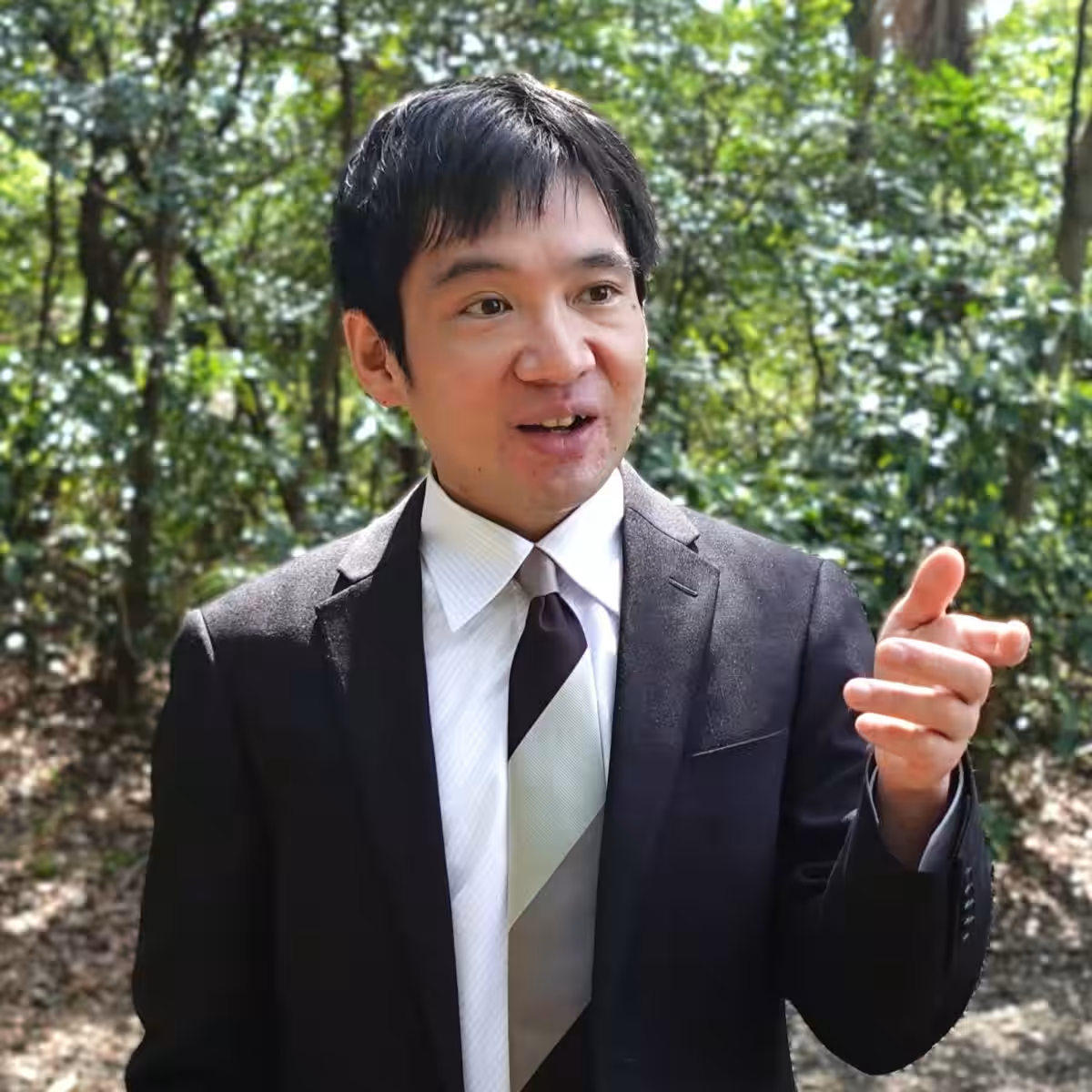
Born in Nagoya in 1983, Takashi Ito graduated from Keio University. After working in various tutoring and preparatory schools, he served as a mathematics teacher in traditional high schools until 2024. Disillusioned by the limitations of existing educational frameworks in addressing dropout issues, he founded Schorbit in 2025 to pioneer a new method of online education.
Call for Participants for the First Cohort
The program is currently seeking eager participants for its inaugural cohort willing to engage in this innovative learning structure, particularly targeting high school students seeking university admission, especially to prestigious institutions.
- - Eligibility: Students from correspondence high schools or dropouts aspiring for university.
- - Start Date: January 2026.
- - Participation Fee: Free.
- - Activities: Community engagement and mentoring services solely conducted online.
- - Application Method: Interested individuals can apply via the official website.
Organizational Overview
- - Name: Shin-Gakkou Schorbit
- - Founded By: Takashi Ito
- - Established: 2025
- - Purpose: Management of online free school for high school-age individuals.
- - Website: Schorbit
For inquiries, please use the contact form available on our official website.
Shin-Gakkou Schorbit aims to provide a fully online learning space for high school-age children not attending school regularly. Addressing dropout issues and ensuring quality education akin to preparatory schools, we believe in fostering the intelligence and energy within young individuals. Our mission is to nurture these “Trailblazers” equipped to advance society in the 21st century.







Topics Other)
【About Using Articles】
You can freely use the title and article content by linking to the page where the article is posted.
※ Images cannot be used.
【About Links】
Links are free to use.