



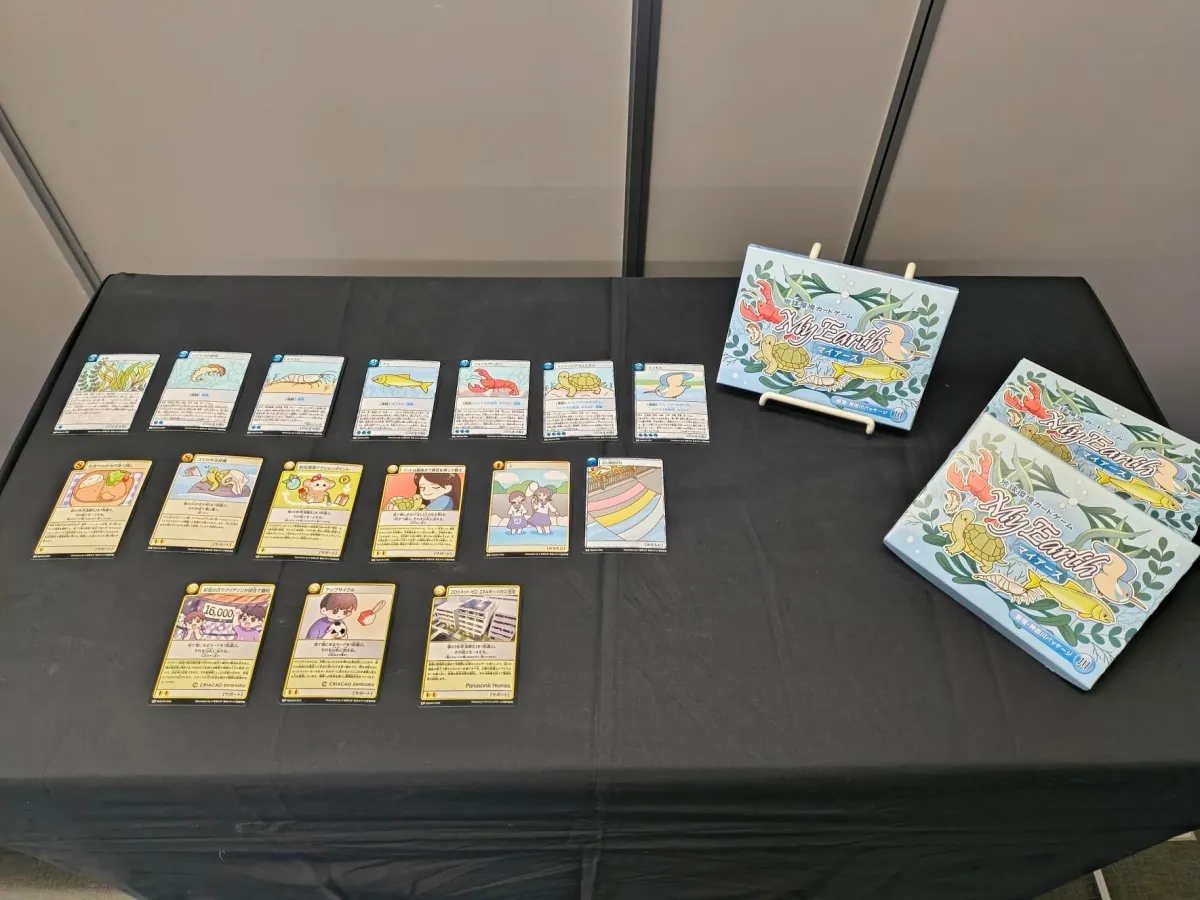
My Earth® Shinjuku/Kandagawa Package: A New Environmental Education Card Game
A New Environmental Education Initiative in Shinjuku
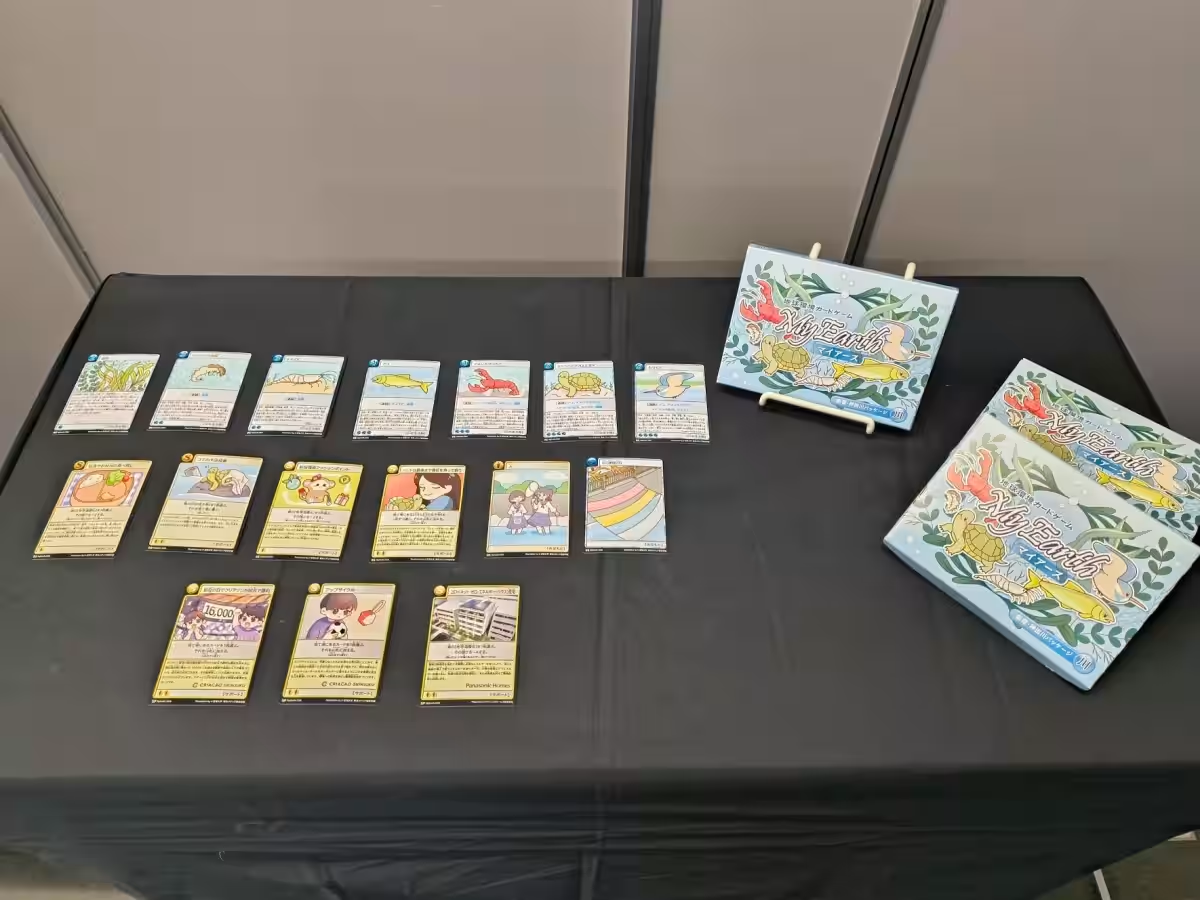
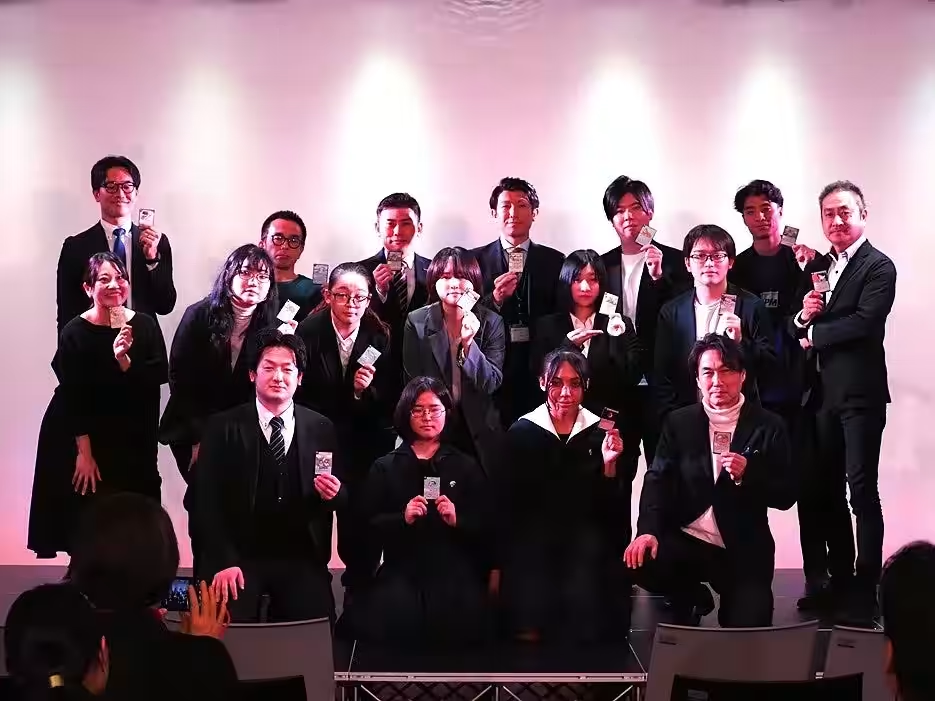
On March 4, a new eco-educational card game titled My Earth® Shinjuku/Kandagawa Package was unveiled. Developed by Takarazuka University’s Department of Media Arts in Shinjuku, Seijyo High School, soccer club Clearson Shinjuku, and NPO SoELa from Kawasaki, the game aims to help children learn about environmental issues in an engaging way, thanks to the support from Shinjuku City. Approximately 40 people, including project members and local stakeholders, gathered at Takarazuka University for the completion ceremony.
This project started in June of last year and brought together local government, businesses, educational institutions, and community members to create an avenue for children to recognize global environmental issues as personal responsibilities. During the event, students and collaborators shared their motivations and experiences in the production process.
The Challenge of Artistic Collaboration
Hiryu Kimura, Executive Director of SoELa, explained the core philosophy behind My Earth and stated, “This is the 14th project nationwide and the first in Tokyo. Incorporating illustrations into the cards is also a first, representing a significant challenge for us.”
Daiaki Nishiyama from Clearson Shinjuku shared his personal connection to the environment, having felt the impacts of rising temperatures during his time as a player. “Environmental issues represent an immediate threat; we want to provide children with opportunities to engage with these matters,” he declared. Clearson’s involvement as a community “hub” aims at connecting various entities to address social challenges, which was evident in the workshops and classroom sessions leading up to the card game’s completion.
Collaborative Efforts of Students
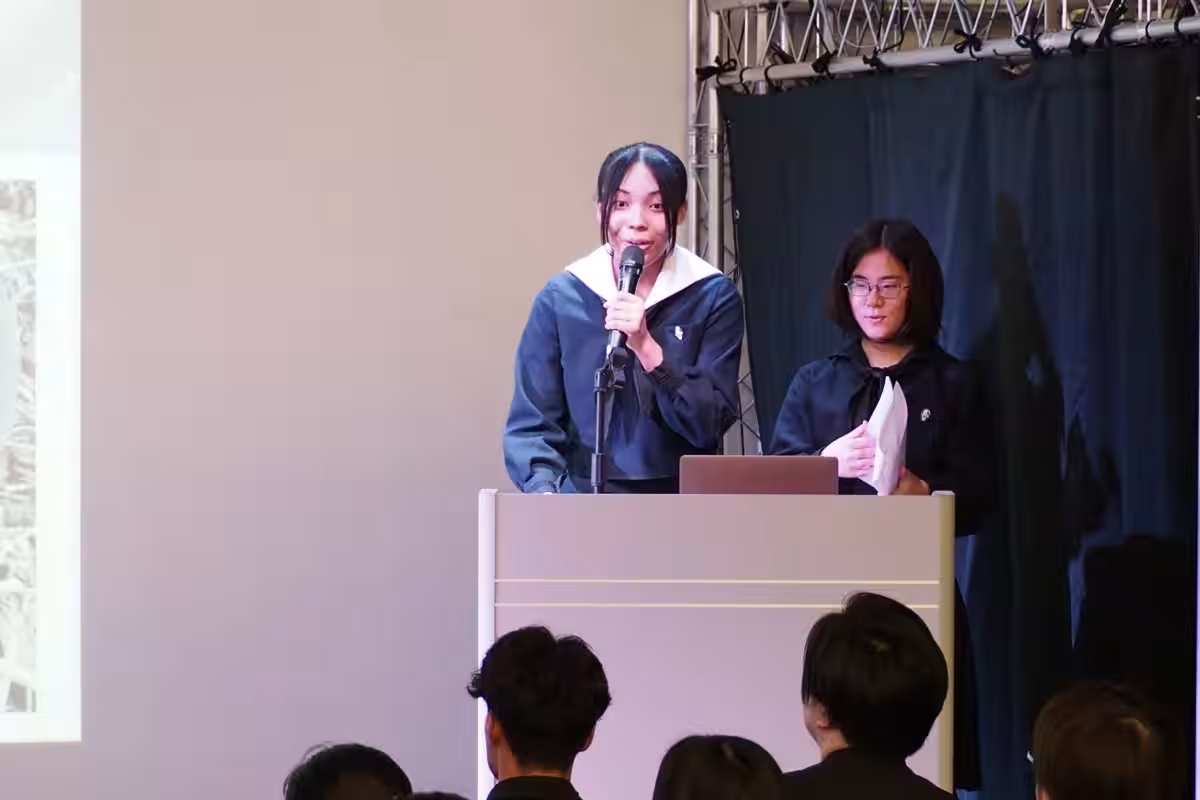
One defining feature of the My Earth® Shinjuku/Kandagawa Package is the significant role played by high school and college students in the creation process. The Biology Club at Seijyo High School conducted ecological surveys of Shinjuku, with students Rona Onuma and Kotomi Yoshida presenting their findings. Ten members collaboratively explored local environments such as Kandagawa Riverside Terrace and Shinjuku Gyoen, discovering biodiversity, including species like ayu fish, kingfishers, and rat snakes amidst the urban landscape.
During a workshop held in August, students organized the predator-prey relationships based on their research, contributing to the game’s foundational design.
From Takarazuka University, Kumiko Taguchi reported on their journey. Students from media design and manga programs spent about seven months creating 15 card illustrations and package designs. With a target audience of elementary school students, they aspired to make the designs approachable, even for children who may not have a fondness for insects. Soft shapes and bright colors were selected to achieve this goal based on careful research.
Community and Corporate Partnerships
During the presentation, representatives expressed appreciation for the collaborative effort. Katsuyuki Yano, head of the Regional Promotion Office in Shinjuku City, applauded the cooperation between the schools, stating, “It reinforces the importance of creating new learning experiences in collaboration with local educational institutions. We aim to foster children’s interest in the environment through events where they can engage directly.
Topics Other)




【About Using Articles】
You can freely use the title and article content by linking to the page where the article is posted.
※ Images cannot be used.
【About Links】
Links are free to use.